


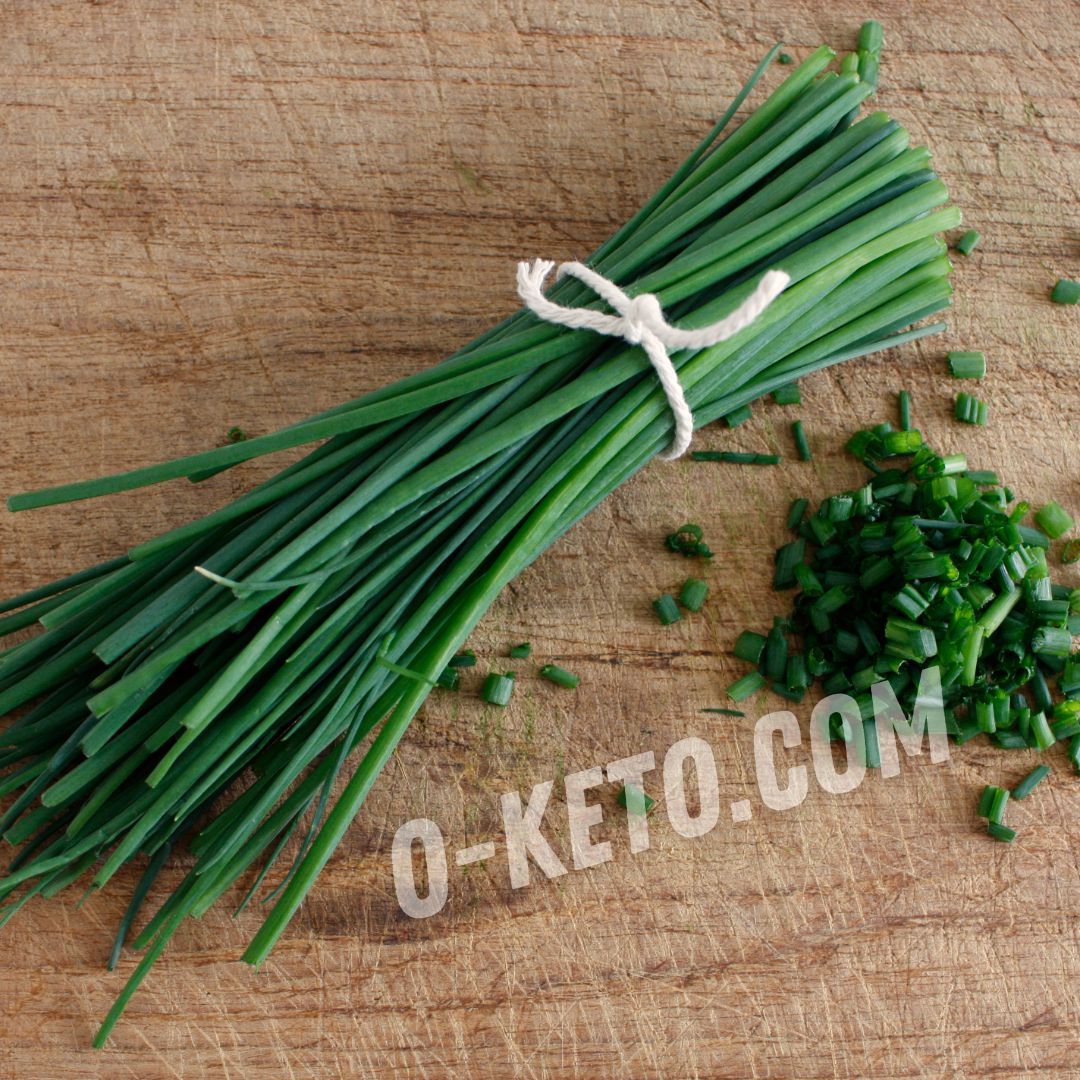

Chives are thin green herbs with a mild onion flavor. Unlike bulb onion, they are used in small bunches as a fresh herb: sprinkled over finished dishes, added to omelets, salads, sauces, cottage cheese, fish, eggs and meat. They give onion aroma without strong sweetness or heavy texture.
For keto, chives are useful precisely as a herb. A normal portion contains few carbohydrates, while the flavor makes simple protein and fat-based dishes fresher. They are not a side dish or main vegetable, but an aromatic addition best used at the end of cooking.
Nutrition
Per 100 g, chives contain about 30-35 kcal, around 1.8 g of protein, 0.2 g of fat and about 4-5 g of carbohydrates, much of which is fiber. But 100 g is a large amount for this herb; in practice, 5-15 g is more common, so the carbohydrate contribution is usually minimal.
Chives contain vitamin K, vitamin A, vitamin C, folate, iron and small amounts of other minerals. They are useful as part of varied greens, but should not be treated as a main nutrient source.
Are Chives Keto-Friendly?
Yes, chives fit keto and LCHF well. They provide onion flavor without needing much bulb onion, which contains more sugars in larger amounts. They pair especially well with eggs, cream cheese, cottage cheese, sour cream, fish, chicken, cucumber and salad leaves.
The problem is usually not the herb itself, but the dish: sweet sauces, bread, potatoes, starchy fillings and ready dressings can make a recipe non-keto even if chives are sprinkled on top.
How to Use Them
Chives are best added fresh or at the very end of cooking. Long heat destroys the delicate aroma and dulls the color. They are easy to cut with scissors or a sharp knife so the thin leaves are not crushed.
Practical options include:
- a topping for omelet, fried eggs or boiled eggs;
- sauce with sour cream, Greek yogurt or cream cheese;
- an addition to cottage cheese, fish, shrimp or chicken;
- a green accent in cucumber and avocado salad;
- herb butter for meat or vegetables.
How to Choose and Store
Fresh chives should be firm, bright green and free of slime, yellow tips or heavy wilting. Store them in the refrigerator wrapped in a damp towel or standing in a glass with water. Wash shortly before use rather than in advance.
Common Mistakes
Chives should not be replaced with a large amount of bulb onion when the goal is low carbohydrates and mild flavor. They have different roles: chives add a fresh aromatic note, while bulb onion becomes sweet when fried and adds more carbohydrates. Another mistake is frying them for a long time with meat; they lose aroma and may become bitter.
Portion and Pairings
Chives rarely need precise counting when used as a herb. A tablespoon of chopped leaves gives noticeable aroma but barely changes the carbohydrate count of the dish. This is useful when onion flavor is wanted without adding much bulb onion or fried sweetness.
They work best in cold and warm dishes with a mild base. Cream cheese, sour cream, eggs, fish, shrimp, chicken, cucumber, avocado and cauliflower take their fresh flavor well. In heavily spiced dishes chives may disappear, so add them just before serving.
Fresh and Dried
Dried chives are convenient, but weaker and less fresh in flavor. For sauces and toppings, fresh leaves are better; dried chives are more useful in omelets, casseroles or dishes that need a light onion note. If dried herbs smell dusty or like hay, they will add little flavor.
Limitations and Substitutes
Onion-family herbs may cause bloating or discomfort in sensitive people, especially raw. If chives do not suit you, use a smaller amount of green onion, dill, parsley, wild garlic, basil or mixed mild herbs. For onion flavor without pieces, a little dried onion can work, but its carbohydrates are more concentrated.
How to Keep the Aroma
Chives have thin hollow leaves, so they lose aroma quickly after cutting. Slice only the amount needed and add it right before serving. If the herb is used in a sauce, stir it into the finished base rather than keeping it for a long time in a warm pot.
For prep, chopped chives can be mixed with soft butter and a pinch of salt, then chilled. This herb butter is convenient for fish, eggs, meat and vegetables without increasing the amount of bulb onion.


