


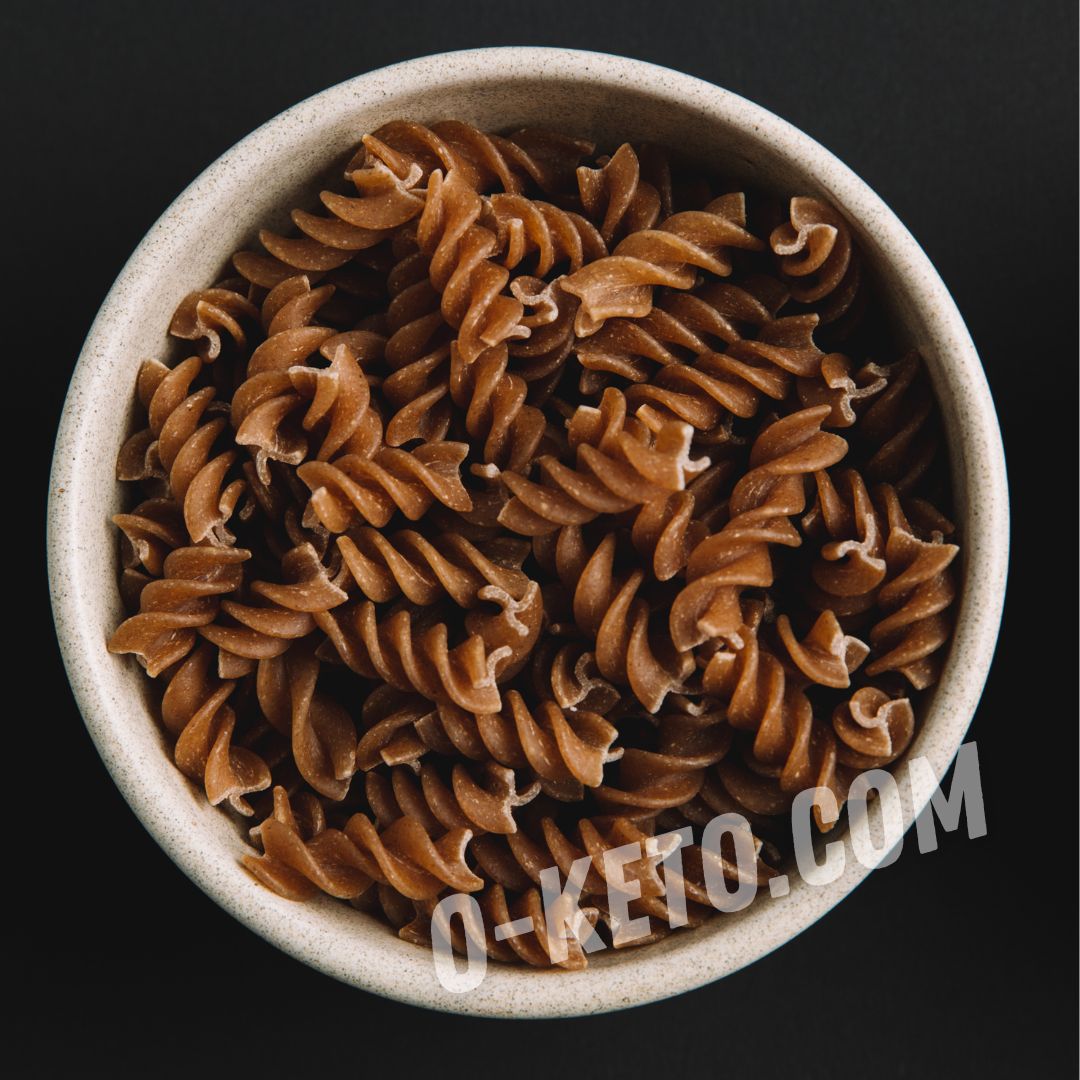

Whole grain pasta is made from flour that keeps the bran, germ, and endosperm of the grain. Compared with regular pasta made from white flour, it is denser, darker, has a more pronounced grain or nutty flavor, and contains more fiber. Most often it is wheat pasta, but versions made from whole spelt, rye, oats, barley, corn, rice, and blends also exist.
The phrase “whole grain” does not make the product low-carb. It is still pasta, meaning a concentrated starch source. It can be viewed as a denser grain alternative to regular pasta, but not as a keto product. For low-carb eating, dry weight, cooked portion, and frequency matter.
Nutritional value
In 100 g of dry whole grain pasta there may be about 340–360 kcal, roughly 12–14 g of protein, 1.5–3 g of fat, and 65–75 g of carbohydrates. A common table reference is about 348 kcal, 13 g of protein, 2 g of fat, and 72 g of carbohydrates per 100 g of dry product. After cooking, weight increases about 2–2.5 times because of water.
The glycemic index of whole grain pasta is often lower than that of soft overcooked white pasta, sometimes listed around 40. But this does not cancel the total carbohydrate amount. The body’s response depends on wheat type, grind, pasta shape, cooking time, and whether it is eaten with protein, fat, and vegetables.
Is it suitable for keto?
For strict keto, whole grain pasta is usually unsuitable: even a small dry portion quickly uses a large part of the daily carbohydrate limit. A 50 g dry serving can provide about 35 g of carbohydrates before sauce and additions. That is already a lot for a diet where carbohydrates are counted tightly.
In a looser LCHF pattern or in an occasional higher-carb meal, it may sometimes be kept as a rare dish with a smaller portion. In that case, it is better paired with meat, fish, eggs, cheese, olive oil, greens, and non-starchy vegetables, not with bread, sweet sauce, and an additional grain side.
If hunger returns quickly after pasta, the portion is worth reducing and more protein or vegetables can be added. The whole grain version is more filling than white pasta for many people, but it does not cancel the starchy base of the dish.
How to cook it
Whole grain pasta often cooks a little longer than white pasta, but it is better not overcooked. An al dente texture keeps structure and makes the dish less sticky. After cooking, pasta should not sit in water for long: it keeps softening and loses its grain flavor.
Because of its denser taste, this pasta pairs well with stronger sauces: sugar-free tomato, mushroom, creamy, cheese, tuna, meat, eggplant, spinach, olives, or herbs. For a cold salad, it is better rinsed and fully cooled so it does not stick together.
The portion is easier to measure dry before cooking. A cooked plate looks much larger because of water, so a “normal” serving by eye easily becomes too large. If the goal is carbohydrate control, it is better to decide in advance how many grams of dry product go per person.
How to choose
The package should make clear which grain the pasta is made from and whether the flour is truly whole grain. Phrases like “with bran” or “dark pasta” do not always mean a full whole grain base. The ingredient list should be short: flour and water, sometimes eggs. Sugar, syrups, excess flavorings, and starchy additions are unnecessary for plain pasta.
If gluten matters, the raw material must be checked. Wheat, spelt, rye, and barley pasta contain gluten. Gluten-free options made from rice or corn may be whole grain by their own raw material, but they are usually not better for keto: they also contain a lot of carbohydrates.
Limitations
Whole grain pasta may feel heavy for sensitive digestion because of fiber and dense structure. With sensitivity to gluten or wheat, ordinary versions are unsuitable. Sauces also matter: sweet tomato sauces, breading, ketchup, and ready dressings can noticeably increase carbohydrates.
How to store it
Dry pasta is kept in a closed package or jar, in a dry dark cupboard, away from moisture and strong smells. After cooking, pasta is stored in the refrigerator separately from sauce and used quickly. If sour smell, slime, or mold appears, the cooked dish should be discarded.
What can replace it?
For a keto replacement, zucchini noodles, squash spaghetti, shirataki, thinly sliced cabbage, cauliflower, spaghetti squash in a small portion, or vegetable ribbons work better. They do not repeat the taste of grain pasta, but they keep the dish format with sauce and a lower carbohydrate load.


