


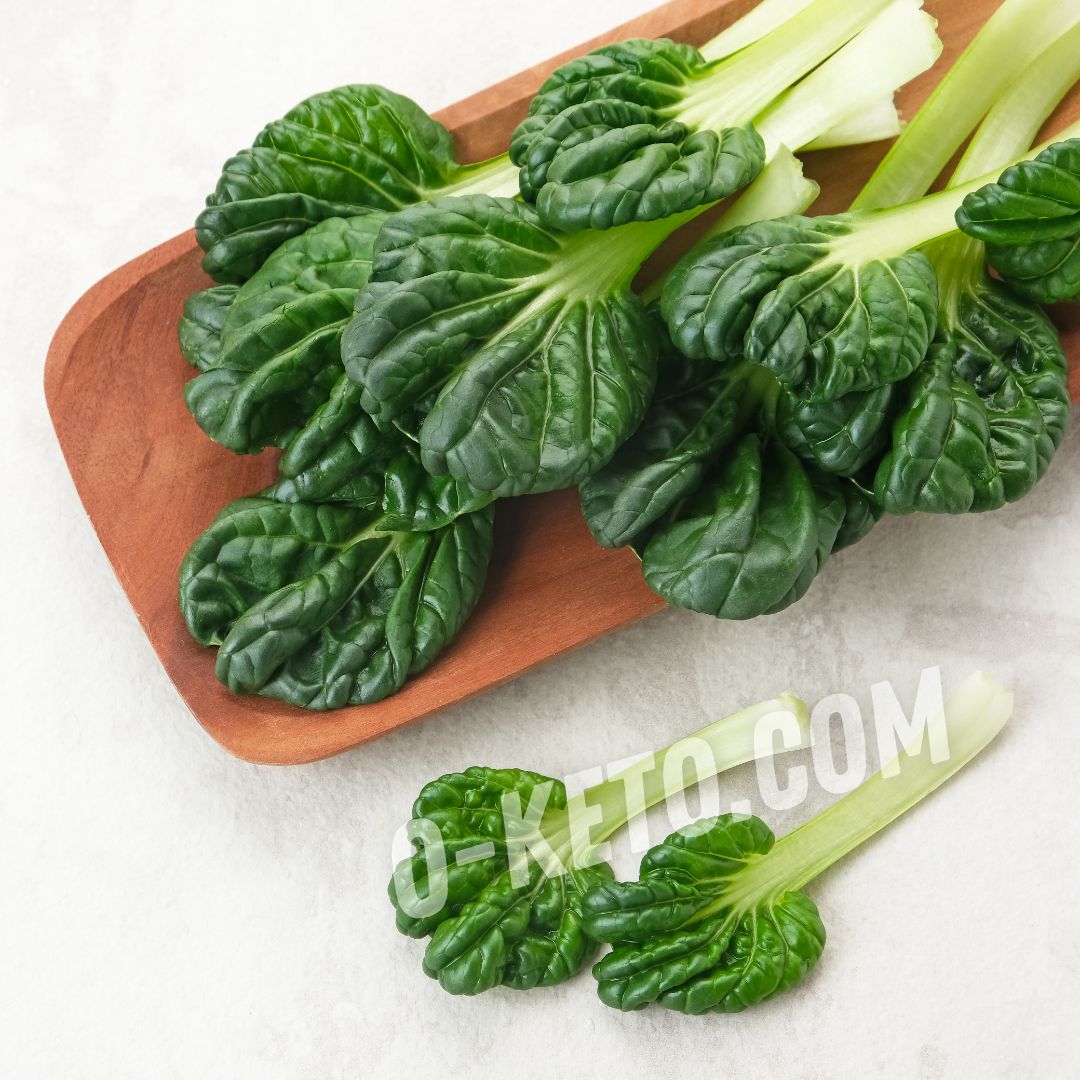

Tatsoi is a leafy green from the cabbage family, related to bok choy, mizuna, and other Asian mustard greens. It has small dark green leaves, juicy stems, a mild cabbage-mustard flavor, and a pleasant crisp texture. Tatsoi can be eaten raw, warmed quickly in a pan, added to soups, omelets, salads, and warm sides.
For keto, tatsoi is convenient as a low-carb green: it adds volume, freshness, and flavor without a meaningful carbohydrate load. It is not very filling by itself, but it works well with eggs, fish, meat, tofu, cheese, and fatty sugar-free dressings.
Nutritional value
Per 100 g, tatsoi usually contains about 13 kcal and roughly 2 g of carbohydrates. A normal portion of leaves has a minimal carbohydrate load, so the green fits keto and LCHF easily. Like other leafy greens, it matters more for volume, fiber, freshness, and variety than for calories.
It contains carotenoids, vitamin C, vitamin K, folate, potassium, calcium, and small amounts of iron. These compounds matter as part of the overall diet, but tatsoi should not be turned into a product with medical promises. Its practical value is simpler: fresh greens with a more expressive taste than plain lettuce.
Is it suitable for keto?
Tatsoi fits keto well. It can be used by the handful in salad, warmed quickly in a pan, or added to soup at the very end. It is low in carbohydrates and flavorful enough to replace some sweeter vegetables in Asian-style and vegetable dishes.
Sauces need attention. Sweet soy sauce, teriyaki, honey, starchy thickeners, and noodles quickly change the dish. Better keto pairings are sesame or olive oil, garlic, ginger, lemon, vinegar, chili, fish, eggs, and meat.
How to use
Young tatsoi can be eaten raw: the leaves are soft and the stems add crunch. Larger leaves are better warmed quickly or added to hot food at the end so they do not become watery. Stems cook a little longer than leaves, so large rosettes can be cut and the denser part warmed first.
Practical options include:
- salad with cucumber, avocado, and sugar-free sesame dressing;
- a quick pan dish with garlic, ginger, and egg;
- an addition to broth with fish, chicken, or tofu;
- a green base for shrimp or salmon;
- a side with oil, lemon, and sesame seeds;
- a filling for an omelet or a low-carb roll in lettuce leaves.
What to pair it with
Tatsoi handles bright but unsweetened flavors well: garlic, ginger, sesame, lime, lemon, sugar-free rice vinegar, chili, black pepper, and a small amount of fish sauce. In cold salads, it pairs with avocado, cucumber, radish, eggs, tuna, salmon, chicken, and cheese.
In warm dishes, it is convenient with meat, shrimp, mushrooms, cauliflower, zucchini, and eggs. If an Asian-style taste is desired, build the sauce from oil, acidity, and spices rather than a sweet thick glaze.
How to choose
Good tatsoi looks fresh, without slime, yellow edges, dark wet spots, or sour smell. Leaves should be springy and stems juicy. If sold with roots, it often keeps a little better and stays crisp longer.
Very large and old leaves may be tougher and sharper in taste. For salad, young rosettes are better; for hot pan dishes, denser leaves also work. Before cooking, sort the greens because damaged leaves can spoil the whole package faster.
How to store
Store tatsoi dry in the refrigerator, in a container or bag with a paper towel. Wash it before use, not in advance: excess moisture speeds wilting and makes leaves slimy. Dressed salad quickly loses crunch, so sauce is added just before serving.
When cooked, tatsoi loses volume quickly: a large raw handful becomes a small serving. That is convenient for a side dish, but it is easy to overdo oil or sauce. Cook the leaves briefly and leave some stems crisp.
Limits and substitutes
As a cabbage-family green, tatsoi may cause bloating in sensitive digestion, especially raw and in large portions. If discomfort appears, lightly cook the leaves or reduce the amount. People taking medication where stable vitamin K intake matters should avoid sudden major changes in greens without specialist advice.
Tatsoi can be replaced with bok choy, spinach, mizuna, arugula, mustard greens, chard, young Napa cabbage, or mixed salad leaves. For raw salad, spinach and mizuna are closer; for hot pan cooking, bok choy and chard work better.


