


Glucagon
A hormone from pancreatic alpha cells that helps maintain glucose between meals by activating hepatic glycogen breakdown and gluconeogenesis.
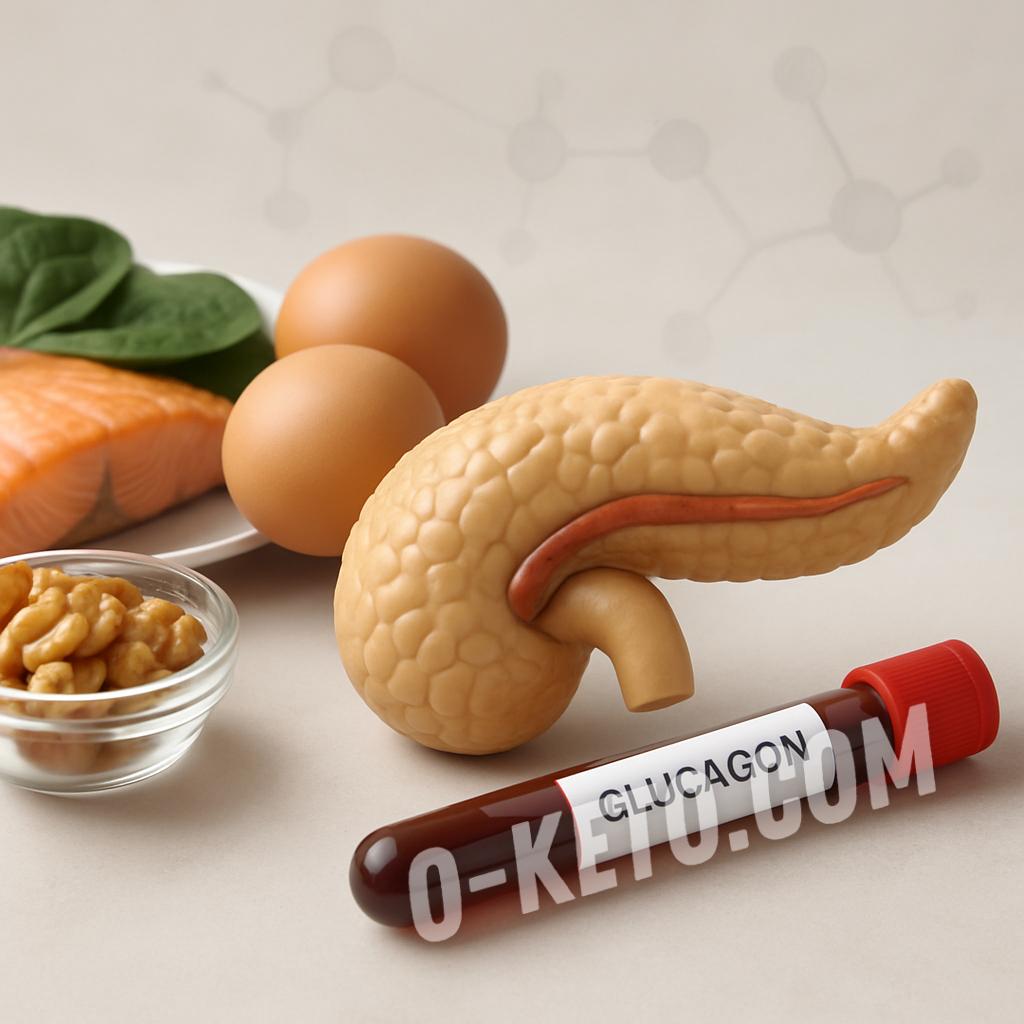
Glucagon is a hormone produced by alpha cells of the pancreas. It is often called the opposite of insulin, but that is an oversimplification. Insulin helps store and use energy after meals, while glucagon helps maintain fuel availability between meals, overnight, during physical activity, and when carbohydrate intake is low. The main target of glucagon is the liver. There it stimulates glycogen breakdown and new glucose production so that blood glucose does not fall too low.
When it rises
Glucagon rises when glucose falls, during long gaps between meals, physical activity, stress, high protein intake, infection, and some hormonal signals. After a protein-containing meal, glucagon may rise together with insulin. This is normal: amino acids stimulate insulin, while glucagon helps prevent excessive glucose lowering and directs the liver to handle incoming amino acids. Protein should therefore not be feared simply because of glucagon.
Glucagon works together with adrenaline, cortisol, growth hormone, and the autonomic nervous system. These counter-regulatory signals are especially important during hypoglycemia. If glucose falls, the body tries to raise it through glycogenolysis, gluconeogenesis, shaking, sweating, hunger, and stress hormone release. In long-standing diabetes, this protection can become weaker, increasing the risk of severe hypoglycemia.
Glucagon and diabetes
In type 2 diabetes, glucagon may be inappropriately elevated, especially fasting and after meals. The liver receives a signal to produce glucose even when blood glucose is already sufficient. This is one reason for fasting hyperglycemia and increased hepatic glucose production in insulin resistance. The problem is not that glucagon is bad, but that coordination between insulin, alpha cells, liver, fat tissue, and gut hormones is disturbed.
In type 1 diabetes, the situation is different. Endogenous insulin is low or absent, and the glucagon response to falling glucose may decline over time. A person using insulin therefore needs a hypoglycemia treatment plan. Modern emergency glucagon preparations can be used for severe hypoglycemia when a person cannot safely take carbohydrate by mouth. Family members and colleagues should know where the medication is and how to use it if prescribed.
Keto, protein, and glucagon
On a low-carbohydrate diet, glucagon helps the liver maintain glucose while much of the energy comes from fats and ketones. This is normal adaptation, not a malfunction. Lower insulin and higher glucagon support fat mobilization, ketogenesis, and gluconeogenesis. If a person under-eats, sleeps poorly, drinks a lot of caffeine, and lives under constant stress, counter-regulatory hormones may contribute to higher morning glucose.
Protein on keto often raises questions. Amino acids do stimulate glucagon, but in a healthy person this does not mean an automatic glucose spike. Protein is needed for muscle, enzymes, immunity, and satiety. Problems are more likely with very large portions in the context of diabetes, insufficient insulin, stress, or already elevated hepatic glucose production. The response should be judged by glucose, symptoms, and the whole metabolic picture, not by fear of one hormone.
Incretin medications such as GLP-1 receptor agonists partly influence glucagon regulation. They can reduce inappropriate post-meal glucagon secretion, slow gastric emptying, and enhance glucose-dependent insulin secretion. This helps explain their effect in type 2 diabetes and obesity. These medications still have indications, contraindications, and side effects; they are not simply a way to turn glucagon off.
In liver disease, glycogen stores and gluconeogenesis can be impaired. The response to fasting, alcohol, infection, and medications then becomes less predictable. This is another reason not to experiment with long fasts or very strict keto without supervision when cirrhosis, severe hepatitis, or marked wasting is present.
Practical meaning
Glucagon helps explain why glucose may rise fasting, during illness, or after stress even without carbohydrate. The liver does not wait for food; it responds to hormonal signals. If morning glucose is repeatedly high, sleep, late meals, stress, medications, liver health, insulin resistance, and physical activity should be reviewed. When hypoglycemia risk exists, it is important to know not only how to lower glucose but also how to raise it safely if it falls. Glucagon is part of the protective system, and the goal is not to suppress it at any cost but to restore normal metabolic coordination.
If you have any questions about the term "Glucagon", you can ask them to AI. Please note, a low-cost OpenAI model is used. It may answer questions about disease treatment with errors!


 1 / 4
1 / 4 1 / 4
1 / 4


 1 / 4
1 / 4
