


Dehydration
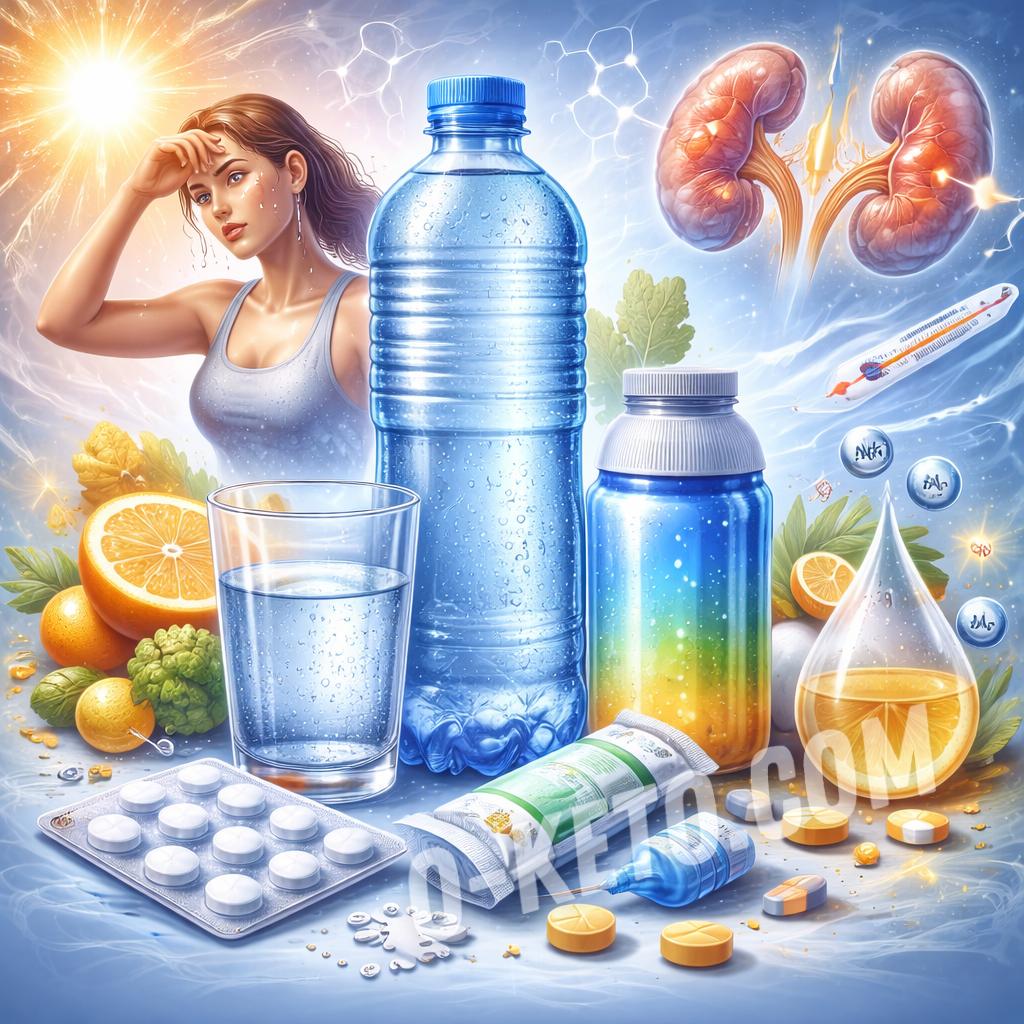
Dehydration — is a condition in which the loss of fluids and electrolytes exceeds their intake, leading to disruption of metabolic processes, enzyme function, the nervous system, and circulation.
Water makes up a significant part of body mass and participates in almost all biochemical reactions, so even moderate dehydration affects well-being and performance.
Causes of Dehydration
Dehydration can develop gradually or acutely, depending on conditions and the state of the body:
- insufficient water and liquid food intake;
- excessive physical exertion with active sweating;
- hot weather and high ambient temperature;
- fever, vomiting, and diarrhea in infectious diseases;
- use of diuretics and certain hormonal medications.
Physiological Role of Water
Water is necessary to maintain a stable internal environment of the body. It performs the following functions:
- participation in the transport of nutrients and oxygen;
- removal of metabolic waste and toxins;
- regulation of body temperature;
- ensuring normal blood viscosity;
- supporting the structure of cells and tissues.
Even a loss of 1–2% of body weight in fluids can reduce concentration and physical endurance.
Symptoms of Dehydration
Manifestations depend on the degree of fluid deficiency and individual characteristics:
- thirst and dryness of mucous membranes;
- general weakness and reduced performance;
- headache and dizziness;
- darkening of urine and decrease in its volume;
- reduced skin elasticity.
In pronounced dehydration, tachycardia, confusion, and muscle cramps may occur.
Consequences of Dehydration
Prolonged fluid deficiency leads to systemic disorders:
- worsening kidney function and risk of stone formation;
- decreased blood pressure and circulating blood volume;
- disruption of thermoregulation;
- dysfunction of the central nervous system;
- increased load on the cardiovascular system.
Role of Electrolytes
Dehydration almost always accompanies the loss of electrolytes, primarily sodium, potassium, and magnesium. It is the imbalance of electrolytes that often causes weakness, arrhythmias, and cramps. Therefore, during intense fluid loss, it is important to replenish not only water but also mineral salts.
Prevention and Recovery
Maintaining fluid balance requires a systematic approach:
- regular drinking throughout the day, not just when thirsty;
- consideration of climate, physical activity, and body weight;
- use of mineral water or electrolyte solutions during sweating;
- limiting alcohol and excess caffeine;
- monitoring the color and volume of urine as a simple indicator of hydration.
In mild dehydration, gradual increase in fluid intake is sufficient, while severe cases require medical assistance and intravenous replenishment.
Conclusion
Dehydration — is not just a feeling of thirst, but a condition that can disrupt the functioning of all body systems. Regular and adequate intake of water and electrolytes is a fundamental condition for health, resilience to stress, and normal metabolism.
If you have any questions о термине "Dehydration", you can ask them to our bot.
List of videos from YouTube by request "Dehydration":


