


Muscle cramps
Muscle cramps are often linked not only to overworked muscles, but also to fluid-electrolyte imbalance, poor recovery, and possible magnesium deficiency.



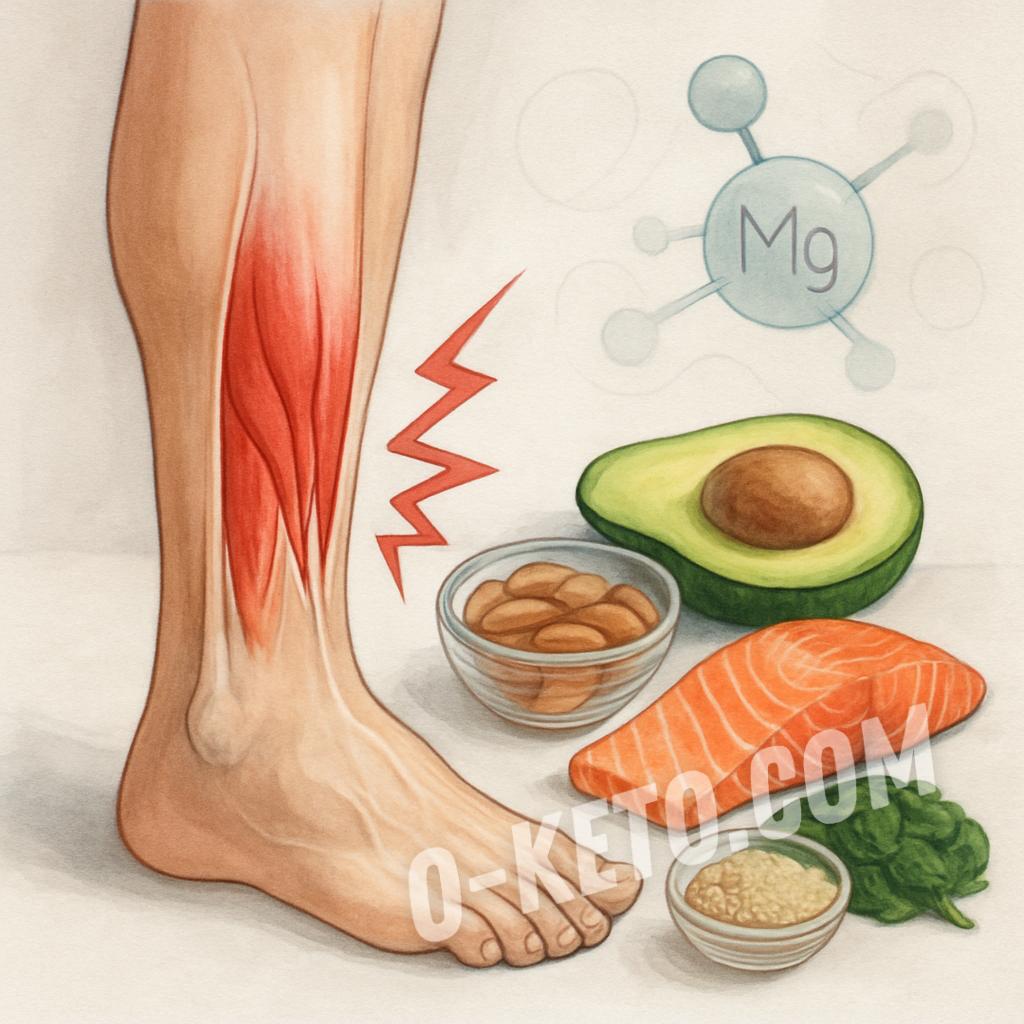
Cramps are sudden, involuntary muscle contractions that can be brief and infrequent and can significantly interfere with sleep, physical activity, and a sense of control over the body. Most often, people experience cramps in the calf muscles, feet, or small muscle groups after exercise, at night, in the heat, due to dehydration, or with increased neuromuscular excitability. Although the cramp itself seems to be a local problem, in practice it often indicates a wider disturbance of water and electrolyte balance, muscle recovery or general overload of the body.
Why do seizures occur?
There are many reasons for seizures. They occur with fluid loss, lack of electrolytes, overheating, intense training, poor recovery, varicose veins, pregnancy, eating disorders and prolonged stress. Sometimes magnesium deficiency plays a role, sometimes sodium, potassium or calcium deficiency, and sometimes a combination of several factors at once. A separate difficulty is that the same muscle can react convulsively to physical fatigue, metabolic imbalance, and prolonged tension in the nervous system.
Therefore, seizures cannot automatically be considered evidence of only one deficiency. But if they are recurring, worse at night, combined with twitching, anxiety, shallow sleep and poor recovery, magnesium deficiency becomes one of the reasonable options that really makes sense to consider.
How does magnesium play into this story?
Magnesium helps regulate neuromuscular transmission and levels of muscle arousal. When it is lacking, the muscle can more easily “break” into a painful contraction, and relaxation after exercise is worse. This does not mean that any episode of cramping is directly treated with magnesium, but this is why magnesium is so often discussed in the context of muscle tension, night cramps and recurring spasms.
If there is a combination of sleep deprivation, chronic stress, excessive sweating, exercise without sufficient recovery, or low electrolyte intake, the role of magnesium becomes even more prominent. Under such conditions, the body quickly loses stability, and the muscles react with spasms to factors that were previously tolerated calmly.
Why is magnesium citrate often chosen?
Magnesium citrate is often discussed for seizure proneness. It is well known in practical nutritional support and at the same time helps to take into account the overall electrolyte picture. This form may be especially logical when, along with the cramps, there is a tendency to have hard stools, insufficient hydration, or a general feeling that the muscles and intestines lack soft mineral support. However, the dose is usually titrated up gradually rather than suddenly increased because tolerance varies from person to person.
Magnesium alone is not a substitute for proper hydration, adequate sodium, recovery from sports, and adequate sleep. If a person continues to train through severe overwork, drinks little, often overheats, or sharply limits his diet, the supplement will not cover all the causes of cramps.
When seizures require closer evaluation
If cramps become frequent, severe, or accompanied by severe weakness, swelling, sensory disturbances, pain at rest, diuretics, or kidney disease, the cause may go far beyond the usual magnesium deficiency. Seizures require special attention in people with neurological symptoms, severe dehydration, after severe infections or suspected endocrine disorders. In such situations, it is important not only to support magnesium, but also to understand what exactly provokes the muscle to go into spasm.
Practical approach
In practice, what works best is not looking for one miracle pill, but looking at the triad: hydration, electrolytes, recovery. If against this background there are signs of possible magnesium deficiency, a course of magnesium citrate in a reasonable dosage may indeed be an appropriate part of the regimen. But it provides maximum benefit when a person simultaneously equalizes the regime, reduces accumulated overload and monitors the overall mineral balance, and not just one element.
It is especially useful to notice when cramps occur more often: at night, after exercise, in hot weather, after alcohol, or during more severe carbohydrate restriction. Such a simple journal often helps to see that the problem increases precisely when hydration and electrolyte stability drop. In this sense, magnesium works best not as a random supplement, but as part of a more precise strategy built around recurring triggers.
Even if the episodes appear “normal,” it is useful to take recurrent cramps as a signal to take a closer look at water, salt, magnesium, overall load, and depth of recovery. This perspective is often more helpful than trying to look for just one simple symptomatic answer.

If you have any questions about the term "Muscle cramps", you can ask them to AI. Please note, a low-cost OpenAI model is used. It may answer questions about disease treatment with errors!


 1 / 4
1 / 4


 1 / 4
1 / 4 1 / 4
1 / 4

 1 / 4
1 / 4 1 / 4
1 / 4