


Tyrosol
A phenolic alcohol from olive oil and olive products; it should be distinguished from the amino acid tyrosine and understood together with hydroxytyrosol and oil quality.
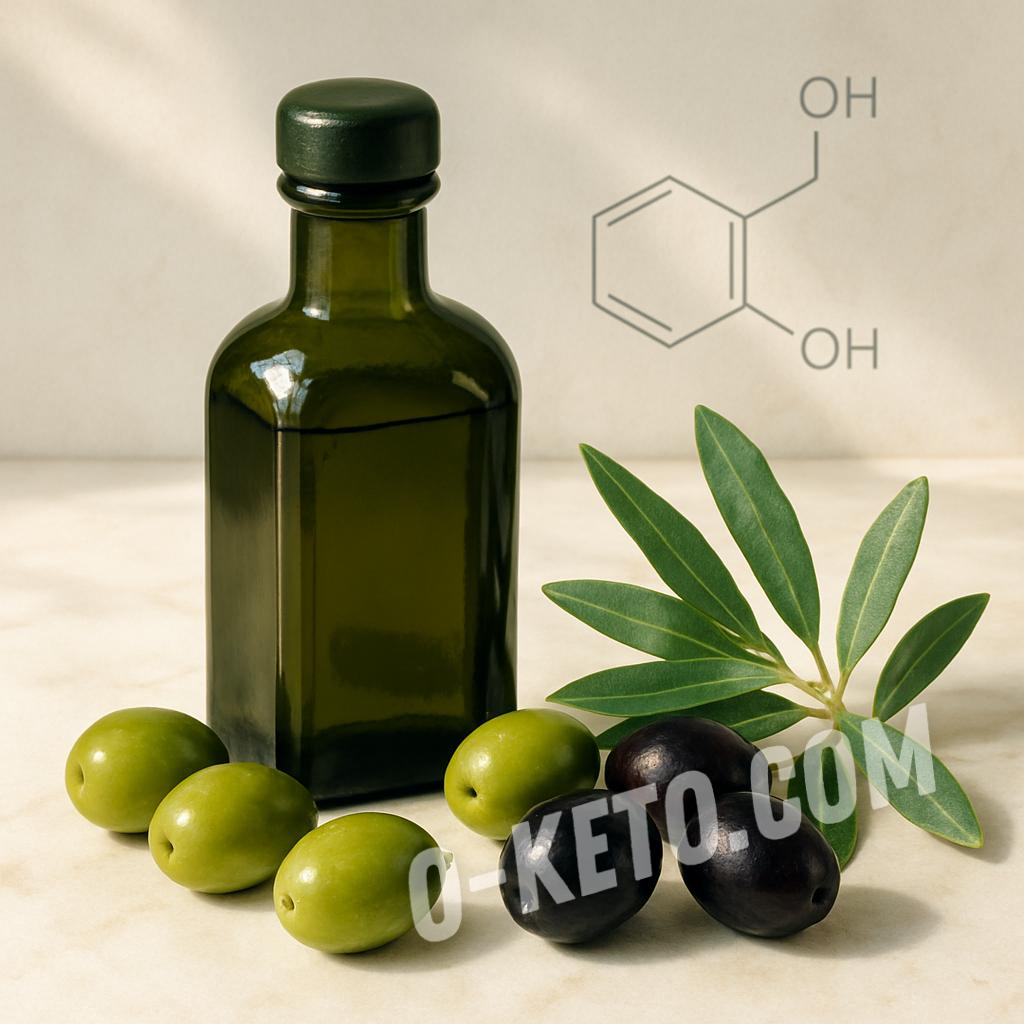
Tyrosol is a phenolic alcohol found in olive oil, olives, and some fermented products. It is often mentioned together with hydroxytyrosol because both are part of the polyphenol profile of olive oil. Tyrosol is not the amino acid tyrosine, is not a direct building block for thyroid hormones, and does not act as a dopamine stimulant. It is a different compound with a different nutritional meaning.
Where tyrosol is found
The main food context for tyrosol is extra virgin olive oil and olives. The amount depends on cultivar, fruit ripeness, pressing technology, storage, oil freshness, and total polyphenol content. A more bitter and peppery oil often contains more phenolic compounds, although taste is not a precise laboratory test. Refined olive oil is usually poorer in polyphenols because processing removes many bioactive compounds.
Tyrosol can also appear in some fermented foods and drinks as a product of microbial metabolism. For nutrition, however, it is more useful to understand the whole source than to chase the isolated molecule: olive oil, olives, Mediterranean-style food, and plant polyphenols. In that environment, tyrosol comes together with monounsaturated fats, tocopherols, squalene, hydroxytyrosol, and other phenolic molecules.
Confusion with tyrosine is especially unhelpful in supplements. Tyrosine is discussed in relation to catecholamine and thyroid hormone synthesis, while tyrosol belongs to the context of olive polyphenols and oxidative stress. If someone is looking for thyroid, attention, dopamine, or training support, tyrosol is not a substitute for tyrosine. If the topic is fat quality and olive oil, the amino acid tyrosine is no longer the main object.
How it differs from hydroxytyrosol
Hydroxytyrosol is usually considered a stronger antioxidant in laboratory conditions because its structure more readily participates in neutralizing oxidative reactions. Tyrosol is milder in direct antioxidant activity, but it is more stable, can be converted into metabolites, and belongs to the overall olive oil profile. In practice, there is little point in opposing these compounds. In real food they work as part of a mixture, not as lone heroes.
Interest in tyrosol is connected with oxidative stress, blood vessels, lipid metabolism, and protection of LDL from oxidation. This should not become a promise that a spoonful of oil treats atherosclerosis or replaces therapy. The effect of olive oil depends on the whole diet: what it replaces, how much sugar and ultra-processed food remain, protein and vegetable intake, body weight, sleep, movement, and medication use.
Keto, LCHF, and olive oil
For keto and LCHF, olive oil is one of the most convenient fat sources. It makes vegetables, fish, meat, eggs, and salads more flavorful without adding sugar. But polyphenols do not cancel the energy density of oil. If a person pours oil without regard to appetite and portions, weight loss may stall. A good low-carbohydrate diet uses olive oil as a quality fat, not as an endless addition.
Polyphenol-rich olive oil should be stored tightly closed in a cool, dark place and not kept for years. Light, oxygen, and heat reduce quality. For moderate-heat cooking, olive oil can be acceptable, but the most aromatic and polyphenol-rich oils are often better used in salads, finished dishes, and sauces, where flavor and bioactive compounds are preserved better.
Tyrosol is not the only marker of valuable oil. Good oils may also contain hydroxytyrosol, oleocanthal, oleacein, tocopherols, squalene, a favorable fatty acid profile, and freshness. Oleocanthal, for example, gives the characteristic throat sting and is studied separately for effects on inflammatory pathways. Judging oil by tyrosol alone is too narrow. It is better to think about the whole product: freshness, flavor, storage, origin, and what fats it replaces in the diet.
Supplements and practical meaning
Tyrosol supplements are less common than olive leaf extracts or hydroxytyrosol products. Most people do not need them. If the goal is vascular support, lipid metabolism, and an anti-inflammatory style of eating, it is more important to choose good oil, eat fish, greens, vegetables, enough protein, control glucose, and avoid smoking. One capsule cannot replace that system.
In practice, tyrosol is a reminder of fat quality. Dietary fat is not only calories and macronutrient ratios; it can also carry bioactive compounds. Extra virgin olive oil, when tolerated, can be a strong part of low-carbohydrate cooking. Its value appears in meals, not in magical expectations from one phenolic alcohol.
If olive oil causes nausea, heaviness, or worsens reflux, the amount and form should be adjusted: smaller portions, better distribution across dishes, a different oil variety, or adding it to finished food rather than taking a large fat bolus. A quality fat should help the diet, not become an endurance test. When tolerated well, tyrosol and neighboring phenols make the oil more interesting, but the foundation of benefit remains the whole dietary system.
If you have any questions about the term "Tyrosol", you can ask them to AI. Please note, a low-cost OpenAI model is used. It may answer questions about disease treatment with errors!


 1 / 4
1 / 4

 1 / 4
1 / 4

 1 / 4
1 / 4
 1 / 4
1 / 4