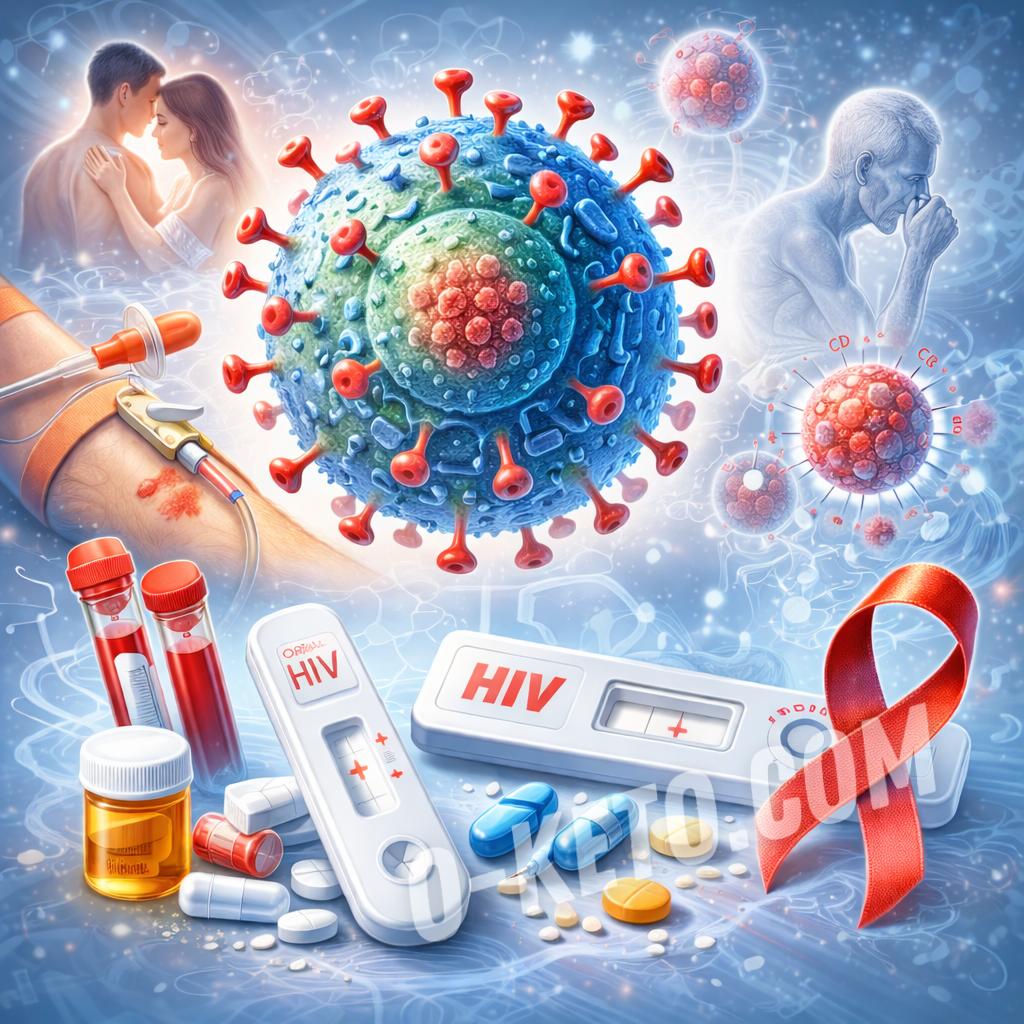
The human immunodeficiency virus (HIV) is a retrovirus that attacks the immune system’s cells, primarily CD4 lymphocytes. The gradual decrease in their numbers leads to a weakening of the immune response and a loss of the ability to effectively defend against infections and tumor processes.
Without treatment, HIV infection has a prolonged, chronic course and can lead to the development of acquired immunodeficiency syndrome.
Modes of Transmission and Infection Characteristics
HIV is transmitted only when infected biological fluids enter the bloodstream or mucous membranes directly:
unprotected sexual contacts;
sharing needles, syringes, and other injection tools;
transmission from mother to child during pregnancy, childbirth, or breastfeeding;
transfusion of infected blood or its components.
The virus is not transmitted through casual contacts, handshakes, kisses, dishes, water, food, or insect bites.
How HIV Affects the Immune System
After entering the body, the virus integrates its genetic material into the DNA of immune cells. This leads to:
a gradual decrease in the number of CD4 lymphocytes;
disruption of the coordination of the immune response;
increased susceptibility to infections that are easily managed in healthy individuals;
an increased risk of oncological diseases.
At early stages, the immune system can still partially compensate for the damage, so the disease can remain asymptomatic for a long time.
Symptoms of HIV Infection
Clinical manifestations depend on the stage of the disease. In the acute phase, usually 2–4 weeks after infection, the following may be observed:
fever;
enlarged lymph nodes;
headache;
general weakness and fatigue;
skin rash.
Then a prolonged asymptomatic period occurs, which can last for years. Without treatment, pronounced immunodeficiency develops over time.
HIV Diagnosis
Modern diagnostics allow for the detection of infection at early stages:
tests for antibodies to HIV;
combined tests for antibodies and antigens;
determination of viral load in the blood.
Early detection is crucial, as timely initiation of therapy prevents damage to the immune system.
Antiretroviral Therapy
HIV treatment is based on lifelong use of antiretroviral medications that:
suppress virus replication;
reduce viral load to an undetectable level;
help maintain immune function;
significantly reduce the risk of virus transmission.
With regular and proper use of medications, the lifespan and quality of life of people with HIV are comparable to those of uninfected individuals.
HIV Prevention
Preventive measures aim to prevent virus transmission:
using barrier contraception;
avoiding sharing injection tools;
regular testing in the presence of risk factors;
applying pre-exposure and post-exposure prophylaxis.
A comprehensive approach effectively reduces the spread of infection.
Conclusion
HIV infection is a manageable chronic disease provided there is timely diagnosis and ongoing treatment.
Modern medicine allows for controlling the virus, preventing the development of severe immunodeficiency, and maintaining a full life. Key roles are played by awareness, prevention, and a responsible attitude towards one’s health.
Only verified information backed by research, physiology, and biochemistry about your health.
Why diseases occur, how to heal with proper nutrition, vitamins, and minerals, what therapeutic doses to take, and which diet is optimal for your health. What tests to take and how to interpret the results.
In the settings, you can also enable knowledge based on GNM and homeopathy.
We use cookies to ensure the best presentation of our website. If you continue to use the site, we will assume that you are satisfied with it.