
Despite numerous advantages, the keto diet can pose certain challenges and side effects, such as electrolyte deficiency, reduced energy levels, and inadequate intake of essential vitamins and minerals.
In addition to keto-specific supplements, attention should also be paid to supplements that are necessary for any individual, regardless of their dietary style.
In this article, we will explore all these supplements, why they are needed, whether they should be taken, and why.
Electrolytes: Maintaining Balance in the Body
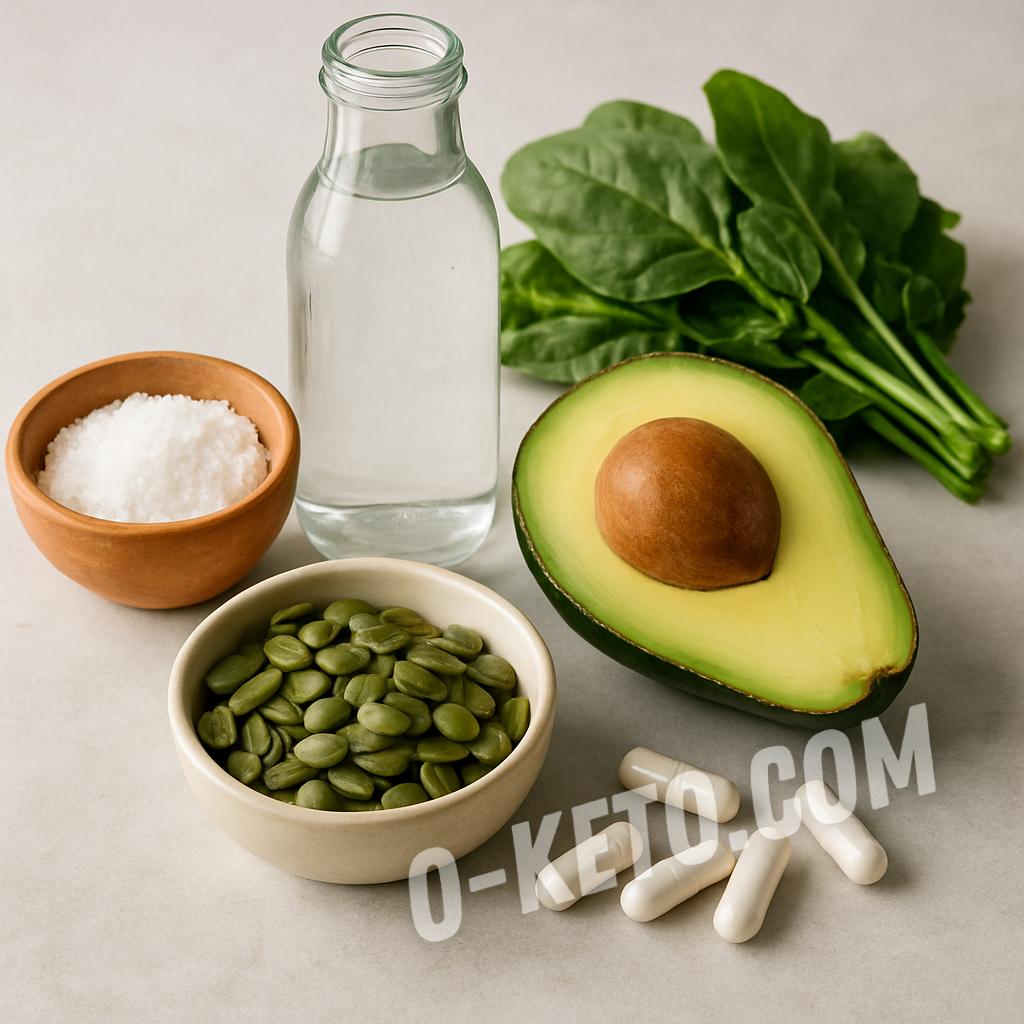
Electrolytes really do matter on a keto diet because lowering carbohydrates usually increases water and sodium loss. That is why headaches, weakness, cramps, palpitations, and “keto flu” feelings are common in the first weeks or during heavy sweating.
But that does not mean everyone needs the same powders or aggressive doses. It makes more sense to first review how much salt, water, greens, fish, nuts, seeds, and other mineral-rich foods are actually present in the diet before jumping straight to supplements.
Sodium. If there are no medical restrictions on salt, keto usually works better when food is salted normally and broths are used when needed. Sodium is often the first electrolyte to drop during adaptation.
Potassium. Potassium matters for muscles and the nervous system, but potassium supplements are not universal and should not be an automatic recommendation for every person. With kidney disease, ACE inhibitors, ARBs, or potassium-sparing diuretics, excess potassium can be dangerous. Food-first sources such as avocado, greens, mushrooms, fish, meat, and vegetables are safer starting points.
Magnesium. Magnesium often falls short on keto when the diet is low in seeds, nuts, greens, and unsweetened cocoa. Citrate, glycinate, and malate are common supplement forms, but the best choice depends on tolerance and the goal: bowel regularity, sleep, muscle tension, or activity level.
The main principle is simple: food and symptoms first, targeted supplementation second. Electrolytes can support keto adaptation, but they do not replace a varied diet and do not work on a “more is always better” rule.
MCT Oil: A Source of Quick Energy Fuel
MCT oil (medium-chain triglyceride oil) is a popular supplement among keto diet followers.
Thanks to its structure, it is rapidly absorbed and converted into ketones, which serve as an instant energy source for the body.
The main advantages of MCT oil are its ability to maintain ketone levels in the blood, which contributes to improved cognitive functions and increased physical endurance.
Additionally, MCT oil can aid in appetite control and maintaining a healthy weight.
Using MCT oil is particularly beneficial in the morning when the body requires quick energy.
MCT oil can be added to coffee, creating “bulletproof” coffee.
“Bulletproof Coffee” is a special drink created by Dave Asprey. It is a mixture of black coffee, unsalted butter (or ghee), and MCT oil.
Another advantage of MCT oil is that 1-2 teaspoons of this oil can be used during fasting, on intermittent fasting. This way, you can add a boost of energy and also eliminate hunger without compromising the work of growth hormone.
Ketone Bodies: Accelerating the Achievement of Ketosis
Ketone bodies allow you to accelerate the process of entering a state of ketosis. They can be introduced into the diet in the form of exogenous ketones, which help the body transition to using fats as an energy source more quickly.
Exogenous ketones are available in various forms, such as salts and esters. They can significantly reduce the time needed to achieve ketosis, especially after dietary disruptions or in the initial phase of adaptation.
The benefits of exogenous ketones include:
- Accelerated transition into a state of ketosis
- Increased energy levels
- Support for mental clarity and concentration
It is important to remember that exogenous ketones should be used in conjunction with a proper keto diet for the best results.
Vitamin D: Supporting Immunity and Bone Health
With vitamin D, it is usually smarter to orient yourself by a 25(OH)D blood test and the full context rather than by trends alone. Its real usefulness depends not only on the capsule itself, but also on magnesium status, gut absorption, liver and kidney function, and overall fat metabolism, so high-dose “just in case” use is not a great default strategy.
Vitamin D deficiency is widespread, especially in regions with limited sunlight, and can lead to weakened immunity, fatigue, and bone problems.
Why is vitamin D needed:
- Bones and teeth. Vitamin D helps the body absorb calcium, which is important for maintaining bone density and preventing osteoporosis.
- Immunity. It plays a key role in supporting the immune system, helping the body fight infections and inflammation.
- Mood and energy. Vitamin D is associated with mood regulation, and its deficiency can contribute to depression and chronic fatigue.
The recommended dose of vitamin D may vary depending on its levels in the body. It is generally recommended to take 1000-4000 IU (international units) per day, but the exact dosage is best determined by blood test results.
To obtain this amount of vitamin D, one would need to consume 500 grams of fish daily or 100 grams of cod liver.
If you do not consume such amounts of seafood, it is better to use supplements from your nearest pharmacy to get vitamin D.
Fish Oil: Omega-3 for Heart and Brain
Fish oil is a source of omega-3 fatty acids, such as EPA and DHA, which are important for heart, brain, and joint health.
On a keto diet, where the focus is on fat consumption, it is important to monitor the ratio of omega-3 to omega-6 fatty acids, and fish oil can help balance this ratio.
Why is fish oil needed:
- Cardiovascular system. Omega-3 fatty acids help lower triglyceride levels in the blood, reduce inflammation, and support heart health.
- Brain function. DHA is important for maintaining cognitive functions, improving memory and concentration.
- Inflammation. Omega-3 has anti-inflammatory properties, which is especially important in chronic inflammatory diseases.
- Blood thinning with oxygen. Fish oil helps thin the blood, reducing the risk of blood clots, and increases energy and performance during workouts.
This is because omega-3 fatty acids reduce platelet aggregation, thus preventing them from sticking together and forming blood clots. Improved blood flow allows for more efficient oxygen delivery to tissues, which is beneficial for the heart and other organs.
Taking fish oil supplements:
It is recommended to take 1000-3000 mg of fish oil per day, depending on the body’s needs and dietary quality.
It is best to choose fish oil with high levels of EPA and DHA to maximize benefits.
Cod Liver Oil: Omega-3, Vitamins A and D in One Product
Cod liver oil is a unique product that combines vitamins A and D, as well as omega-3 fatty acids. This makes it particularly valuable for maintaining health on a keto diet, where it is important to obtain sufficient fats and fat-soluble vitamins.
Why is cod liver oil needed:
- Vision and immunity. Vitamin A, found in cod liver oil, is important for maintaining eye health and the immune system.
- Bone health. The vitamin D in the oil helps maintain strong bones and teeth.
- All points related to fish oil. Since cod liver oil is rich in omega-3, it provides the same benefits as fish oil.
Taking cod liver oil:
It is recommended to take 1-2 teaspoons of cod liver oil per day, providing you with essential vitamins A and D, as well as omega-3 fatty acids.
Pay attention to the quality of the product: it is best to choose oil from reliable sources with minimal contamination.
Apple Cider Vinegar: Supporting Digestion and Regulating Sugar
Apple cider vinegar is a natural remedy that helps improve digestion, supports blood sugar levels, and may aid in weight loss.
It is often used on a keto diet to enhance metabolic efficiency and maintain gut health.
Attention, apple cider vinegar should not be taken if you have a stomach ulcer. You must first heal the ulcer using cabbage juice.
Cabbage contains vitamin U (S-methylmethionine), which helps heal ulcerative lesions of the stomach lining.
Why is apple cider vinegar needed:
- Digestion. Apple cider vinegar stimulates the production of gastric juice, improving the digestion of food and nutrient absorption.
- Blood sugar levels. It helps stabilize blood sugar levels after meals, which is especially important on a keto diet for maintaining stable energy levels.
- Support for weight loss. Apple cider vinegar may help reduce appetite and accelerate metabolism.
Increasing acidity in the stomach. The main benefit of apple cider vinegar lies in reducing the pH level in your stomach. This significantly increases the number of minerals that the body can absorb from food, especially iron, calcium, and magnesium.
One of the signs of a too high pH in the stomach is a reluctance to eat meat products.
If the pH in the stomach is not sufficiently high, the body will not be able to digest meat. Pepsin – an enzyme that breaks down proteins, including those from meat – will not be able to activate. But the worst thing is the inability to obtain minerals from any food.
If a child refuses meat, it may be related to stomach acidity issues. Try adding a small amount of apple cider vinegar to their diet (for example, mixing it with water before meals) and see if their appetite and desire to eat meat improve.
Relief from heartburn. Apple cider vinegar may also help if you have heartburn. Treating heartburn with baking soda is fundamentally the wrong approach. It is necessary to do the opposite – increase acidity in the stomach with apple cider vinegar.
Heartburn often occurs not from excess acid but rather from insufficient stomach acidity.
With low acidity, the sphincter between the stomach and esophagus may not close completely, allowing stomach contents to enter the esophagus and cause burning.
Apple cider vinegar improves stomach acidity, which helps normalize the function of the lower esophageal sphincter, preventing reflux and closing the esophageal sphincter. After that, heartburn goes away.
Taking apple cider vinegar: it is recommended to take 1 tablespoon of apple cider vinegar diluted in a glass of water before meals or in the morning on an empty stomach.
If you are just starting to take apple cider vinegar, it is better to start with a teaspoon.
This will help improve digestion and support blood sugar levels.
It is best to choose organic, unfiltered apple cider vinegar to gain maximum benefits.
Iodine
Iodine is needed for normal thyroid function, and on a low-carb diet intake can quietly fall if seafood, eggs, dairy products, and iodized salt are all limited at the same time.
But iodine is not a supplement that should automatically be pushed upward without context. In thyroid disease, especially autoimmune thyroid conditions, too much iodine can be as problematic as too little. That is why it is better to first review the diet, the use of iodized salt, and the thyroid context before deciding on extra supplementation.
In practice, the safer strategy is simple: regular iodized salt, fish and seafood in the diet, and supplements only when there is a clear reason and no obvious contraindication.
Sources
- Ketogenic Diets: A Position Stand of the International Society of Sports Nutrition — Journal of the International Society of Sports Nutrition.
- The Ketogenic Effect of Medium-Chain Triacylglycerides — Frontiers in Nutrition.
- Medium-Chain Triglycerides and Cardiometabolic Outcomes: A Systematic Review and Meta-Analysis — Advances in Nutrition.
- Magnesium: Health Professional Fact Sheet — Office of Dietary Supplements, National Institutes of Health.
- Vitamin D: Health Professional Fact Sheet — Office of Dietary Supplements, National Institutes of Health.
- Omega-3 Fatty Acids: Health Professional Fact Sheet — Office of Dietary Supplements, National Institutes of Health.
- Potassium: Health Professional Fact Sheet — Office of Dietary Supplements, National Institutes of Health.
- Exogenous Ketone Bodies and the Ketogenic Diet as a Treatment Option: A Review of Clinical and Preclinical Evidence — Frontiers in Nutrition.