




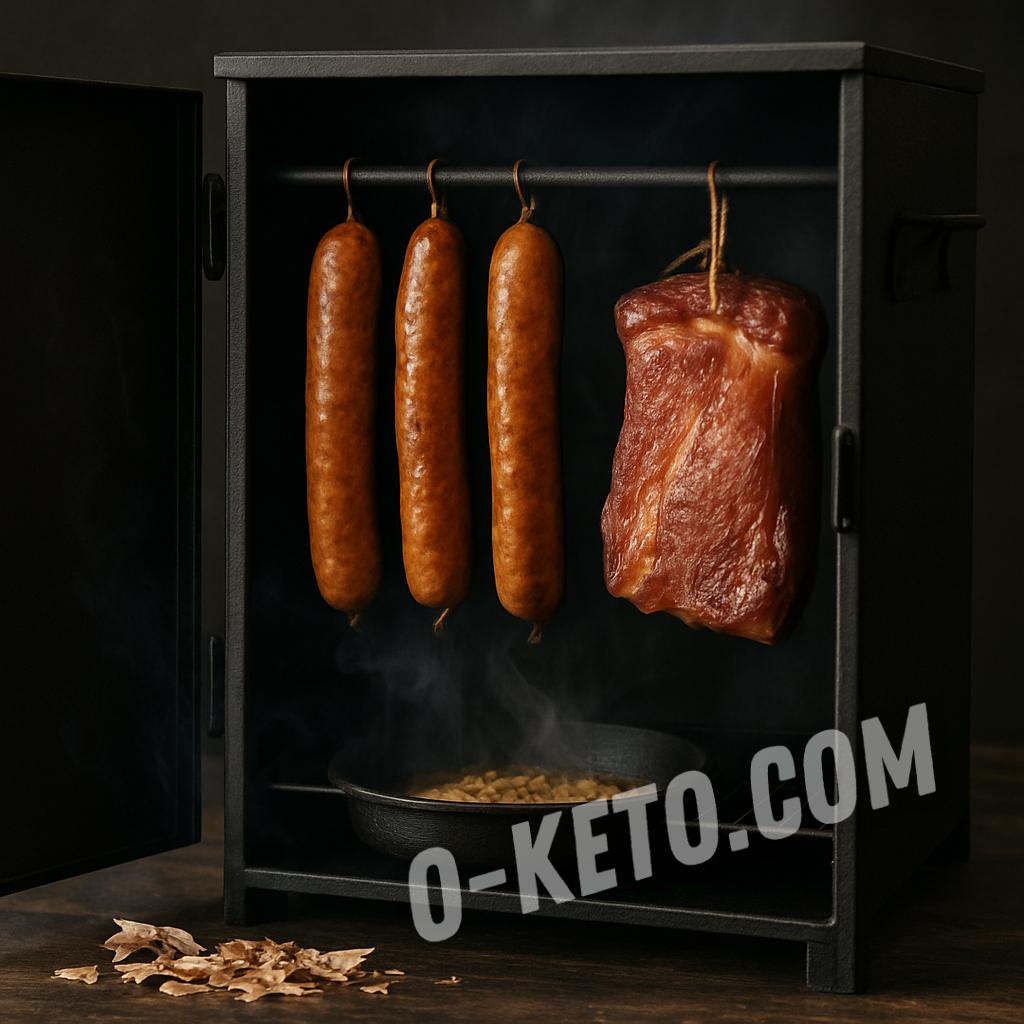

Smoking meat and sausages at home is not just “adding smoke for aroma”. Flavor, color, and safety depend on temperature, surface dryness, airflow, wood-chip quality, distance from the smoke source, and whether the product has already been cooked or only cured.
Good smoking gives a clean aroma, even color, and a dry neat surface. Poor smoking gives bitterness, spots, sour condensation, an overly dark crust, and combustion by-products instead of a pleasant smoked taste.
Hot, warm, and cold smoking
These terms describe not only smoke temperature, but also what happens to protein, fat, moisture, and microbes inside the product. A mode for dry-cured sausage cannot be copied blindly to cooked sausage or ready pork belly.
| Type | Temperature guideline | What it means |
| Hot smoking | above 55°C | Heat treatment occurs: proteins denature and collagen partly cooks |
| Warm smoking | about 30-40°C | A gentler regime that needs careful time control |
| Cold smoking | about 19-25°C | The product is not cooked; it slowly dries and absorbs smoke |
For home use, the clearest approach is to smoke a product that has already been properly salted and prepared. For cooked sausages, smoking is often combined with browning or used briefly for aroma after the sausage is cooked.
Why the surface must be dry
A wet surface colors poorly and collects condensation. This can cause spots, pale patches, uneven casing color, and off-flavors. Before smoking, meat or sausage should be dry to the touch, and links should not touch each other.
If the smoker cannot dry the product gently at a low temperature, dry it separately: uncovered in the refrigerator, in a dehydrator on a gentle setting, or in an oven with minimal heat and airflow.
Wood chips, smoke, and airflow
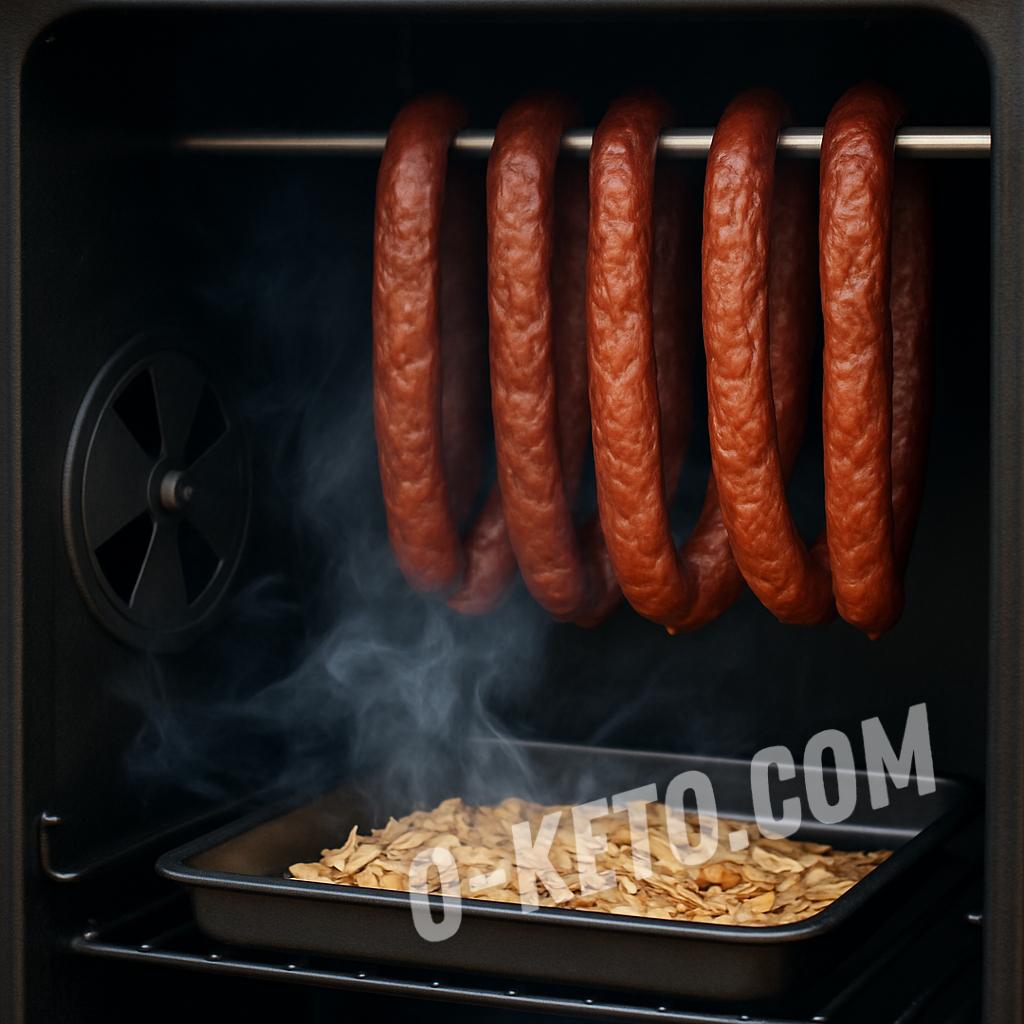
Airflow is especially important in a home smoker. Smoke should pass through the chamber instead of sitting inside as a wet cloud. With poor draft, moisture mixes with smoke, condenses on the walls and ceiling, then drips onto the food.
Use moderately dry chips, sawdust, or briquettes from hardwood. Softwood usually gives dark color and bitterness, especially in cold smoking. Juniper, bay leaf, rosemary, mint, or sage can be added in very small amounts for aroma, but they should not become the main smoke source.
| Parameter | Good guideline | What goes wrong |
| Wood chips | moderately dry, clean, not moldy | wet chips create condensation and stale flavor |
| Smoke | thin, steady, without open flame | heavy smoke makes the surface dark and harsh |
| Airflow | air inlet and top vent are open enough | stagnant smoke creates moisture and sour smell |
| Distance | preferably at least 10-15 cm from smoke source | too much direct heat dries and overheats the product |
Why soaking chips is a bad idea
In a home smoker, wet chips often cause more problems than benefits. Industrial equipment moves air differently, but in a small domestic chamber wet chips easily create excess condensation. That moisture can ruin color and taste.
If chips turn into embers, replace them instead of pouring water on them. Open flame and overheated wood increase bitterness, harsh smell, and unwanted combustion products.
How to smoke meat and sausages at home
There is no single regime for all products: whole meat, cooked sausage, cervelat, frankfurters, and dry-cured products need different preparation. The control sequence, however, is similar.
- salt and prepare the product according to the recipe;
- dry the surface before smoking;
- hang pieces or links freely, preferably vertically;
- keep adjustable air inlet and smoke outlet open;
- let chips smolder, not burn with flame;
- do not keep a water bowl in the chamber all the time; add moisture near the end only if needed;
- cool the finished product and let the flavor stabilize in the refrigerator.
A ready cooked meat delicacy may need only 30-40 minutes of smoking for aroma. A raw product needs the full technology: salting, resting, drying, heating or drying, temperature control, and cooling.
Short smoking of already cooked sous vide preps
At home, a very practical pattern is to cook meat, fish, or sausages safely through sous vide first and use smoking only as a short aromatic finish. In that setup, smoke is not there to cook the product again, but to add an outer fire note, a little color, and a more interesting smell. This helps avoid drying and reduces the risk that the protein inside will toughen from excess heat.
If there is no separate smoker, a semi-hot finish is sometimes done even in a heavy pot or another closed vessel with a rack and wood chips, but the principle stays the same: the food should not sit in smoke for too long and should not be recooked into dryness. For already finished sous vide preparations, a short clean aroma usually matters more than a long heavy smoke exposure.
Common smoking mistakes
Most smoking defects are visible on the surface: the color is too pale, too dark, spotted, sticky, or smells wrong. The cause is usually the smoker regime, not the recipe itself.
| Problem | Cause | Fix |
| Pale color | weak smoke, wet surface, too little time | dry the product and keep thin steady smoke |
| Very dark crust | heavy smoke, softwood, overheating, or smoking too long | reduce smoke intensity and use hardwood chips |
| Spots and pale patches | links touched, surface was wet, chamber was too humid | hang freely, dry better, improve airflow |
| Bitterness | open flame, resinous wood, dirty or damp chips | prevent chip burning and replace bad wood |
| Drops on the product | condensation from wet chips or poor draft | do not soak chips, open the vent, improve airflow |
| Drying out | too close to heat or too long in the smoker | increase distance, shorten time, add moisture near the end if needed |
Short checklist
Before smoking, check a few things. They matter more than trying to compensate with extra smoke.
- do not smoke a wet surface;
- do not soak chips in a home smoker;
- do not close the smoker into a sealed loop without smoke outlet;
- do not let chips burn with open flame;
- do not hang links tightly together;
- do not use moldy, damp, or resinous wood;
- control product temperature when smoking is part of heat treatment.
Home smoking should add aroma and color, not hide mistakes. When the meat is salted, the surface is dry, the smoke is thin, and airflow is stable, the flavor is cleaner and calmer.


