






Starter cultures in dry-cured sausage are not a trendy extra. They are used to control fermentation: to build acidity faster, suppress unwanted microbes, and shape flavor, color, aroma, and texture during drying.
Dry-cured sausage is not cooked in the usual way. Its safety and quality depend on several barriers at once: salt, nitrite, reduced water activity, proper temperature, humidity, clean raw material, and the work of beneficial bacteria.
What starter cultures are
A starter culture is a selected mix of microorganisms added to sausage mince to start predictable fermentation. In sausage making this often includes lactobacilli, pediococci, staphylococci, and other cultures, each with its own role.
| Culture type | What it does | Why it matters |
| Lactic acid bacteria | use carbohydrates and raise acidity | help suppress unwanted microbes faster |
| Flavor and color cultures | take part in protein and fat maturation | build aroma, color, and deeper flavor |
| Antagonistic cultures | interfere with some spoilage and pathogenic bacteria | add another safety barrier |
| Mold cultures | form a surface bloom | support maturation and protect the surface under proper conditions |
A commercial starter usually contains several bacterial types. Always follow the producer’s instructions: different cultures need different temperatures, humidity, dosage, and activation time.
What happens in the first days
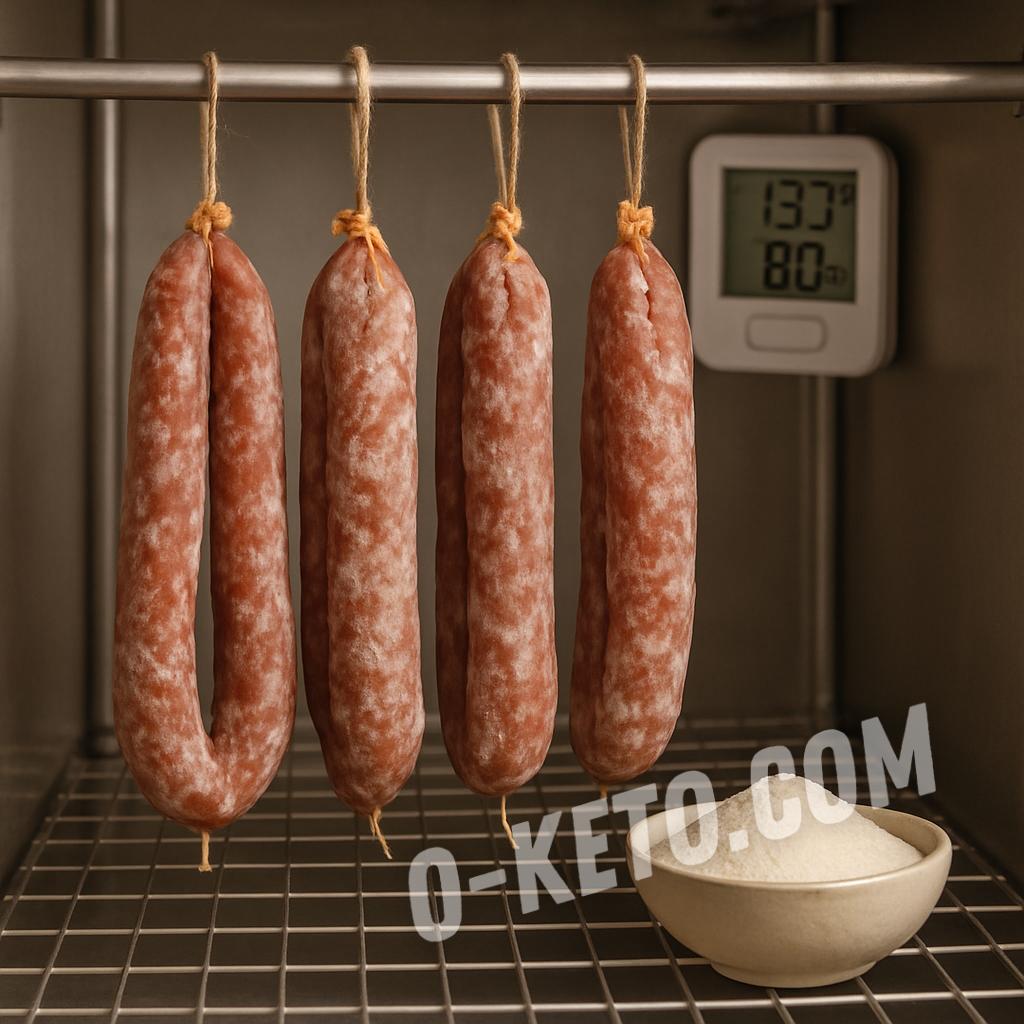
The first days are critical. Beneficial bacteria are given conditions where they can start quickly, while unwanted microbes are held back. Lactic acid cultures use a small amount of carbohydrate, usually glucose or sugar from the recipe, and increase the acidity of the mince.
Maturation also begins: proteins break down into peptides and amino acids, while fats form compounds that later become part of the typical dry-cured sausage aroma. Early smell may be sharp or unusual, but it usually settles by the end of drying.
Why cultures need the right conditions
Starter cultures are a living tool, not a powder that fixes any mistake. Bacteria need suitable temperature, humidity, clean mince, and moisture inside the meat mass.
| Condition | Why it matters | What can go wrong |
| Temperature matching the culture | bacteria work at the intended speed | fermentation may be too slow or unstable |
| High initial humidity | cultures develop better and the surface does not dry too soon | the casing may dry outside while the inside lags behind |
| Cold clean mince | reduces fat smearing and excess microbial load | mince becomes sticky, dries poorly, and can spoil |
| Controlled drying | moisture leaves gradually and evenly | a hard outer crust traps moisture inside |
For many starter cultures, the first stage requires high humidity around 90%, but exact values depend on the specific culture. After fermentation, conditions are shifted toward drying: the goal is no longer maximum bacterial activity, but steady moisture loss.
Why mince must stay cold and granular
Dry-cured sausage does not tolerate overheated, smeared mince. If fat coats meat particles, moisture cannot leave properly and starter cultures have a harder time working. The mince becomes pasty, sticky, slippery, and slow to dry.
A practical rule is to keep the mince below 10-12°C, grind lean and fatty raw materials separately, chill the meat well, and add frozen back fat last. After fat is added, mix only enough to distribute it without smearing.
Are starters always necessary
Dry-cured sausage can be made without starter cultures, but the process is less controlled and depends more on raw material, salt, temperature, humidity, cleanliness, and experience. Starters are especially useful when the result needs to be repeatable, home conditions are imperfect, or the beginning of fermentation needs to be safer and faster.
Starters do not replace nitrite salt, hygiene, proper drying, or weight-loss control. They are one part of the technology. If the mince is overheated, the casing has voids, humidity is wrong, or the chamber is uncontrolled, the starter cannot save the product.
Signs that fermentation is going wrong
Some warning signs are visible early. The earlier a problem is noticed, the less likely you are to waste weeks on a sausage that will not mature properly.
- the mince becomes pasty and sticky before stuffing;
- the sausage surface is slippery, sticky, and refuses to dry;
- a strong putrid smell appears instead of normal fermentation aroma;
- a hard dry crust forms outside while the center stays soft;
- weight barely drops when drying should already be working;
- unwanted mold, slime, or spots appear on the surface.
When signs are doubtful, do not try to “dry it anyway”. Dry-cured sausage requires respect for microbiology: a broken regime can make the product unsafe.
Short checklist
For starter cultures, the real issue is not the name on the package, but the conditions in which they work. Check the basics before making the sausage.
- use the culture according to the manufacturer’s scheme;
- add only the carbohydrate needed for fermentation;
- keep mince cold and avoid smearing fat;
- provide high initial humidity when the culture requires it;
- dry gradually and evenly after fermentation;
- monitor weight loss, not only the appearance of the casing;
- do not expect starters to fix dirty raw material, overheated mince, or a bad chamber.
Starter cultures make dry-cured sausage more predictable. They guide fermentation in the right direction, but the final result still depends on accurate salt, cold mince, clean work, proper humidity, and patient drying.


