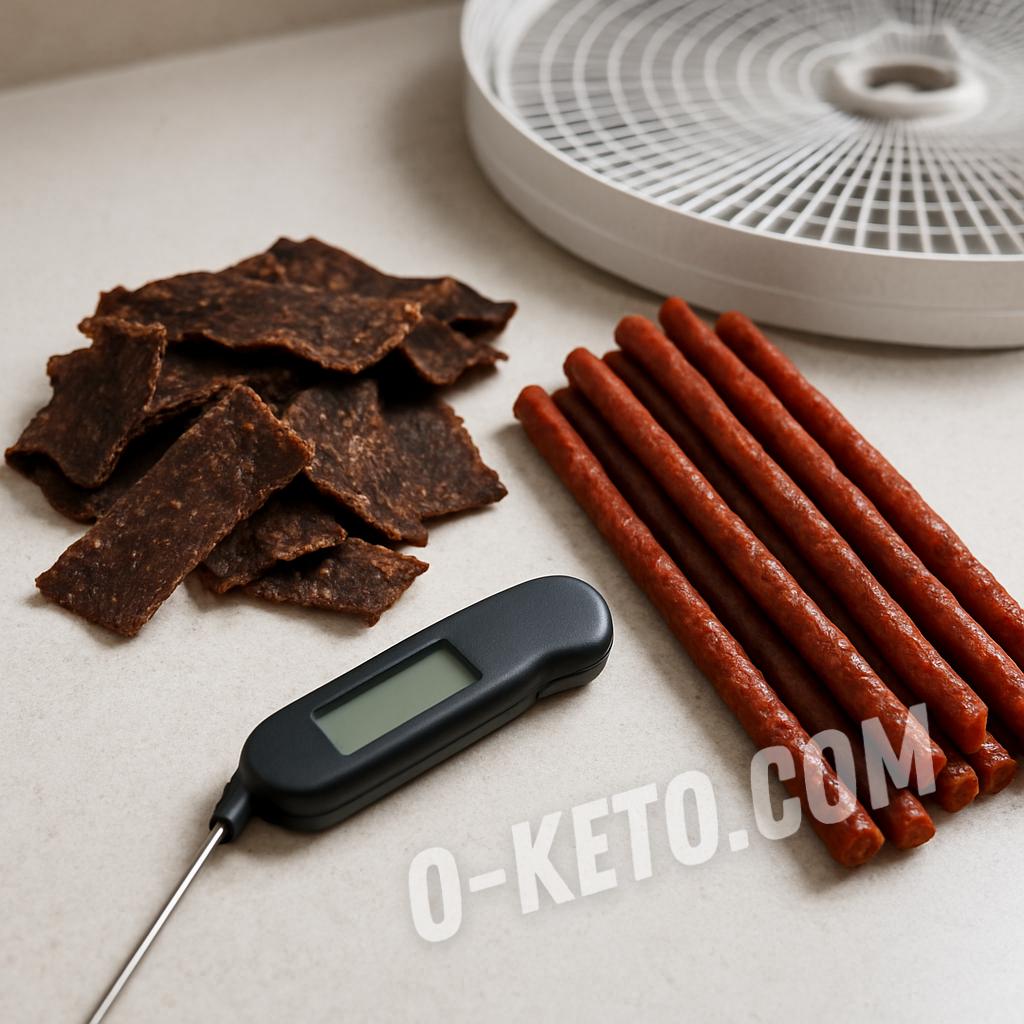

Jerky and thin meat sausage sticks look simple: slice or pipe the meat, season it, dry it, and get a protein snack. With meat, that simplicity is deceptive. Low moisture does slow microbial growth, but drying alone does not guarantee that bacteria or parasites present in the raw meat are gone.
A safer home process depends on five controls: fresh raw material, cold handling, precise curing, enough heat, and proper storage. If one control is missing, a dehydrator can become a place where meat spends a long time in a warm risk zone.
Why Drying Meat Needs Caution
Meat and poultry may contain pathogens before cooking. During low-temperature drying, the surface can dry quickly while the inside heats slowly. Once meat dries, some bacteria become more heat resistant, so late heating is less reliable than early heating.
The main home-drying risks are these:
- salmonella and other bacteria in poultry and meat;
- E. coli in beef and ground meat;
- staphylococcal toxins when cleanliness and temperature are poor;
- botulism risk in poorly controlled cured, dried, and packed meat products;
- parasites, especially in wild game.
This does not mean jerky cannot be made at home. It means the recipe has to be a process, not only a spice list.
Choosing Meat
Choose fresh, lean meat for the dehydrator. Fat dries poorly, oxidizes faster, tastes rancid sooner, and shortens storage life. Chicken breast, turkey breast, lean beef, pork loin, and clean cuts without membranes or excess fat work best.
Practical raw-material rules look like this:
| raw material | choose | avoid |
| poultry | fresh breast or fillet | warm meat, slime, old smell, long bag storage |
| beef | lean muscle or tenderloin | too many membranes, fat, or unclear origin |
| pork | lean loin or clean lean cut | fatty cuts and meat without quality control |
| wild game | only after laboratory testing | home drying without parasite control |
Wild game is not a good choice for casual home drying without testing. Freezing and drying are not reliable guarantees against all parasites.
Why Cold Handling Matters
Meat should stay cold before drying. This matters for safety and texture: cold meat slices more neatly, and cold mince mixes better, holds shape, and pipes cleanly.
A practical workflow usually includes these steps:
- thaw meat only in the refrigerator, not on the counter;
- do not keep purchased meat for several days in a closed bag;
- freeze the meat for 30-40 minutes before slicing or grinding;
- do not leave mince at room temperature longer than needed;
- cure sausage mince in the refrigerator, not on the counter.
If mince becomes warm and greasy, the process is going wrong. It is better to chill the mixture and tools than to continue and get loose, risky sausage sticks.
Nitrite Salt Is Part of a System
Nitrite salt is used in meat delicacies not only for color. It helps reduce dangerous microbial spoilage and stabilizes flavor, especially in products that are cured, dried, smoked, or heated moderately.
But nitrite salt does not replace the rest of the process. It cannot fix old meat, dirty tools, warm mince, lack of a thermometer, or poor storage. The dose is calculated by raw-material weight and weighed, not added “just in case”.
For home recipes with nitrite salt, always check the sodium nitrite concentration on the package. A common household mix contains about 0.6%, but other versions exist and their doses are not interchangeable.
The Main Safety Point: Heat
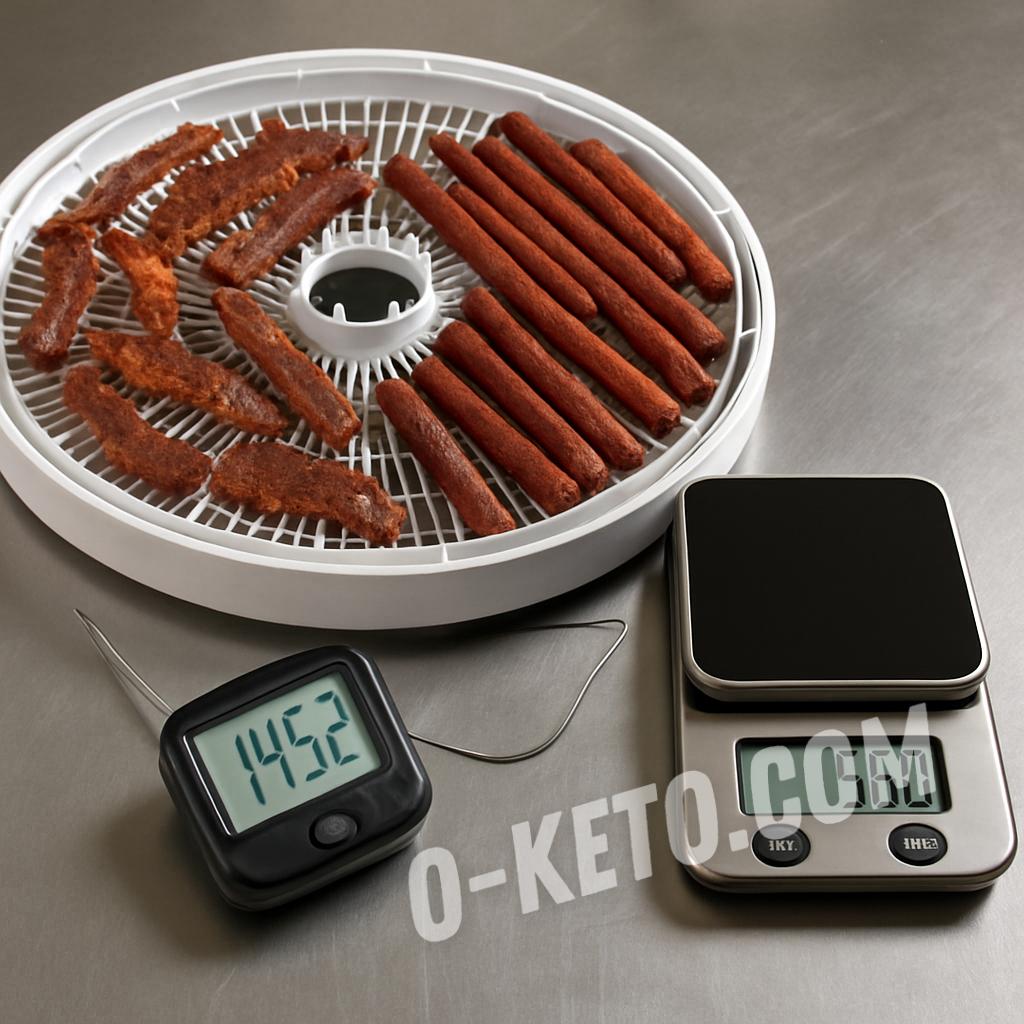
USDA recommends heating meat for homemade jerky to 160 °F, about 71 °C, and poultry to 165 °F, about 74 °C, before dehydration or early in the process. The reason is simple: warm dry air may not destroy pathogens fast enough, especially once the product has started to dry.
Three home-control options are useful:
| option | how to do it | when it fits |
| high-heat dehydrator | hold 70-75°C for the first 1-2 hours and check internal temperature | when the appliance truly heats the product, not only the air |
| preheating in the oven | after curing, bring meat or sausage sticks to 71°C for meat and 74°C for poultry | when the dehydrator is weak or internal temperature is uncertain |
| brief boiling or blanching | use for foods such as squid when the technique allows it | when a softer, denser texture is desired |
The number on the dehydrator dial is not enough. Air temperature inside the appliance and temperature in the center of the meat strip are different things.
Drying Without Overdrying
After safe heating, the task changes: remove excess moisture without turning the food into a brittle hard crust. Thin cuts dry faster but are easy to overdry. Thicker cuts stay softer but need more time and better heat control.
These rules help keep the result stable:
- slice jerky usually no thicker than 5-6 mm;
- place strips and sausage sticks in one layer with air gaps;
- do not cover trays with dense paper without openings;
- check thin pieces earlier than the recipe time;
- let the finished product cool and equalize moisture after drying.
Finished jerky and sausage sticks should be firm, elastic, and dry on the surface. A sticky wet center, raw smell, slime, or mold spots mean the product should be discarded, not “dried a bit more and eaten”.
Packing and Storage
Drying lowers moisture, but it does not make meat immortal. More fat, more residual moisture, and more oxygen in the package all shorten shelf life. Vacuum sealing, cold storage, and clean packing matter more than a pretty bag.
Safer storage targets are these:
| condition | target | comment |
| room temperature | only briefly and only for well-dried product | not the best main storage method at home |
| refrigerator | up to 1-2 weeks for homemade product | keep sealed and check smell |
| freezer | up to several months | best for storing a batch |
| kraft bag or zip-lock | worse than vacuum | oxygen speeds oxidation and spoilage |
A dry white coating may be salt crystallization, especially on sausage sticks. Slime, fuzzy mold, wet spots, gas in the package, and a bad smell are signs of spoilage, not “maturing”.
Quick Check Before Starting
Before drying meat, run through a short control list. It quickly shows whether the process is ready for safe work:
- the meat is fresh, lean, and thawed in the refrigerator;
- salt, nitrite salt, and spices are weighed on precise scales;
- mince or slices cured in the refrigerator, not on the counter;
- a probe thermometer is available for internal temperature checks;
- the first heating stage or preheating brings the product to a safe temperature;
- strips and sausage sticks sit in one layer with airflow between them;
- the finished product is completely cool before packing.
A dehydrator is useful because it makes protein snacks with a clear ingredient list. But safety starts not with the appliance, but with discipline: clean fresh meat, cold handling, exact salt, heat, drying, and cold storage.