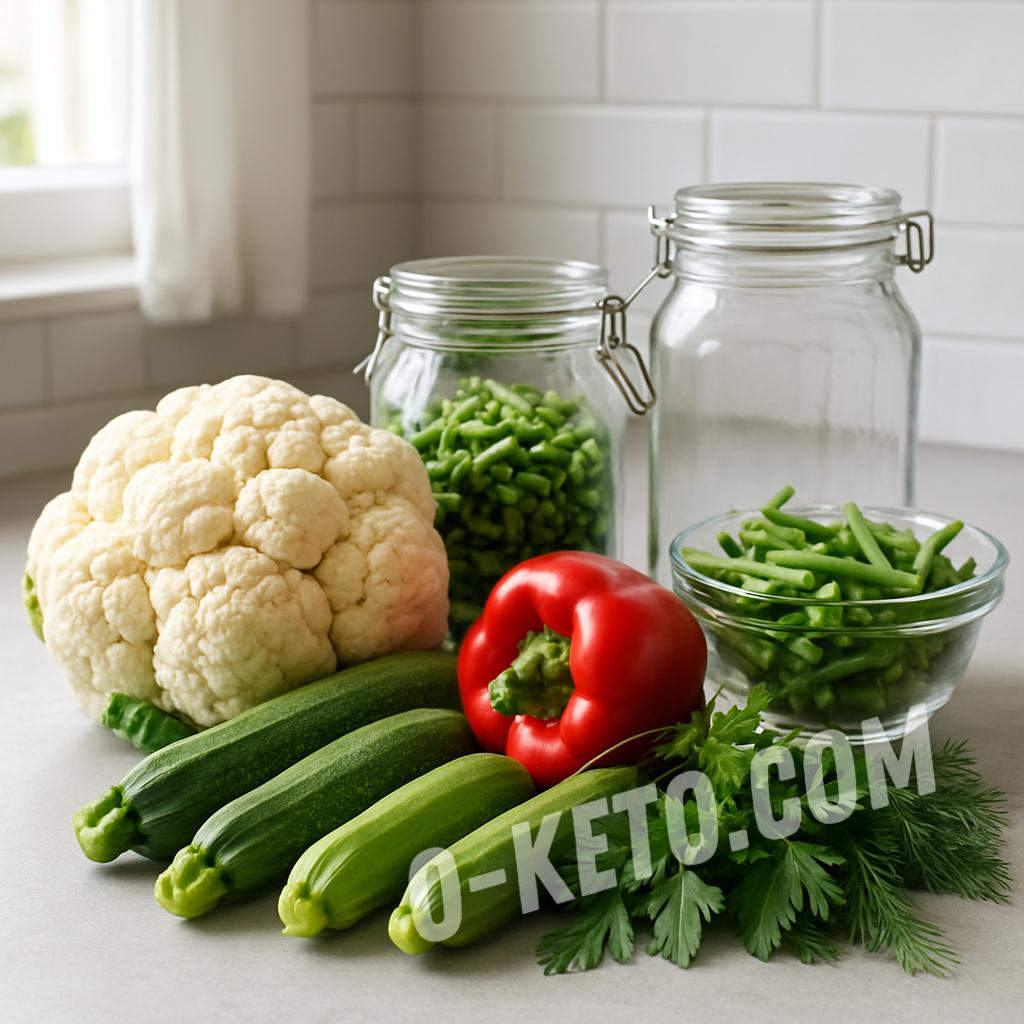

The same vegetables can perform well in a jar but poorly in the freezer, or vice versa, freeze well but lose flavor in a marinade. Therefore, the choice of vegetables for home preservation should be based not on the principle of “what’s left in the kitchen,” but on density, ripeness, moisture content, skin condition, and what exactly you plan to do: can, ferment, or freeze.
For all preservation methods, the basic rule is the same: vegetables must be fresh, clean, free of signs of rot, slime, dark soft spots, and severe mechanical damage. Overripe, watery, and already starting to wilt vegetables hold their structure worse, spoil faster, and yield less predictable results. This is especially noticeable in fermentation and freezing, where texture is very important.
Which vegetables are best for canning
For classic marinades, sterilization, and jar preparations, it is best to choose firm vegetables with an even texture and clear ripeness. Cucumbers should be crisp, small, with thin skin and no voids inside. Tomatoes should be firm, not overripe, and without cracks. Peppers should be meaty but not wilted. Cauliflower and zucchini are also suitable for preparations if they are young, firm, and have not started to soften.
If a vegetable is too juicy, loose, or overripe, it often becomes mushy in the jar. For canning, it is better to take batches of roughly the same size and ripeness: this way they heat, brine, or marinate more evenly. This is especially important for vegetable assortments, as a variety in density often results in uneven texture in a single jar.
Which vegetables are best for fermentation
For fermentation, dense vegetables that can maintain their crunch after several days or weeks in brine are particularly valuable. Good options include white cabbage, cauliflower, carrots, cucumbers, zucchini, radishes, peppers, broccoli, beets, and green beans. It is important that the original vegetable is as fresh as possible: the cleaner and sturdier the raw material, the more reliable the fermentation process.
When choosing vegetables for fermentation, it is important to consider not only the taste but also the texture. For example, overly soft cucumbers or overripe zucchinis quickly lose their firmness. It is better to choose cauliflower and broccoli with dense florets without dark spots, carrots that are firm and juicy, and to use only clean greens and aromatic additives without signs of spoilage. If especially crunchy vegetables are needed, leaves containing tannins, such as grape, horseradish, or currant leaves, can help.
Which vegetables are best suited for freezing
Vegetables with a dense structure and moderate water content freeze best. Among those particularly convenient for home use are green peas, carrots, onions and garlic when sauteed, cauliflower, green beans, spinach, kale, bell peppers, herbs, tomatoes in the form of puree or sauce, and whole cherry tomatoes. For keto and LCHF, cauliflower, beans, peppers, herbs, spinach, and zucchini in small convenient portions are especially practical.
It is important to remember that not all vegetables freeze equally. Some need to be blanched beforehand to preserve color and texture, while others only need to be dried and quickly frozen in a single layer. The less water on the surface and the more carefully the vegetable is prepared, the smaller the ice crystals that damage its cellular structure.
Which vegetables lose texture after freezing
There are vegetables that become too watery after being frozen and are no longer suitable for a typical fresh presentation. First and foremost, these are cucumbers and salad leaves: after thawing, they lose their crunch and release a lot of moisture. Beets are also not the best candidate for simple home freezing, as they hold color and texture worse. Very watery vegetables are generally better frozen not in pieces, but in processed form, for example as puree, a base for soup, or sauce.
If a vegetable is needed specifically for a fresh salad, freezing almost always falls short. However, if it will later be used in soup, stewing, baking, or sauce, some loss of texture becomes less critical. Therefore, choosing vegetables for the freezer should always be done alongside the future use scenario, not just based on seasonality.
How to properly prepare vegetables for freezing
Before freezing, all vegetables should be washed and thoroughly dried. It is best to send only dry raw materials without water on the surface to the freezer; otherwise the pieces will freeze together, and the structure will suffer more. Many vegetables, such as cauliflower, peas, and green beans, should be blanched before freezing, then quickly cooled in cold water and dried again. This helps preserve color, density, and flavor.
The next important step is to freeze them in a single layer. Vegetables are spread out on a tray or baking sheet lined with parchment paper, allowed to freeze separately from each other, and only then transferred to bags or containers. This method is especially useful for pepper cubes, cauliflower florets, carrot slices, and berry additions to vegetable mixes.
How to hold washed and dried vegetables before cooking or freezing
Sometimes vegetables are washed and prepped in advance not for immediate freezing, but simply so they are ready to use over the next one to three days. In that mode broccoli, cauliflower, spinach, and some herbs work especially well. After washing, however, they need not only refrigeration but also moisture control. If damp florets or leaves are packed straight into a container, condensation builds up quickly and the texture becomes less pleasant.
That is why a paper towel inside the container is so helpful for washed and dried vegetables. It catches some of the remaining moisture and protects the product from living in a damp microclimate. Broccoli and cauliflower often keep more calmly this way in a container or a gently sealed pack rather than under strong vacuum right away. The less free water remains around the food, the better it tends to hold until cooking, freezing, or mixing.
How to prepare frozen vegetable mixes at home

It is better to freeze vegetables separately because each has its own preparation, ripening, and blanching times. Once the components are fully frozen, it is convenient to combine them into ready-made homemade mixes. The main guideline here is to ensure similar cooking times. If one vegetable cooks in three minutes while another requires long stewing, the mix will be inconvenient.
For low-carb homemade mixes, combinations like cauliflower, green beans, and bell peppers work well for side dishes; cauliflower, zucchini, and greens for pureed soups; spinach, greens, and sauteed onions for quick sauces or omelets. If the mix is not intended for keto purposes, broader vegetable sets can be created, but on o-keto it makes more sense to focus on vegetables with lower carbohydrate content.
How to store frozen vegetables and mixes
Prepared vegetables and vegetable mixes should be stored in thick zip-lock bags, containers, or vacuum packaging at a temperature of -18 °C and below. It is best to label the date based on the first frozen component in the mix to avoid confusion. For home use, it is practical to keep such preparations for no longer than about 10 months, especially if the packaging is not vacuum-sealed.
Vegetables should not be stored in open bags or on a tray after the initial freezing. Once they are frozen, they need to be quickly packed tightly. This helps protect the flavor, reduces freezer burn, and prevents the freezer from drying out the product.
Short practical conclusion
For canning and fermentation, it is better to choose firm, even, and not overripe vegetables of the same ripeness level. For freezing, structure, drying, blanching where necessary, and pre-freezing in a single layer are especially important. Homemade vegetable mixes should be assembled from separately frozen components with similar cooking times and real winter use in mind.