
Home fermentation of vegetables looks simple: chop the vegetables, add salt, cover them with water, and wait. But the result depends on the details. Those details decide whether you get a crisp, pleasantly sour-salty ferment or a jar with mold, slime, and an unpleasant smell. Safe fermentation is not only about a recipe. It also depends on the produce, salt, temperature, brine, jars, and keeping oxygen away from the vegetables.
Fermented vegetables are a living product. Lactic acid bacteria use carbohydrates from vegetables, produce lactic acid, change the flavor, and help suppress unwanted microorganisms. But the helpful microflora does not win automatically. It needs the right conditions.
What happens during vegetable fermentation
During lactic acid fermentation, bacteria gradually acidify the environment. Lactic acid works as a natural preservative: it lowers pH, slows the growth of many unwanted microorganisms, and gives the product a bright sour flavor that is more stable during storage.
Successful fermentation rests on several basics:
- fresh vegetables without rot or mold;
- the right amount of salt;
- clean water without chlorine, if brine is used;
- vegetables kept below the liquid;
- a temperature at which bacteria can work without the product spoiling;
- enough time for fermentation;
- clean containers, without questionable plastic.
If one of these basics fails, the ferment may become too soft, slimy, over-sour, moldy, or simply unpleasant.
Which vegetables are suitable for fermentation
The quality of the produce is the first safety filter. Do not use vegetables that are already borderline: rotten, overripe, moldy, unpleasant-smelling, or with soft watery spots. In ordinary cooking, people sometimes cut off a damaged piece. For fermentation, that is a bad idea.
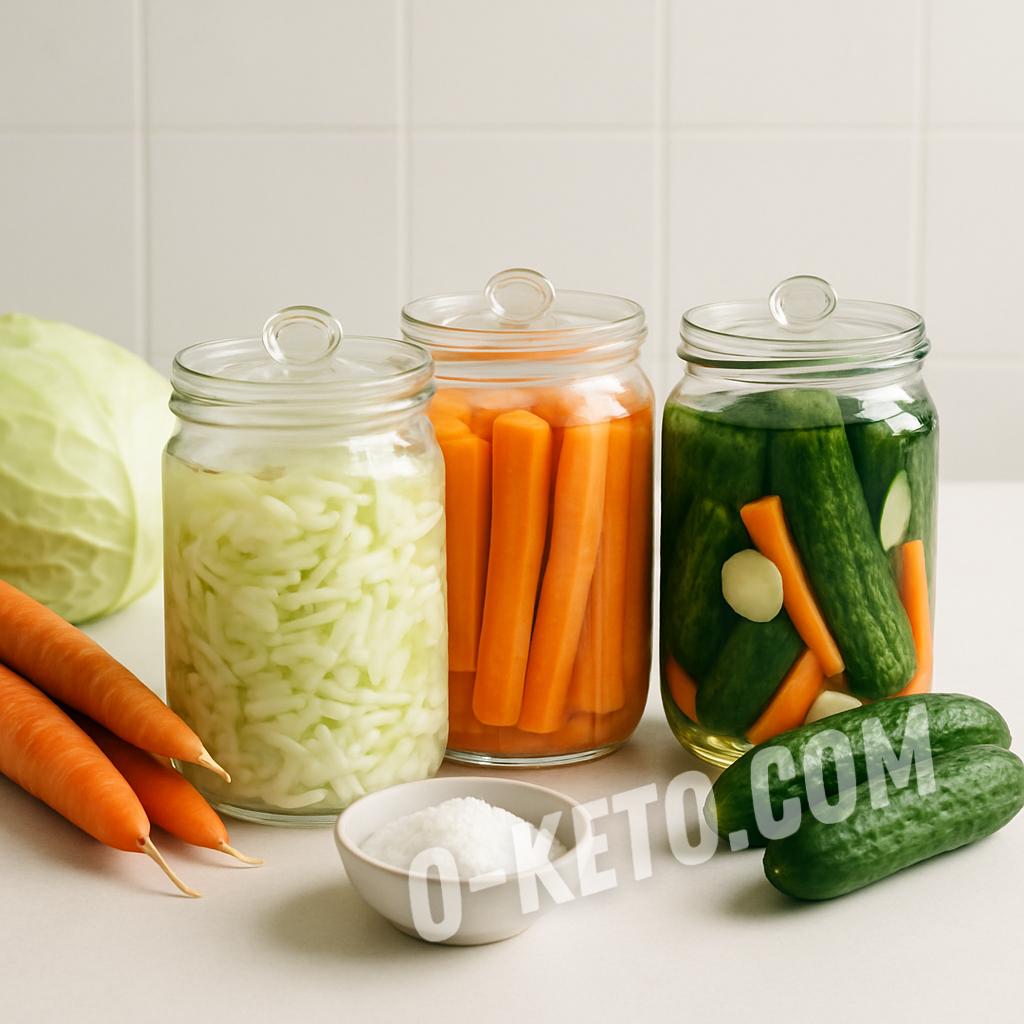
The best vegetables are fresh-looking, firm, and juicy:
- cabbage;
- carrots;
- cucumbers;
- beets;
- radishes;
- peppers;
- cauliflower;
- green tomatoes;
- onion and garlic as additions to the main vegetables.
If vegetables have started to spoil, spoilage microorganisms may multiply before lactic acid bacteria do. In that case, the product may not only taste bad, but also become unsafe.
Water for brine: why chlorine can interfere with fermentation
For vegetables fermented in brine, water matters. Chlorinated tap water can suppress not only unwanted microorganisms, but also the bacteria that fermentation depends on. It is better to use filtered, rested, or otherwise clean water without a strong chlorine smell.
If the water is very hard or has an unpleasant taste, that can also show up in the finished product. Fermentation amplifies the qualities of the ingredients. Bad-tasting water rarely turns into good brine.
Salt: how much you need and why more is not always safer
Salt in fermentation is not only for flavor. It helps draw juice out of vegetables, supports texture, slows unwanted microflora, and gives lactic acid bacteria a more favorable environment. But excess salt does not automatically make the product safer.
If there is too little salt, the risk of mold, kahm yeast, slime, and overly soft texture increases. If there is too much salt, fermentation may slow down, the flavor becomes harsh, and some salt-tolerant unwanted microorganisms may gain an advantage.
Salt is easier to manage by percentage, not by pinches:
| situation | approximate guide | how to understand it |
| vegetables in their own juice | often about 2% of the vegetable weight | suitable for cabbage and similar vegetables that release juice |
| vegetables in brine | often about 2-5% of the water weight | the exact percentage depends on the vegetable, temperature, and desired result |
| cucumbers and watery vegetables | often require more careful brine strength | brine that is too weak increases the risk of softness and surface film |
| very salty brine | not a universal safety guarantee | it can slow the desired fermentation and spoil the flavor |
The best tool is a kitchen scale. If a recipe calls for 2% salt by vegetable weight, 1000 g of vegetables need 20 g of salt. If the brine is 3% by water weight, 1000 g of water need 30 g of salt.
Brine and the absence of oxygen
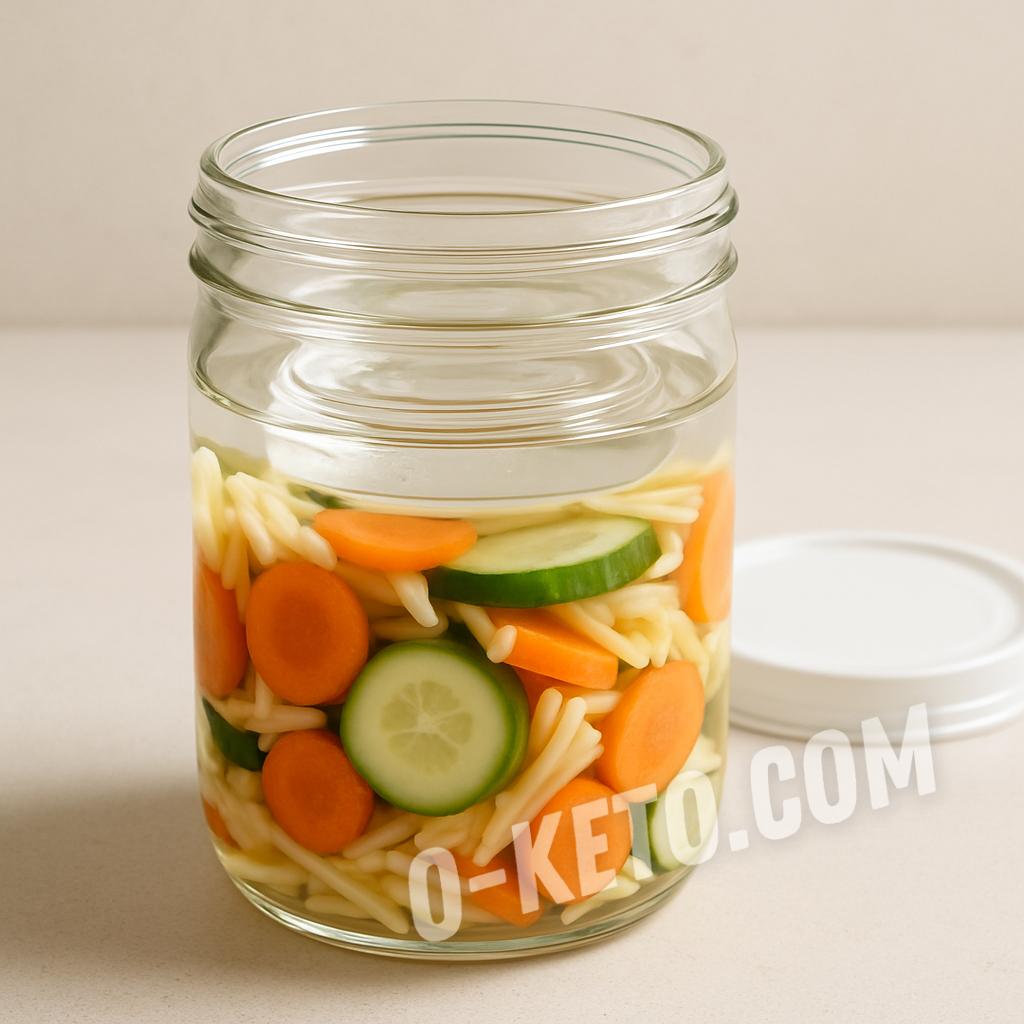
For safe lactic acid fermentation, vegetables must be covered with brine or their own juice. Anything sticking out above the liquid is exposed to oxygen. Surface exposure is where kahm yeast, mold, and other problems most often appear.
To keep vegetables below the liquid, you can use:
- glass fermentation weights;
- special jars with an airlock;
- a clean weight of the right size;
- tight packing without large air pockets;
- daily pressing during the first days if vegetables rise to the surface.
The jar should not be filled too little. If there is a lot of empty space inside, there is more oxygen and a higher risk of surface problems. At the same time, do not fill the jar to the very rim: during active fermentation, brine can rise and overflow.
Temperature: why warmer is not always better
Temperature controls the speed of fermentation. In warmth, the process goes faster. In a cool place, it goes slower. But very high temperature does not make a ferment “more alive.” On the contrary, it can lead to excessive sourness, soft vegetables, yeast activity, and spoilage.
Practical guidelines:
- if the temperature is too low, fermentation may be slow, and the product stays vulnerable for longer;
- in moderate warmth, lactic acid bacteria usually work more steadily;
- if the temperature is too high, the product can over-ferment or spoil quickly;
- temperatures above 30-32 °C can disrupt the process and weaken the desired microflora;
- direct sunlight is best avoided, even if the room is warm.
For many home vegetable ferments, a cool room temperature is more comfortable than heat or direct sun. If the house is too warm, place the jar in a cooler spot, on a stone floor, or in a container with cool water. If it is too cold, choose a slightly warmer place, but avoid overheating.
Fermentation time: when to move the jar to the refrigerator
The timing depends on the vegetable, the cut, salt, temperature, and the flavor you want. The warmer it is, the faster the product becomes sour. The cooler it is, the more time it needs. But “faster” does not always mean “better.” Very fast fermentation often gives sharp acidity and a soft texture.
You can judge readiness by several signs:
- bubbles of carbon dioxide appear;
- the brine tastes more sour;
- vegetables change aroma from raw to sour and spicy;
- the flavor becomes pleasant, not just salty;
- the texture remains acceptable.
When you like the taste, the product is usually moved to the refrigerator. Cold does not stop fermentation completely, but it slows it down strongly. That helps preserve flavor and texture.
Containers and tools
You do not need complicated equipment for home fermentation. But the container material matters. Fermented foods are acidic, so they actively contact the surface of the container.
Better options include:
- glass jars;
- glass bottles with swing-top caps for drinks;
- special ceramic fermentation crocks;
- glass weights;
- clean lids, airlocks, or a suitable weight.
It is better to avoid plastic, especially for long contact with acidic brine. Even food-grade plastic can absorb smells, scratch, and release trace compounds. Metal is also not the best choice for long contact with acidic food unless it is made for that purpose.
White film, mold, slime: what to do
Not every strange appearance means the product is dangerous, but not every problem can be “removed from the top.” With fermentation, you need to look, smell, and evaluate without heroics. If in doubt, it is better to discard the jar than risk your health.
| problem | possible cause | what to do |
| thin white film on the surface | kahm yeast, oxygen, too little salt, high temperature, too much headspace | if smell and taste are normal, remove the film, wipe the jar above the product level with vinegar, and refrigerate |
| white sediment on the bottom | some yeast organisms and normal fermentation sediment | if there is little sediment and the smell is normal, the product is usually usable; if the layer is large and looks unpleasant, do not risk it |
| green, gray, black, pink, or orange mold | oxygen, vegetables above brine, too little salt, high temperature, poor produce | discard the product |
| slime in the ferment | temperature too low, not enough salt, disrupted process | discard the product |
| soft cabbage or soft vegetables | temperature too high or not enough salt | if smell and taste are normal, it can be eaten, but the texture cannot be fixed |
| overly sour cabbage | temperature was too high or fermentation went too long | it can be eaten if there are no signs of spoilage; store in the refrigerator |
Fluffy, colored, raised mold is not a situation where you should “remove the top layer and try it.” Mold on soft vegetables and in brine can spread deeper than you can see.
What kahm is and why it appears
Kahm is a whitish surface film caused by yeasts. It often appears on fermented peppers, beets, cucumbers, and liquid ferments. Kahm is usually not considered dangerous by itself, but it worsens flavor and smell and creates conditions in which the product can spoil.
Kahm appears more often when these conditions are present:
- vegetables are not fully submerged in brine;
- there is a lot of air in the jar;
- the temperature is too high;
- there is not enough salt;
- acidity is still low;
- the container was not cleaned thoroughly enough.
If the film appears early and the product smells normal, you can carefully clean the surface, wipe the jar above the brine level with white vinegar, press the vegetables back under the brine, and move the ferment to the refrigerator. If the smell becomes unpleasant, the flavor is spoiled, or colored spots appear, it is better to discard the product.
How to prevent mistakes
You cannot fully control a living fermentation process. It is affected by the kitchen climate, produce quality, season, temperature, salt, water, and containers. But most problems can be reduced significantly.
Working checklist before fermentation:
- choose fresh vegetables without rot or mold;
- wash jars, lids, weights, and tools;
- use clean water without chlorine;
- weigh salt accurately instead of adding it by eye;
- pack vegetables tightly;
- make sure every piece stays under the brine;
- leave some room for rising brine, but not half a jar of air;
- keep the jar away from direct sun;
- control the temperature during the first days;
- move the jar to the refrigerator when the flavor becomes pleasant.
If a ferment fails, it does not necessarily mean you “cannot do it.” Fermentation is a living process. Mistakes help identify the weak point in your kitchen: too warm, too little salt, too much oxygen, a weak weight, or poor produce.
Who should be careful with fermented foods
Fermented vegetables can be a delicious part of the diet, but they are not suitable for everyone in every situation. They often contain a lot of salt, acids, biogenic amines, and active microbial metabolites. The reaction depends on digestion, blood pressure, kidneys, stomach lining, and individual tolerance.
Caution is needed in these situations:
- flare-up of gastritis, peptic ulcer disease, or severe heartburn;
- kidney disease or strict salt restriction;
- high blood pressure, if dietary salt is not well controlled;
- strong bloating, irritable bowel syndrome, or reactions to acidic foods;
- histamine intolerance or strong reactions to aged foods;
- pregnancy, immune deficiency, or serious chronic disease, when food risks should be discussed with a doctor.
It is better to start with a small portion, not a large bowl of fermented vegetables. Even a good product can cause discomfort if the gut is not used to acid, salt, and fermented fiber.
Conclusion
Safe vegetable fermentation is built not on luck, but on conditions. You need fresh vegetables, the right salt, clean water, vegetables kept under brine, moderate temperature, clean containers, and attention to signs of spoilage.
The most important rules are simple: measure salt, keep vegetables below the liquid, do not overheat the jar, keep it away from direct sun, and do not eat the product if the smell, appearance, or taste raises doubts. Then home fermentation becomes not a lottery, but a clear culinary technique.
Sources
- Safely Fermenting Food at Home: Extension Food Safety Fact Sheet
- Sauerkraut: National Center for Home Food Preservation
- Vegetable Fermentation: Virginia Cooperative Extension
- Preparing Fermented Fruits and Vegetables at Home: University of California Cooperative Extension
- Lactic Acid Fermentations: Applications of Biotechnology to Fermented Foods
- Food Safety, Waste Minimization, and Value Enhancement of Fermented and Lightly Processed Vegetables