


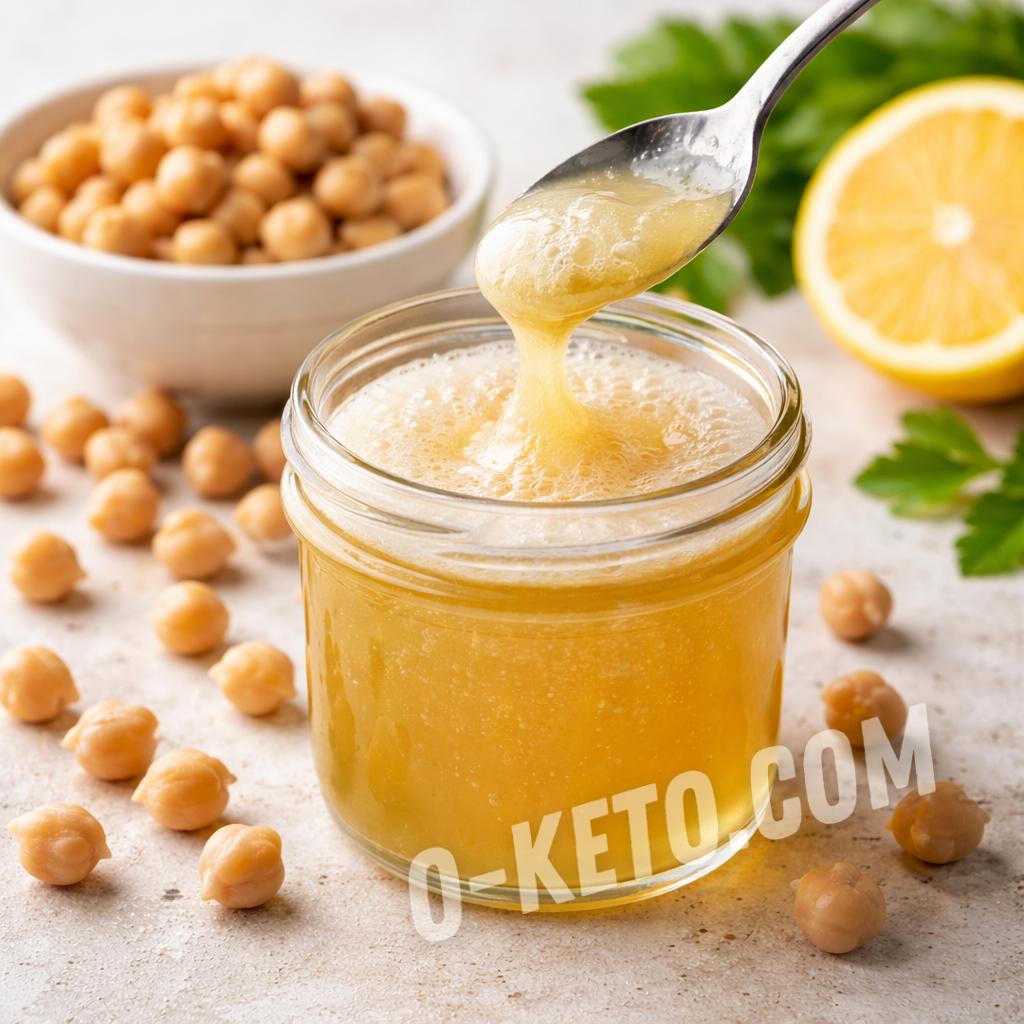

Aquafaba — a functional plant-based ingredient that has gained widespread popularity in modern cooking over the past few years. It is the liquid left after cooking legumes, most commonly chickpeas, and it possesses unique technological properties that allow it to replace eggs in a large number of recipes.
The value of aquafaba lies not only in its versatility but also in its ability to create airy, stable, and elastic structures without the use of eggs. Because of this, it is actively used in desserts, sauces, and baking, expanding the possibilities of plant-based cuisine without compromising texture and flavor.
What is aquafaba and how is it formed
Aquafaba — is a water extract formed during the cooking of legumes. During the thermal processing, soluble proteins, starches, saponins, and other compounds transition into the water, forming an emulsion with high functional activity.
In terms of its physicochemical properties, aquafaba can hold air, stabilize foam, and bind fats. These qualities allow it to be used as a plant-based alternative to egg whites.
There are two main methods for obtaining aquafaba:
- boiling dry chickpeas or beans and then draining the liquid;
- using the liquid from canned legumes without additives.
The most stable and predictable aquafaba is obtained from chickpeas, which explains its popularity in recipes.
Nutritional value and benefits
From a nutritional standpoint, aquafaba is not a concentrated source of protein; however, it contains a small amount of amino acids, minerals, and soluble fiber. Its main value is technological, rather than caloric.
Aquafaba:
- contains no cholesterol;
- contains virtually no fats;
- has low energy value;
- is suitable for people with egg allergies;
- can be used in low-calorie diets.
For vegans, aquafaba allows for the reproduction of familiar textures in dishes that were previously impossible without eggs. For people with egg allergies, it becomes a safe alternative without the risk of an immune reaction.
Use of aquafaba in cooking
Aquafaba is used as a binding, foaming, and emulsifying component. Depending on the task, it can replace either egg whites or whole eggs.
Main areas of use:
- whipped desserts and meringues;
- vegan mayonnaise and sauces;
- baking and dough;
- mousses and creams;
- dressings and emulsions.
On average, 3 tablespoons of aquafaba correspond to one chicken egg, while 2 tablespoons — to one egg white.
Usage recommendations
To achieve stable foam, it is recommended to chill aquafaba and whip it at high speed. Adding an acid, such as lemon juice or vinegar, increases the stability of the structure. For desserts, concentrated aquafaba is often used, which can be slightly reduced to increase density.
It is important to note that the taste of aquafaba is neutral and does not affect the final aroma of the dish, especially after thermal processing.
Aquafaba — is an example of how a by-product can become a full-fledged culinary tool. It expands the boundaries of plant-based cuisine and allows for the creation of complex textures without the use of animal-derived ingredients while maintaining the functionality and stability of dishes.


