


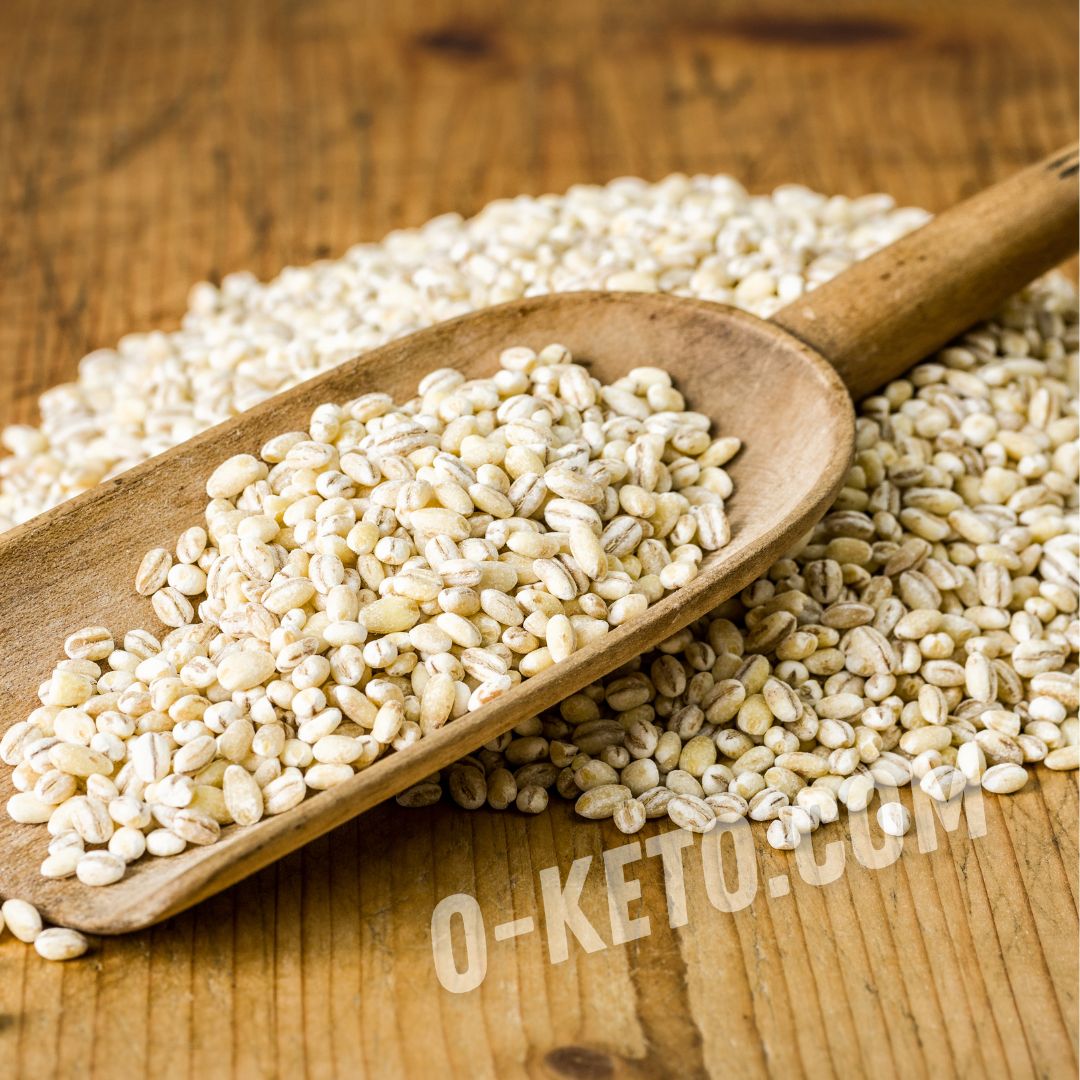

Pearl barley is a grain product made from barley whose outer layers are removed and polished. The name is linked to the smooth pale grains that look like small pearls. In Eastern European cooking it is used in porridge, soups, side dishes, fillings, and army-style meals, but nutritionally it is first of all a starchy grain.
It is important to separate barley as a cereal from pearl barley as a processed grain. Whole barley, barley grits, and pearl barley behave differently: pearl barley is smoother, denser, cooks longer, and keeps a chewy texture. For keto and LCHF it is not a base food, but in a more flexible diet it is worth understanding portions and cooking method.
Nutrition
In 100 g of dry pearl barley there are usually about 350 kcal, around 12 g of protein, 2 g of fat, and about 73 g of carbohydrates. These numbers are for the dry grain. After cooking, weight increases about 3.5-4 times because the grains absorb water. Therefore 100 g of cooked barley and 100 g of dry grain are completely different portions.
The glycemic index of pearl barley is often listed as moderate or low compared with some other grains, but that does not make it low in carbohydrates. In keto, the amount of carbohydrates on the plate matters as much as the index. Even a small bowl of cooked barley can take a large share of the daily limit.
Pearl barley contains fiber, including beta-glucans, plant protein, magnesium, phosphorus, manganese, and B vitamins. These explain its place in an ordinary menu, but they do not remove its starch content.
Keto and LCHF use
For strict keto, pearl barley usually does not fit. A dry portion of 40-50 g turns into a noticeable plate after cooking and still provides many carbohydrates. If the goal is to keep a very low daily limit, barley is easier to replace with less starchy vegetables.
In a more flexible LCHF menu, pearl barley can appear rarely and in a small portion if space for grain is planned consciously. In that case, it is better served not as a large porridge, but as an addition to meat, mushrooms, vegetables, herbs, and butter. The more protein, fat, and non-starchy vegetables the dish contains, the less likely barley becomes the main part of the plate.
How to cook it
Pearl barley is often rinsed and soaked for several hours or overnight. This shortens cooking time and makes the grains more even. After soaking, the water is drained, the grain is rinsed again, and it is cooked in fresh water or broth until tender. For a loose side dish, it should not be overcooked into a sticky mass.
In soups, pearl barley is best cooked separately or added with its long cooking time in mind. In pickle-style soups it pairs with pickled cucumbers, beef, mushrooms, roots, and bay leaf. For a low-carbohydrate version, a very small amount can remain for flavor, while volume comes from cabbage, celery, mushrooms, or cauliflower.
Cooked barley becomes firmer after cooling. Some starch may become more resistant, but this does not turn the grain into a keto food. Cooling can be an additional technique, not permission for a large portion.
How to choose
Good pearl barley is dry and clean, without musty smell, mold, insects, or too much dust. Grains may vary in size: larger grains cook longer and stay chewy, while smaller ones soften faster.
The ingredient list should contain only the grain. “Porridge” mixes with powdered cream, sugar, flavorings, or sweet fruit do not fit keto and usually differ greatly in carbohydrates from plain pearl barley.
Limits
Pearl barley contains gluten because it is made from barley. It is not suitable for celiac condition or strict gluten avoidance. In sensitive people, a large portion may cause heaviness or bloating, especially when the diet is not used to much fiber.
For carbohydrate control, it is better to weigh the dry grain before cooking. Cooked barley absorbs different amounts of water, so measuring by spoonfuls can be misleading. If barley makes the limit hard to keep, replacing it is easier than constantly fighting the portion size.
Storage and substitutes
Dry pearl barley should be stored in a tightly closed container in a dry cool place, away from moisture and strong smells. Cooked grain should be refrigerated in a closed container and used within a few days. Sour smell, slime, or mold are reasons to discard it.
In keto dishes, pearl barley is most often replaced with cauliflower, mushrooms, chopped cabbage, celery, zucchini, shirataki rice, or a small amount of hemp hearts for texture. For soup, mushrooms and celery work well; for a side dish, cauliflower with butter; for a grain-like bite, chopped vegetables fried until still firm.
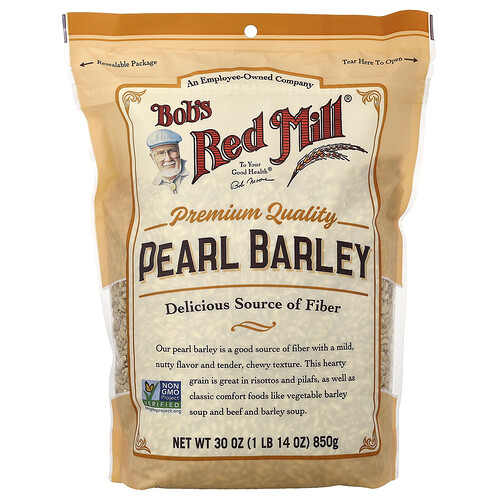
Substitution options in recipes
Bulgur. A similar nutty flavor, but cooks faster and absorbs less water – reduce the liquid by 10%.


