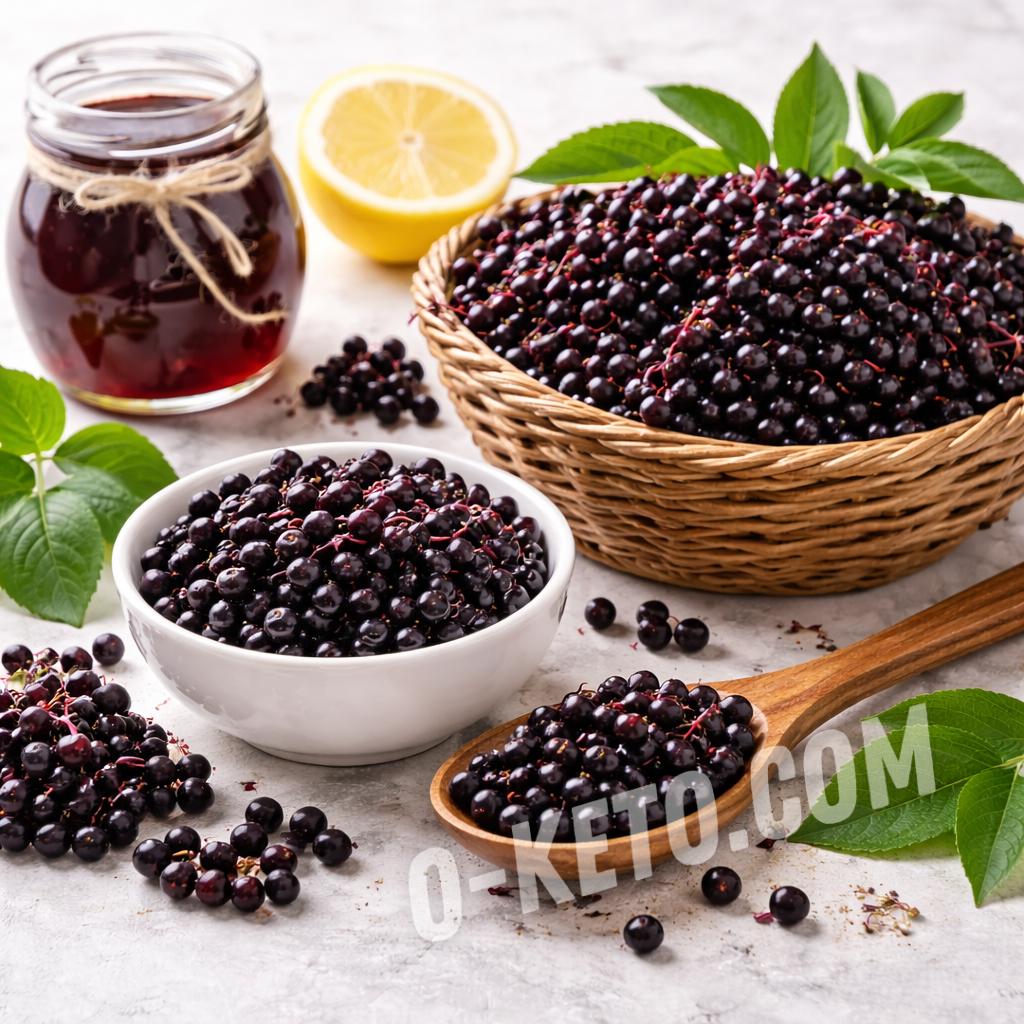

Elderberry — a shrub known for its dark berries and fragrant flowers. It is widely distributed in Europe, Asia, and North America and has been used in cooking and traditional beverages for centuries. Elderberries are distinguished by their rich color and contain a large amount of plant compounds, which makes the plant attractive as a source of natural biologically active substances.
History and Origin
Elderberry belongs to the genus Sambucus and has been known to humans for many centuries. It grows in temperate climates and is often found in forests, on edges, and near populated areas.
In different cultures, elderberry has been used as a food and aromatic plant. Its berries were used to make drinks, syrups, and jams, while the flowers were used to flavor drinks and desserts.
Nutritional Value
Elderberries contain natural sugars, organic acids, fiber, and various plant compounds. They are characterized by their rich color due to the high content of anthocyanins.
| Calories | 70–75 kcal |
| Protein | 0.7 g |
| Fat | 0.5 g |
| Carbohydrates | 16–18 g |
The main part of carbohydrates consists of natural sugars and dietary fibers.
Main Vitamins and Minerals:
- Vitamin C is involved in the antioxidant protection of the body;
- B vitamins are involved in energy metabolism;
- Potassium is involved in regulating water-electrolyte balance;
- Iron is involved in blood formation processes;
- Anthocyanins are involved in protecting cells from oxidative processes.
Health Benefits
Elderberries contain various plant compounds, including polyphenols and anthocyanins. These substances give the berries their dark color and participate in the antioxidant protection of cells.
Additionally, the berries contain dietary fibers that aid in the functioning of the digestive system.
Elderberry in the Diet
Due to their carbohydrate content, elderberries are usually consumed in small amounts or used as a component in drinks and desserts. Most often, the berries are subjected to heat treatment, as they are rarely used raw.
Culinary Uses:
- Making syrups and drinks;
- Jams and preserves;
- Adding to desserts;
- Flavoring drinks;
- Making berry sauces.
Due to their rich color, pronounced aroma, and high content of plant compounds, elderberry remains a popular ingredient in various culinary traditions.