


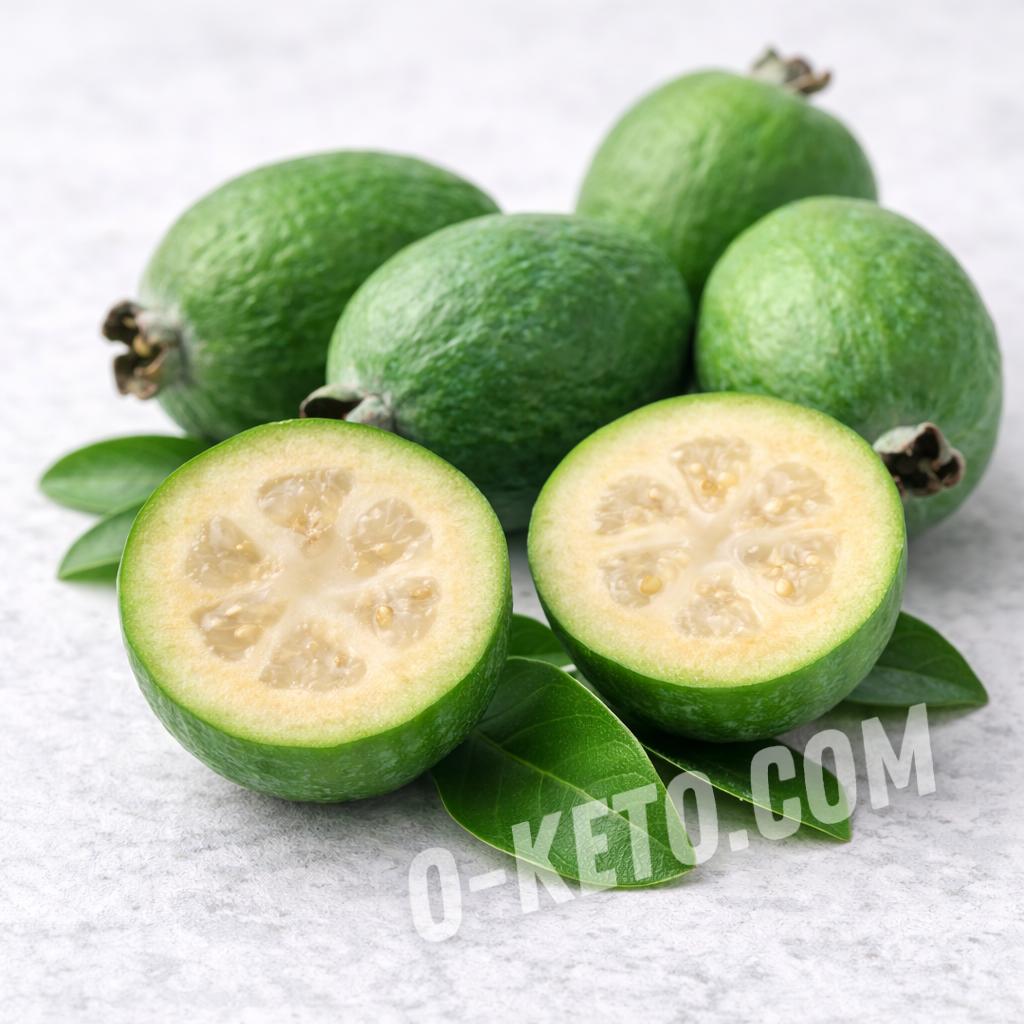

Feijoa — a tropical fruit native to South America, valued for its unusual aroma and refreshing sweet-and-sour taste. Its flesh combines notes of pineapple, strawberry, and kiwi, making the fruit popular both fresh and in desserts and drinks. In addition to its taste qualities, feijoa attracts attention for its biochemical composition and content of beneficial substances.
The fruit contains vitamins, minerals, organic acids, and dietary fiber. Because of this, feijoa is considered a product that can support the immune system and the normal functioning of the digestive tract. However, due to its carbohydrate content, its consumption on low-carbohydrate diets requires moderation.
Nutritional Value
Feijoa contains water, carbohydrates, a small amount of protein, and virtually no fat. The fruit is also rich in fiber and a number of vitamins.
The composition of feijoa includes:
- vitamin C — participates in the immune protection of the body;
- B vitamins — support energy metabolism;
- folic acid — important for cell division processes;
- potassium — involved in regulating water-electrolyte balance;
- magnesium — involved in the functioning of enzyme systems.
Biologically Active Components
Feijoa contains antioxidants, organic acids, and plant polyphenols. These compounds help protect cells from oxidative stress and support normal metabolic processes.
The fruit also contains soluble and insoluble dietary fibers, which promote normal intestinal function and slow down sugar absorption:
- polyphenols;
- organic acids;
- dietary fibers;
- natural sugars.
Feijoa and the Keto Diet
Despite its beneficial composition, feijoa contains a noticeable amount of carbohydrates. In 100 g of fruit, there are about 13–15 g of carbohydrates, so this fruit is not suitable for strict keto diets.
The glycemic index of feijoa is approximately 30, which is considered relatively low. However, the total carbohydrate load can be significant with large portions.
On a low-carbohydrate diet, consumption is only possible in small amounts:
- portion — about 30–50 g;
- better consumed with proteins or fats;
- it is important to consider the overall daily carbohydrate level.
Thus, feijoa is a fragrant fruit with an interesting vitamin-mineral composition and high fiber content. However, on a low-carbohydrate diet, it should be consumed in moderation, taking into account the overall carbohydrate balance in the diet.


