


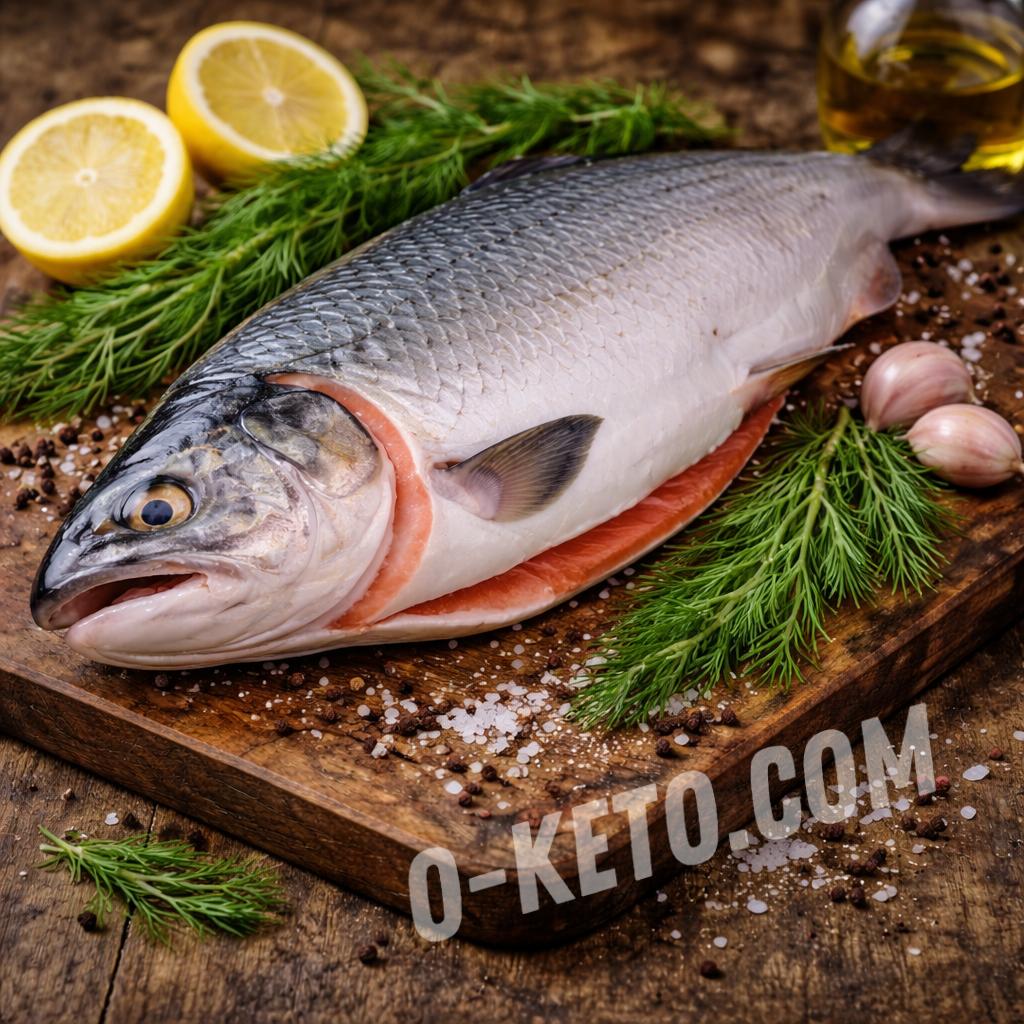

Chum salmon is a Pacific salmon with firm light-pink flesh and a calmer fat content than Atlantic salmon or trout. It lives in the northern Pacific Ocean, is found near the coasts of Russia, Japan, the United States, and Canada, and enters freshwater rivers to spawn. It is sold frozen, chilled, lightly salted, smoked, as steaks, fillets, and roe.
The taste is mild, and the fish is not as oily as fattier salmon species. That makes it easy to dry out, but when cooked correctly it gives firm, clean fish flesh without heaviness. For keto and LCHF, chum salmon is convenient: it has no carbohydrates, plenty of protein, and missing fat can be added with sauce or butter.
Nutritional value
In 100 g of raw chum salmon there are usually about 120–150 kcal, 20–22 g protein, 4–6 g fat, and 0 g carbohydrates. The glycemic index is zero. Exact values depend on season, cut, freezing, and cooking method. Belly pieces are fattier, while tail pieces are drier and denser.
Chum salmon contains EPA and DHA omega-3 fatty acids, vitamin B12, vitamin D, selenium, phosphorus, potassium, and other minerals. In a practical menu, however, it is best treated mainly as a medium-fat protein food. If the dish needs to be very filling, butter, sour cream sauce, avocado, or vegetables cooked with fat can be added.
Is it suitable for keto?
Chum salmon fits keto well if cooked without flour, sugar, breading, sweet marinade, and starchy sauces. It can be baked, pan-seared over moderate heat, steamed, cured, added to salads, omelets, bread-free fish patties, and potato-free soups.
Lightly salted and smoked chum salmon can also fit low-carb eating, but the ingredient list should be checked carefully. Marinades sometimes contain sugar, syrup, dextrose, and flavor enhancers. Ready salted fish may also contain a lot of salt, so it is better paired with unsalted foods.
How to cook it
The main mistake with chum salmon is using too much heat for too long. Fillets are better baked briefly, covered or with sauce, to preserve juiciness. For a pan, moderate heat, a little oil, and short searing work well. If the piece has skin, it can be left on: it helps hold shape and protects the lower side from drying.
Chum salmon works well with lemon, dill, parsley, garlic, butter, starch-free sour cream, cream, sugar-free mustard, and black pepper. For fish patties, the flesh is better not ground too finely: a chopped texture stays juicier. In soup, chum salmon is added near the end so the pieces do not fall apart.
How to choose
Fresh or properly thawed chum salmon has a clean sea smell without ammonia or sour notes. The flesh should be elastic, not sticky, without gray dried edges or excess liquid in the package. Frozen fish should have a thin ice glaze, without a snowy layer or signs of refreezing.
Skinless fillet is convenient but dries faster. Bone-in steaks give a deeper taste in baking and soups. For lightly salted chum salmon, choose an ingredient list of fish, salt, and spices without sugar. Chum salmon roe is a separate product: it is salty, fatty, and used in small portions.
What to pair it with
For keto, cucumber, leafy salads, avocado, eggs, cauliflower, broccoli, zucchini, spinach, mushrooms, cream cheese, sour cream, capers, herbs, and lemon work well. Instead of potatoes or rice, serve salad, cauliflower puree, or braised cabbage.
Limitations
Chum salmon is unsuitable for people with fish allergy. Raw, lightly salted, and cold-smoked fish require especially reliable origin and storage. Pregnant people, children, older adults, and people with weakened body defenses are safer choosing well-cooked fish. When salt is limited, smoked fish and roe need extra caution.
How to store it
Chilled chum salmon is best cooked on the day of purchase or the next day. Thawing is safer in the refrigerator rather than on the counter. After thawing, the fish is blotted with paper towel so it does not stew in excess moisture. Cooked fish is kept covered and eaten quickly; refreezing worsens texture.
What can replace it?
The closest replacements are pink salmon, sockeye, coho, trout, Atlantic salmon, Arctic char, or mackerel. If similar moderate fat content is needed, pink salmon or coho works. If a juicier and fattier fish is wanted, trout, Atlantic salmon, or mackerel are better, but taste and calories will differ.


