


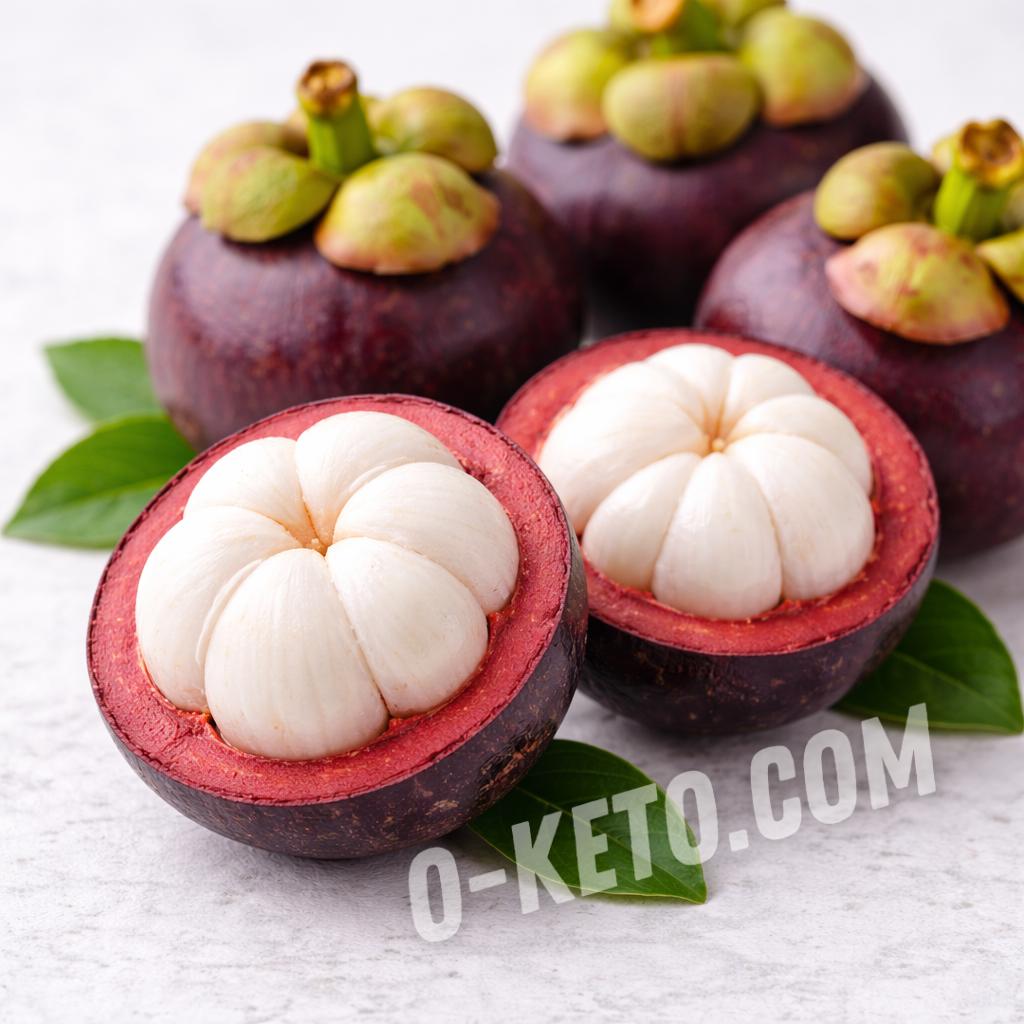

Mangosteen — a tropical fruit often referred to as the “queen of fruits.” It originates from Southeast Asia and is valued for its tender white flesh with a mild sweet-and-sour taste. In addition to its gastronomic qualities, mangosteen attracts attention due to its biochemical composition and high antioxidant content.
The fruit contains vitamins, minerals, and phenolic compounds, including xanthones — substances with pronounced antioxidant activity. Because of this, mangosteen is considered a product that can support the immune system and reduce inflammatory processes. However, due to its notable carbohydrate content, its consumption requires caution in low-carbohydrate diets.
Nutritional Value
The flesh of mangosteen contains water, carbohydrates, and small amounts of proteins and fats. It includes vitamin C, B vitamins, and a number of minerals.
| calories | ≈ 73 kcal |
| proteins | 0.6 g |
| fats | 0.6 g |
| carbohydrates | ≈ 18 g |
The trace elements present in mangosteen include:
- vitamin C — involved in immune system function;
- vitamin B6 — necessary for amino acid metabolism;
- potassium — involved in regulating water-electrolyte balance;
- magnesium — involved in energy metabolism;
- copper — participates in enzymatic processes.
Biologically Active Compounds
One of the features of mangosteen is the presence of xanthones — a group of polyphenolic compounds. These substances have pronounced antioxidant activity and may participate in protecting cells from oxidative stress.
The fruit also contains:
- phenolic compounds;
- organic acids;
- dietary fibers;
- natural sugars.
Fiber contributes to the normal functioning of the digestive system and helps regulate the absorption rate of carbohydrates.
Mangosteen and the Keto Diet
Despite its beneficial composition, mangosteen contains a relatively high amount of carbohydrates. In 100 g of flesh, there are about 18 g of carbohydrates, making this fruit unsuitable for a strict keto diet.
The glycemic index of mangosteen is around 50, which is considered moderate. This means that the fruit can raise blood glucose levels, especially when consumed in large portions.
On a low-carbohydrate diet, its consumption is possible only in small amounts. Small portions allow you to taste the fruit without creating a significant carbohydrate load:
- small portion — up to 30–50 g;
- better consumed with proteins or fats;
- it is important to consider the total daily carbohydrate intake.
Thus, mangosteen is an interesting tropical fruit with a rich composition of antioxidants and vitamins. However, due to its carbohydrate content, its consumption in a keto diet should be limited.


