


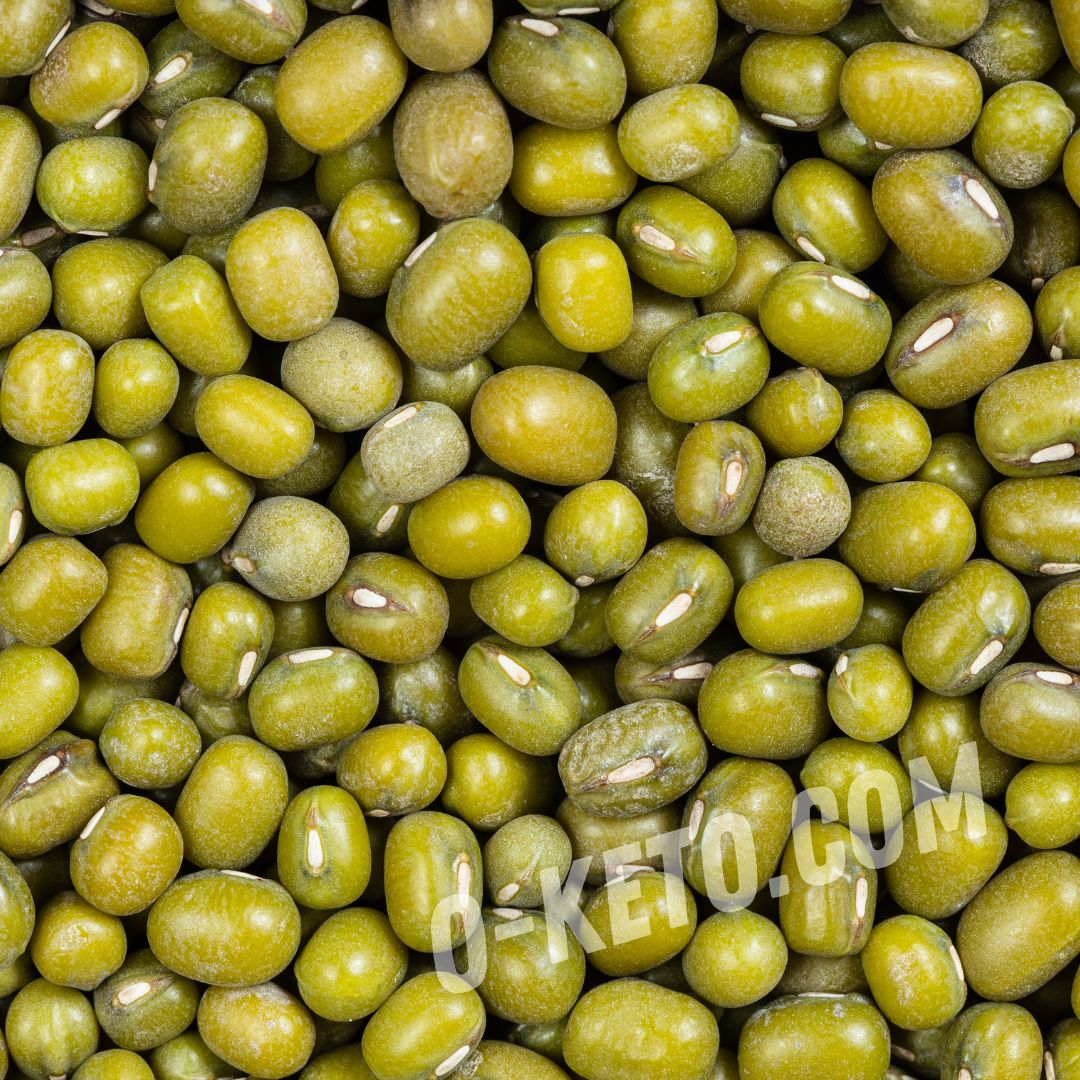

Mung beans, also called moong, are small green legumes used in Indian, Chinese, Korean, Uzbek and other Asian cuisines. They are used for soups, porridges, dal, fillings, side dishes, starch noodles and sprouts. For keto and LCHF, they are a mixed product: they provide protein and fiber, but cooked mung beans still contain a noticeable amount of carbohydrates.
Mung beans contain plant protein, fiber, B vitamins including folate, as well as magnesium, iron and potassium. These facts matter for understanding the food, but they do not automatically make mung beans low-carb. In a keto context, the form matters: dry beans, cooked mung, sprouts and starch noodles behave very differently.
Nutrition
In 100 g of cooked mung beans, common values are about 7 g of protein, 0.4 g of fat and around 20 g of carbohydrates. The glycemic index is often listed around 30, lower than many starchy side dishes. But for keto, the total amount of carbohydrates in the serving matters as much as the index.
A 100 g serving of cooked mung beans looks small, especially in a soup or side dish, but by carbohydrates it can already take a meaningful part of the daily limit. Dry mung beans are even more concentrated before cooking, and noodles made from mung bean starch are very different from whole beans and usually much less convenient for low-carb eating.
Mung bean sprouts are a separate case. They contain more water, have a crisp texture and usually provide fewer carbohydrates per 100 g than cooked beans. This is why sprouts are often easier to use in keto dishes than a bowl of cooked mung beans.
Are They Keto-Friendly?
For strict keto, cooked mung beans usually do not work as a regular side dish. Even a moderate glycemic index does not make 20 g of carbohydrates per 100 g a small amount. If the daily carbohydrate limit is low, mung beans quickly displace vegetables, berries, nuts or dairy.
In more flexible LCHF, mung beans can be used in small portions if counted in advance. It is more reasonable to add 20-50 g of cooked mung to a large dish with meat, fish, eggs, greens and fat than to make it the base of the plate. In that role it becomes a texture and flavor accent rather than a bean side dish.
Mung bean sprouts usually fit more easily: they can be added to salads, quick stir-fries, soups and egg dishes. Still, check the label or ingredient list, because ready-made salad mixes may include sweet sauces, carrots, corn or other carbohydrate additions.
How to Use Them
If cooked mung beans are needed, avoid turning them into a large thick porridge serving. A small amount can be added to a salad, soup or stew where the base is protein, non-starchy vegetables and fat. Spices such as cumin, coriander, turmeric, garlic and pepper make the flavor brighter without sugar.
Practical options include:
- 20-50 g of cooked mung beans in a large salad with greens and meat;
- a small addition to soup instead of a full legume portion;
- mung bean sprouts in a salad with cucumber, egg and oil;
- a quick stir-fry of sprouts with fish, chicken or tofu;
- skipping mung bean starch noodles when strict low-carb eating is needed.
How to Choose and Store
Dry mung beans should be clean, without mold, insects, musty smell or many cracked beans. The color is usually green, sometimes with different intensity. Before cooking, sort and rinse them; soaking helps shorten cooking time and makes the texture more even.
Cooked mung beans keep only a short time in the refrigerator and are best stored separately, without sweet sauces. Sprouts should be bought as crisp and fresh as possible, without slime or sour smell. They should not sit warm for long: the moist environment makes the product spoil quickly.
Substitutes
If a low-carb substitute for cooked mung beans is needed, cauliflower, broccoli, zucchini, mushrooms, spinach, green beans in a moderate portion or chopped nuts for texture are usually easier. They will not copy the legume flavor completely, but they keep volume in the dish with fewer carbohydrates.
If an Asian-style crunch is the goal, mung bean sprouts, cucumber, daikon, cabbage or thinly sliced celery work better. If plant protein is the reason for using mung beans, count not only protein but also the carbohydrates of the whole serving: in legumes, those numbers come together.
Sprouts and Handling
Mung bean sprouts are easier to fit into a low-carb plate, but freshness matters. They should be crisp and light, without stickiness, sour smell or cloudy liquid in the package. Rinse them before eating; for gentler tolerance they can be warmed briefly in a pan or soup.
If sprouts are grown at home, clean equipment, regular rinsing and cool storage after they are ready are important. A moist environment spoils quickly, so large batches meant to sit for a long time are a poor idea.


