


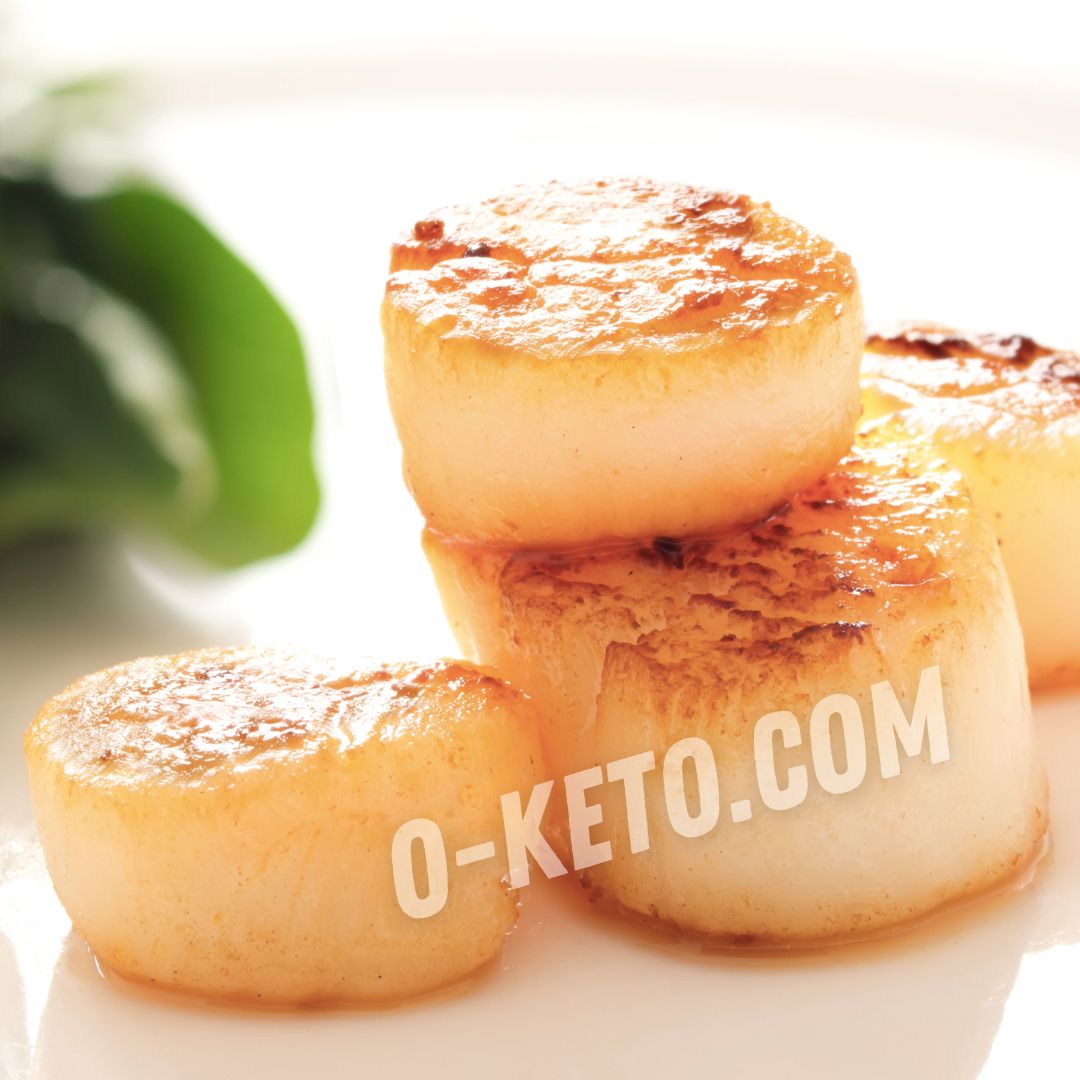

Sea scallops are tender bivalve mollusks with a firm white muscle and a mild sweet flavor. In cooking, the adductor muscle is most often used: it is quickly seared, steamed, added to salads, soups, and dishes with cream or lemon sauce.
For keto, scallops can fit, but the portion matters. They are high in protein, low in fat, and contain a small amount of natural carbohydrates for seafood. They work better not as a standalone fatty dish, but with butter, cream, avocado, olive oil, or non-starchy vegetables.
Nutritional value
Per 100 g, sea scallops often contain about 75-100 kcal, around 15 g of protein, less than 1 g of fat, and up to 4-5 g of carbohydrates. The carbohydrate load is usually low, but carbohydrates are not zero, so strict keto needs portion counting.
Scallops contain vitamin B12, magnesium, zinc, selenium, phosphorus, and small amounts of omega-3 fatty acids. They are nourishing seafood, but not a reason to promise special body effects. Their practical value is delicate flavor, protein, and the ability to make an elegant low-carb dish in minutes.
Are they suitable for keto?
Sea scallops can fit keto when cooked without flour, breading, sugar, or sweet sauces. A 100-150 g serving often fits a low-carb day, but exact carbohydrates should be checked on the package or in a nutrition table.
Because scallops are low in fat, a keto dish is better built with a fat component. Butter, olive oil, aioli, flourless cream sauce, or avocado make the serving more filling and more logical for LCHF.
How to cook
Scallops cook very quickly. Dry them well, place them on a hot surface, and do not move them for the first minutes so a crust can form. If cooked too long, they become rubbery and lose sweetness.
Practical options include:
- a quick pan sear in butter with lemon;
- serving with cauliflower and cream sauce;
- salad with avocado, greens, and olive oil;
- grilling with garlic and parsley;
- an addition to fish soup without potatoes or flour;
- a warm appetizer with cucumber, aioli, and lemon zest.
Doneness is easiest to judge by texture: a scallop should turn opaque and springy while staying tender inside. A strong crust outside with a dry center usually means it was cooked too long. For a first attempt, cook fewer pieces at once and remove the pan from heat a little earlier than seems necessary.
Dry and wet scallops
If scallops are sold in brine or with added moisture, they sear worse and may shrink noticeably in the pan. For a good crust, choose dry scallops when possible, thaw them in the refrigerator in advance, and pat them thoroughly dry before cooking.
Salt them close to cooking rather than an hour ahead, so excess moisture is not drawn out. The pan should be hot and the portions small: if too many are added at once, they steam instead of sear.
How to choose
Fresh scallops should smell clean and marine, not like ammonia or sourness. The surface should be moist but not slimy. Frozen scallops are better without a thick ice layer and without a lot of snow in the package.
Size affects serving: large scallops are convenient for a quick pan dish and a neat plate, while small ones work for soups, salads, and warm appetizers. If the product is already marinated, check sugar, starch, salt, and the oil in the brine or sauce.
What to pair them with
Good keto pairings include cauliflower, zucchini, spinach, salad leaves, lemon, garlic, butter, and olive oil. Scallops also work with parsley, thyme, white pepper, paprika, and a little chili.
Rice, sweet glaze, breading, and thick flour-based sauces completely change the carbohydrate profile. If a more filling plate is needed, add a flourless cream sauce, avocado, eggs, or a vegetable side with oil.
Limits and storage
Like other shellfish, scallops can cause allergies. Origin and freshness also matter because seafood from unclear sources raises food safety risks. If salt is restricted, prepared marinades and restaurant sauces should be considered.
Thaw scallops in the refrigerator, then dry with a paper towel. Refreezing worsens texture. Cooked scallops should not be stored long; this delicate seafood is best eaten right away.
Substitutes
Scallops can be replaced with shrimp, crab meat, octopus, squid, or white fish, although the sweet firm texture will differ. If fast pan cooking and tenderness matter, large shrimp are closest. If the marine sweet taste matters, avoid overwhelming the substitute with heavy sauces.


