


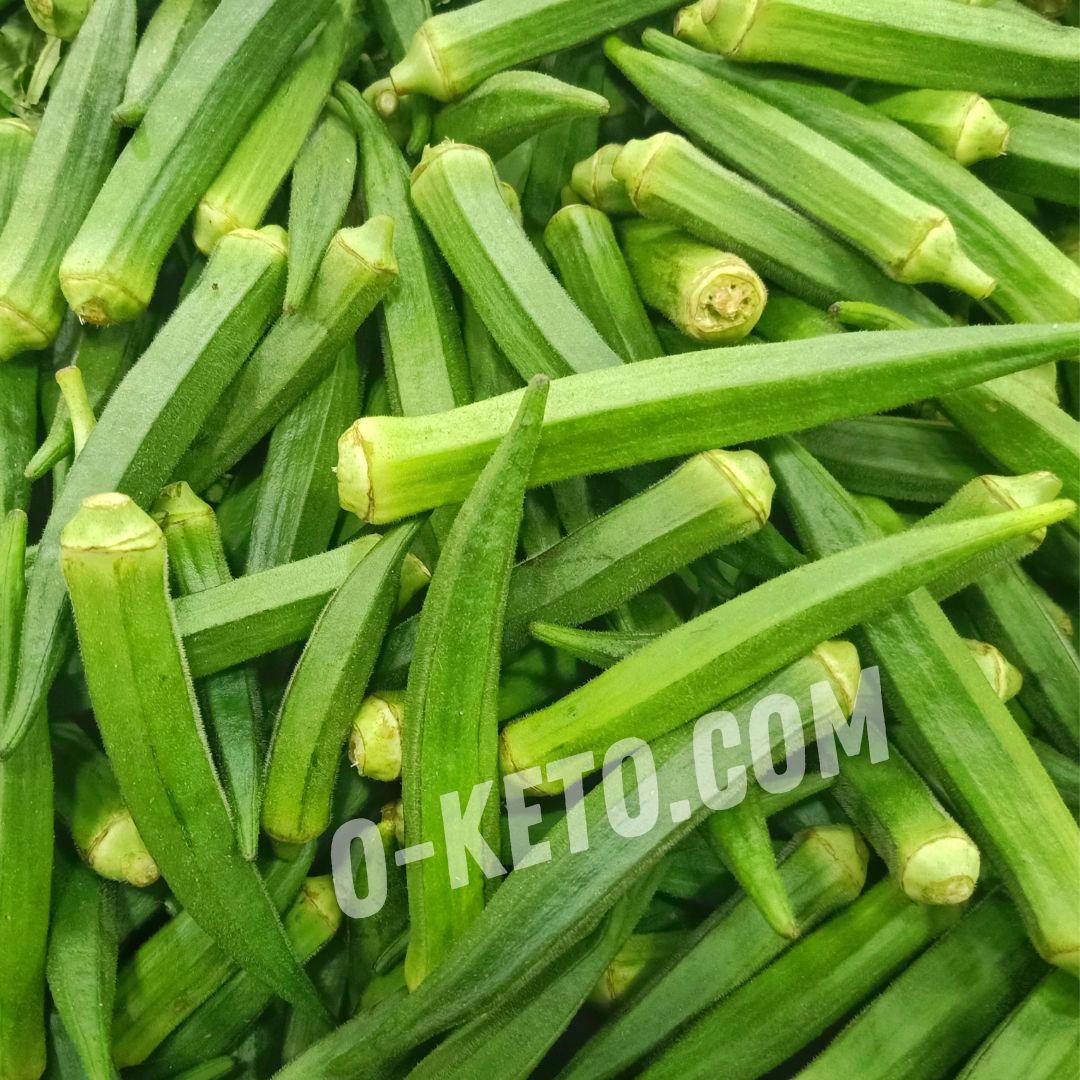

Okra, also called lady’s finger, is a green pod vegetable with a mild grassy flavor and a characteristic mucilaginous texture when cut and heated. That texture is useful in cooking: okra naturally thickens stews, soups and sauces without flour or starch. Fresh pods are crisp, stewed pods become tender, and fried pods can keep their shape.
Per 100 g, okra is often listed at about 33 kcal, 2 g of protein, 0.2 g of fat and 7 g of carbohydrates, of which about 3.2 g are fiber. The glycemic index is around 15, and glycemic load is low. It contains vitamins A, C and K, folate, magnesium, potassium and fiber. For keto, the important points are not the general “light vegetable” image, but net carbohydrates, portion and cooking method.
Nutrition
Okra sits between very low-carb greens and more carbohydrate-rich vegetables. In a small serving it is usually convenient, but a large bowl of stewed okra still needs counting. Fiber and mucilage add volume and help thicken sauce without usual starch thickeners.
Vitamin K should be considered by people who need stable intake of that vitamin. Okra itself is not a protein or fat food, so on keto it is better paired with eggs, meat, fish, cheese, butter, olive oil or unsweetened coconut milk.
Is It Keto-Friendly?
Okra fits keto and LCHF in moderate amounts, especially as a side dish or thickener. Problems appear when it is cooked in breading, cornmeal, sugar, sweet sauces or with a lot of onion and tomatoes. Then the carbohydrates come from the whole recipe, not from okra alone.
A practical serving is about 80-150 g cooked, when the rest of the ingredients are low-carb. For strict keto, start with a smaller amount and check the whole daily carbohydrate limit.
How to Use It
Okra works well where gentle thickness is needed: vegetable stews, sugar-free curry, soups, stewed chicken, seafood and tomato sauces without sweet additions. To reduce sliminess, cook pods whole or in large pieces, fry quickly over high heat or add acid such as lemon, sugar-free vinegar or a moderate amount of tomatoes.
Practical options include:
- quick sauté with garlic, salt and lemon;
- stewing with chicken and unsweetened coconut milk;
- adding to soup instead of a starchy thickener;
- a side dish for fish with olive oil;
- roasting whole pods with spices.
How to Choose and Store
Choose small firm pods without dark spots, slime or dry tips. Very large okra is often fibrous and tough. A pod should cut easily but not feel limp. Frozen okra is convenient for stewing if it contains no sauce, breading or flour.
Store fresh okra dry in the refrigerator and use it soon. Wash it before cooking rather than in advance because extra moisture speeds spoilage. Cut okra should be used immediately: after cutting, it quickly releases its mucilaginous juice.
Limits and Substitutes
Not everyone likes the slimy texture. If it is unpleasant, choose frying, roasting or an acidic dressing. With sensitive digestion, large portions of fiber may cause discomfort, so start with a small amount.
Okra can be replaced with zucchini, green beans, eggplant, green pepper, spinach or cauliflower, but the natural thickening will be weaker. If thickness without carbohydrates is the goal, psyllium, cream cheese or reducing the sauce may work better.
Portion and Common Mistakes
For a first try, use 5-6 small pods rather than a whole pan. This makes it easier to understand whether the mucilaginous texture is pleasant. A common mistake is simmering sliced okra for a long time in a watery sauce: the sliminess increases and the flavor becomes flat. It is better cooked quickly, salted near the end and balanced with acid or spices.
Managing the Texture
The main feature of okra is not its flavor but the way the juice inside the pod behaves. If thickness is wanted for soup or stew, the pods can be sliced into rounds and cooked longer: the mucilage moves into the sauce and makes it denser. If a drier vegetable side dish is wanted, keep the pods whole, dry them well and cook them quickly in a hot pan or oven.
Acid changes the result noticeably. Lemon juice, sugar-free vinegar or a small amount of tomatoes makes the texture less stringy and the flavor brighter. In keto dishes this is useful: okra can thicken a sauce without flour, while the dish does not have to become overly viscous. For a cleaner taste, choose assertive but unsweetened spices such as cumin, coriander, garlic, smoked paprika, chili or black pepper.


