


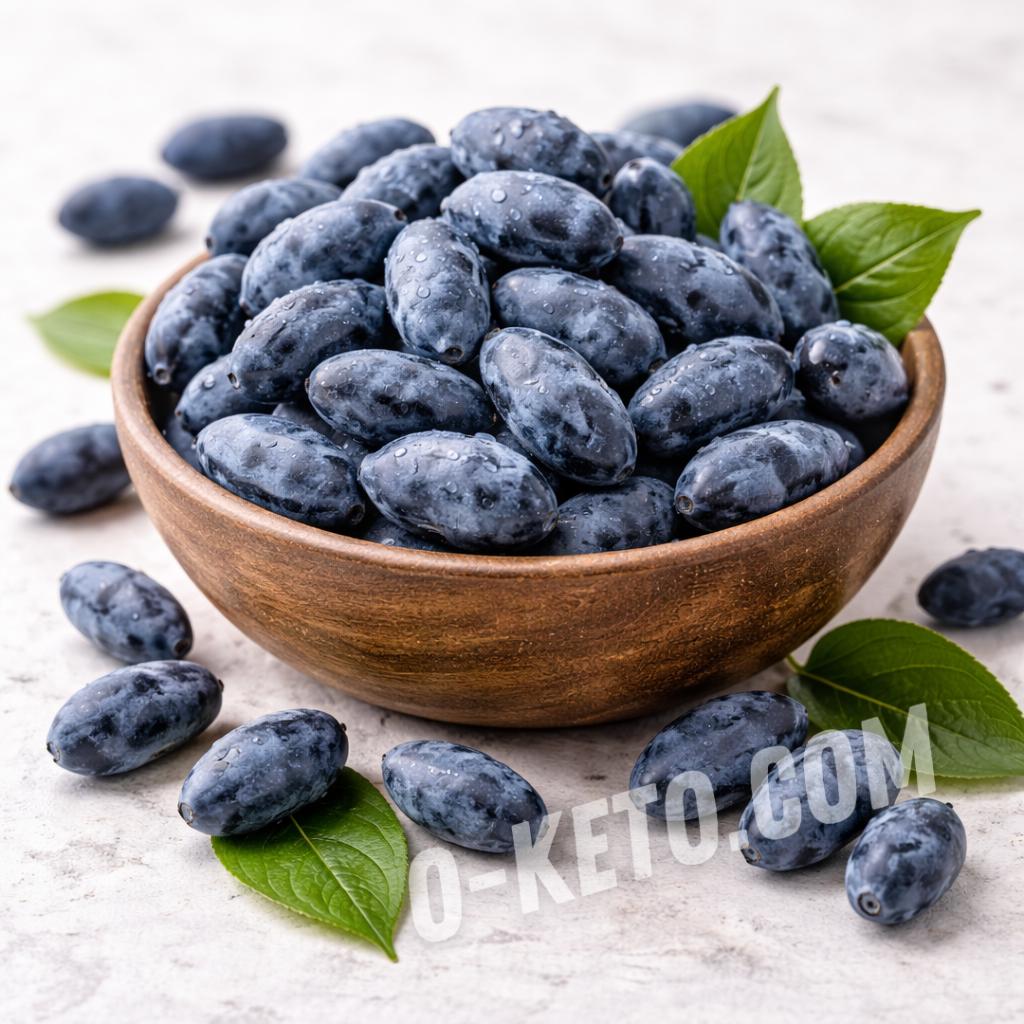

Honeysuckle is a berry plant that is valued for its rich flavor and high concentration of biologically active substances. The blue elongated berries have a sweet and sour taste and a characteristic aroma. They are consumed fresh, used for making drinks, desserts, and various preserves.
Honeysuckle is considered one of the earliest berries of the temperate climate. Due to its content of vitamins, organic acids, and antioxidant compounds, it is used in nutrition as a source of beneficial substances. The berries have a relatively moderate sugar content, so they can sometimes be included in the diet in small amounts when limiting carbohydrates.
Nutritional Value
Honeysuckle is classified as a low-calorie berry. On average, per 100 g of the product, there are:
The berries contain various vitamins and minerals:
- vitamin C;
- carotenoids;
- potassium;
- magnesium;
- folates.
The dark color of the berries is associated with the presence of anthocyanins—natural antioxidant compounds that help protect cells from oxidative stress.
Health Benefits
Honeysuckle contains organic acids, vitamins, and polyphenols that participate in various physiological processes in the body:
- antioxidant compounds help protect cells;
- vitamin C supports the normal functioning of the immune system;
- potassium helps maintain water-electrolyte balance;
- dietary fibers promote normal digestive function.
Due to the combination of vitamins and antioxidants, the berries are often considered one of the components of a varied diet.
Use in Nutrition
Honeysuckle is used in cooking in various forms. The berries are consumed fresh or processed to make drinks and desserts:
- consumption of fresh berries;
- preparation of juices and fruit drinks;
- jams and preserves;
- addition to desserts and berry mixes.
Consumption Features in Low-Carbohydrate Diets
Despite the moderate sugar content, honeysuckle still contains carbohydrates. Therefore, in strict low-carbohydrate diets, small portions of the berries are usually used.
A small amount of fresh berries is sometimes added to dishes or desserts for flavor and variety. The main focus in such a diet is usually on controlling the total carbohydrate intake.


