


ADHD
ADHD is a neurodevelopmental condition that affects attention, self-regulation, impulsivity and behavioral organization, so it is important to understand not only distractibility but also sleep, overload, emotions, study, work and everyday function.




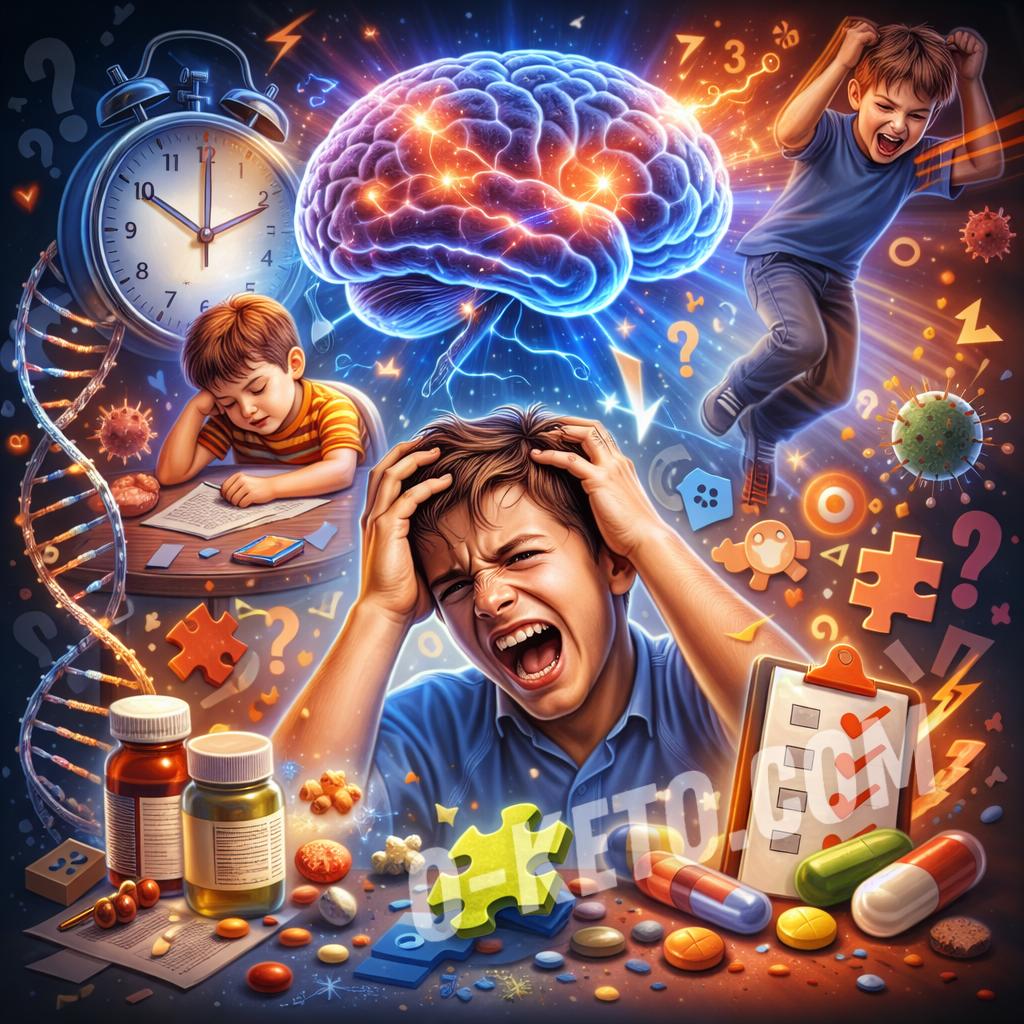
ADHD, attention-deficit/hyperactivity disorder, is not simply “being inattentive” and not a moral failure, but a neurodevelopmental condition in which it is harder to sustain attention, manage impulses, plan actions and tolerate monotonous demands. In some people motor hyperactivity is more obvious, while in others distractibility, forgetfulness, internal chaos and emotional impulsivity dominate. This is why ADHD should not be reduced to the school stereotype of a “restless child.” For many adults it is also a real difficulty in organizing life, work, sleep and relationships.
Why ADHD is not just bad discipline
The core issue is not a lack of effort, but the way attention control, inhibition, executive functions and reward regulation are wired. A person may genuinely want to complete a task, yet keep sliding away from it, forgetting steps, losing structure and becoming overloaded by what seems to others like an ordinary demand. That is why constant accusations of laziness often deepen shame and chaos without touching the actual mechanism. The more clearly the neurobehavioral profile is recognized, the less room remains for moral judgment and the more room opens for useful support.
A common mistake is to explain everything by personality while ignoring a stable repeated pattern of functional difficulty.
How it shows up in daily life
ADHD may appear as forgetfulness, difficulty finishing tasks, jumping between activities, inner restlessness, impatience, impulsive decisions, chronic lateness, losing objects and the feeling that the mind is holding too many unfinished things at once. In one person school suffers most, in another work, and in a third relationships or home management. Anxiety, sleep loss, burnout and low self-esteem often grow in parallel, because the person may live for years with the feeling of “I keep failing at normal life.”
The accumulated functional wear-and-tear, not only the individual symptoms, is often what makes ADHD truly significant.
What can worsen the picture
Sleep deprivation, information overload, anxiety, depression, lack of structure, chronic stress and constant multitasking often worsen ADHD symptoms. This does not mean they create the condition from nothing, but they can sharply reduce compensation capacity. In some people glucose swings, chaotic eating, excess stimulants or emotional exhaustion make self-regulation even more fragile. For that reason practical support often involves not only a psychiatrist or neurologist, but also sleep routine, workload, eating pattern and external structure.
ADHD functions poorly in environments that demand endless self-management without stable supports.
Nutrition, stimulants and lifestyle
Nutrition is not a universal cure for ADHD, but regular meals, adequate protein, fewer severe glucose swings and more careful use of caffeine genuinely improve attention stability in some people. At the same time, expecting one diet to erase all symptoms is naive. Adults with ADHD may overestimate one supplement or, conversely, ignore basic foundations such as sleep and routine. The practical role of lifestyle here is not magic, but creating conditions in which the brain can hold focus more reliably and fall into impulsivity less easily.
The stronger the external supports, the less energy is spent on emergency self-rescue during the day.
Why early recognition changes outcomes
The earlier a person understands that the problem is not simply “bad character” but a stable neurobehavioral pattern, the fewer years are lost to useless self-criticism. That makes it easier to build external supports, break tasks into smaller steps, adjust the environment and notice anxiety, sleep loss or burnout that amplify the picture. The practical value lies in no longer fighting blindly against the same mechanism every day.
When closer review is needed
Closer review is needed when symptoms interfere with study, work, relationships or daily management, especially if anxiety, burnout, chronic sleep loss or long-standing self-blame are present. The most sensible way to think about ADHD is as a condition of self-regulation and executive-function difficulty in which what matters most is not the label itself, but the person’s specific pattern of impairment and the strategies that help compensate for it.
If you have any questions about the term "ADHD", you can ask them to AI. Please note, a low-cost OpenAI model is used. It may answer questions about disease treatment with errors!


 1 / 4
1 / 4

 1 / 4
1 / 4


 1 / 4
1 / 4

 1 / 4
1 / 4