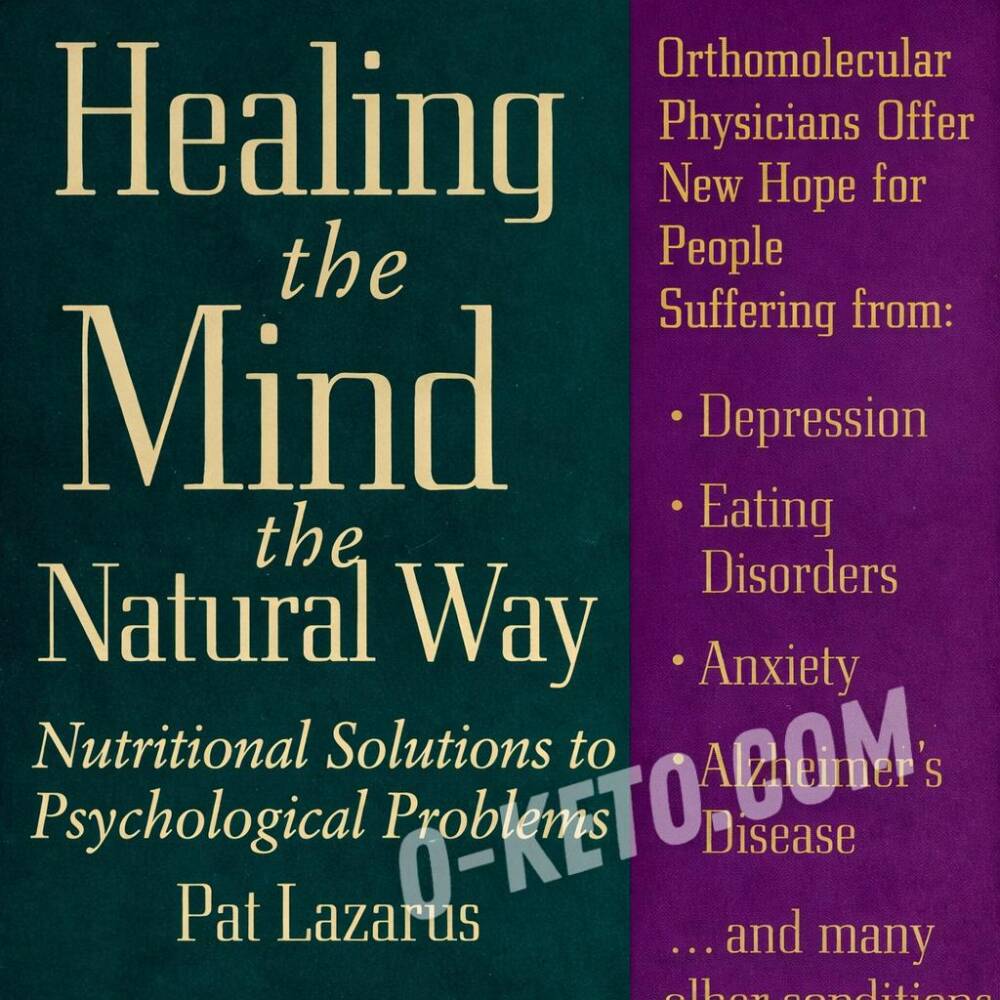
Chapter 1. New Hope for Emotional and Mental Problems: Without Drug Side Effects, Psychoanalysis, or Shock Therapy
Mental and emotional disorders are viewed as a consequence of biochemical imbalances rather than as "lifetime diagnoses." The author demonstrates that depression, anxiety, psychoses, and mood swings are often linked to deficiencies in vitamins, minerals, amino acids, and food or chemical intolerances.
The emphasis is placed on the fact that psychotropic drugs, electroshock, and prolonged psychoanalysis do not address the root cause but merely suppress symptoms, while the drugs themselves often exacerbate nutritional deficiencies.
The main idea is that restoring individual brain biochemistry through an orthomolecular approach can lead to sustainable improvement without severe side effects.
Chapter 2. Prevention of Mental (and Physical) Problems
The prevention of mental and somatic diseases begins long before symptoms appear and even before a person is born. A lack of key nutrients in parents, especially in the mother during pregnancy, directly affects the development of the child's brain and nervous system. The author emphasizes the role of B vitamins, folates, zinc, magnesium, and fatty acids in preventing congenital disorders, cognitive impairments, and future mental problems. It is concluded that most "inevitable" diseases are actually the result of a chronic deficiency state.
Chapter 3. Everyday Moods
Daily emotions and moods are directly dependent on which neurotransmitters prevail in the brain, which, in turn, are synthesized from food. Proteins, carbohydrates, sugar, caffeine, and fats affect the balance of excitatory and inhibitory neurochemical systems in different ways. Even stable personality traits may result from chronic dietary imbalances.
The principle of biochemical individuality is emphasized: the same food can provoke opposite reactions in different people. The author concludes that managing the diet allows for conscious influence on mood, energy, and mental resilience.
Chapter 4. Psychosomatic Symptoms, Hypochondria, and Other Mysterious Problems
So-called psychosomatic and "unexplained" symptoms often have a real physiological basis—hidden food allergies, chemical sensitivities, detoxification disorders, and mineral deficiencies.
Symptoms may manifest as anxiety, panic, depression, pain, spasms, and strange phobias, which are mistakenly interpreted as purely psychological. The author shows that eliminating irritants and restoring nutritional balance leads to the disappearance of symptoms, which calls into question the traditional approach to diagnosing such conditions.
Chapter 5. Addiction to Alcohol, Drugs, Cigarettes, Caffeine, and Sugar
Addictions are viewed not as moral weaknesses but as biochemical attempts by the body to compensate for deficiencies in neurotransmitters and nutrients.
Alcohol, sugar, caffeine, and drugs temporarily alter brain chemistry, creating an illusion of relief, but in the long term, they exacerbate deficiencies in B vitamins, magnesium, zinc, and amino acids. The destructive impact of sugar on mood, aggression, and depression is particularly emphasized.
The main conclusion is that without correcting nutritional status, treatment for addictions is doomed to relapse, whereas restoring biochemistry significantly reduces cravings for substances.
Chapter 6. Anxiety Disorders: Generalized Anxiety Disorder, Panic Disorder, Phobias, Obsessive-Compulsive Disorder
Anxiety disorders are viewed as a consequence of an imbalance between inhibitory and excitatory processes in the brain. Key roles are played by deficiencies in magnesium, calcium, manganese, and B vitamins, as well as carbohydrate metabolism disorders and the accumulation of lactic acid, which binds calcium and increases nerve excitability.
Panic attacks, phobias, and OCD are interpreted as biochemical reactions rather than "personality traits."
The author emphasizes that medications only temporarily suppress symptoms, while correcting mineral balance, eliminating sugar, caffeine, and food intolerances can address the very foundation of anxiety.
Chapter 7. Depression and Manic Depression
Depression and bipolar states are described as the result of severe disturbances in neurotransmitter synthesis, primarily serotonin, dopamine, and norepinephrine. Deficiencies in B3, B6, B12 vitamins, folates, magnesium, and amino acids, as well as hormonal shifts and hypoglycemia, are often identified.
Manic and depressive phases are explained by fluctuations in brain biochemistry rather than psychological traumas as the primary cause.
The author concludes that restoring the nutritional foundation can significantly alleviate or completely eliminate symptoms, reducing the need for antidepressants and mood stabilizers.
Schizophrenia is presented not as an incurable disease but as a severe metabolic and biochemical disorder of the brain. The role of niacin (vitamin B3), vitamin B6, zinc deficiencies, as well as disturbances in antioxidant protection and detoxification, is emphasized. Cases are described where orthomolecular therapy significantly reduced psychotic symptoms and restored functionality to patients previously deemed hopeless.
The key idea is that antipsychotics suppress the manifestations of the disease but do not eliminate the underlying metabolic disturbances in nerve tissue.
Chapter 9. Mental Retardation
Many cases of "mental retardation" are attributed by the author to pseudoretardation—conditions caused by chronic nutritional deficiencies, congenital metabolic errors, and impaired absorption of vitamins and minerals. Special attention is given to zinc, vitamin B6, folic acid, and other micronutrients critically important for brain development.
Data is provided on the increase in IQ and cognitive functions with targeted nutritional correction. It is concluded that early diagnosis and nutrition can prevent or significantly alleviate many forms of cognitive impairments.
Chapter 10. Criminal Behavior and Violence
Aggression, impulsivity, and violent behavior are viewed as a consequence of biochemical instability in the brain rather than solely social or moral factors.
Deficiencies in B vitamins, magnesium, zinc, as well as excess sugar and food allergens are directly linked to outbursts of rage, decreased self-control, and antisocial behavior.
The author shows that dietary correction in prisons and boarding schools reduced levels of aggression and offenses. The final idea is that crime prevention begins with normalizing nutrition and the biochemistry of the nervous system.
Chapter 11. Women’s Psychological Problems: PMS, Painful Periods, Postpartum Depression and Psychosis, Anorexia and Bulimia
Women’s psycho-emotional disorders are primarily linked to hormonal fluctuations and their nutritional regulation.
PMS, painful menstruation, and postpartum psychoses are viewed as a result of deficiencies in magnesium, B vitamins, zinc, and imbalances between copper and zinc, rather than as "normal" states of the female body.
The role of progesterone and nutritional support immediately after childbirth for preventing severe depressive states is particularly emphasized.
Anorexia and bulimia are described as deeply biochemical disorders, where deficiencies in zinc and other micronutrients distort appetite, body perception, and emotional regulation.
Chapter 12. Alzheimer’s Disease and Senile Dementia (“Senility”)
Alzheimer’s disease and age-related dementia are interpreted as progressive metabolic disorders of the brain rather than an inevitable result of aging. The author points to the role of oxidative stress, deficiencies in antioxidants, B vitamins, fatty acids, and disturbances in neuronal energy metabolism. It is emphasized that chronic undernutrition at the cellular level accelerates the degeneration of nerve tissue.
The key idea is that with early intervention, nutritional therapy can slow down or partially reverse cognitive decline.
Chapter 13. Children’s Mental Problems: Autism, Childhood Schizophrenia, Hyperactivity, Learning and Behavior Disorders
Children’s mental and behavioral disorders are viewed as reflections of disrupted metabolism in the developing brain. Autism, hyperactivity, and learning difficulties are linked to deficiencies in B vitamins, folates, zinc, magnesium, as well as food allergies and detoxification disorders.
The author emphasizes that children’s symptoms are particularly sensitive to dietary correction, and eliminating deficiencies can lead to significant improvements in cognitive and behavioral functions. It is concluded that pharmacological suppression of symptoms without addressing biochemistry hinders the full development of the nervous system.
Chapter 14. Food and Chemical Intolerances (Sensitivities, “Allergies”)
Food and chemical intolerances are described as one of the most underestimated causes of mental and somatic disorders. Reactions can be delayed, cyclical, or "addictive," and therefore often go unrecognized. Such intolerances can cause depression, anxiety, psychoses, pain, phobias, and behavioral breakdowns.
The author emphasizes that identifying and eliminating triggers often leads to the disappearance of symptoms without additional treatment, which calls into question traditional psychiatric diagnosis.
Chapter 15. Low Blood Sugar (Functional Hypoglycemia)
Functional hypoglycemia is viewed as a key factor in unstable moods, anxiety, irritability, depression, and panic attacks. Fluctuations in glucose levels directly affect the production of adrenaline and cortisol, which depletes the nervous system. Often, the cause is an excess of sugar, refined carbohydrates, and deficiencies in protein, chromium, magnesium, and B vitamins.
The main conclusion is that stabilizing blood sugar levels through nutrition and nutritional support can eliminate a wide range of psycho-emotional symptoms.
Chapter 16. Yeast Infection (Candidiasis)
Candidiasis is viewed as a systemic metabolic and immune disorder that goes far beyond a local fungal infection. The overgrowth of Candida is associated with excess sugar and refined carbohydrates, prolonged antibiotic use, and deficiencies in zinc, B vitamins, and other nutrients that support immunity and detoxification.
Toxins produced by fungi affect the nervous system, causing anxiety, depression, "brain fog," mood swings, and chronic fatigue. The author emphasizes that without correcting nutrition and nutritional status, antifungal therapy provides only temporary relief.
Chapter 17. Heavy-Metal Toxicity
Heavy metal toxicity is viewed as a hidden but powerful cause of neurological and mental disorders. Mercury, lead, cadmium, aluminum, and other metals disrupt enzyme function, displace vital minerals, and damage nerve tissue.
Symptoms may include depression, anxiety, cognitive decline, aggression, and psychoses, often masquerading as "psychiatric diagnoses."
The author emphasizes that effective detoxification is impossible without adequate levels of zinc, selenium, magnesium, and antioxidants, and attempts to treat without nutritional support can be dangerous.
Chapter 18. Nutrients and Brain Chemicals
This chapter explains in detail how neurotransmitters that determine mood, thinking, and behavior are synthesized from nutrients. Serotonin, dopamine, norepinephrine, GABA, and other brain chemical messengers directly depend on the availability of amino acids, B vitamins, vitamin C, magnesium, and trace elements. Even minor deficiencies can radically change emotional states.
The author emphasizes that mental disorders cannot be correctly understood without knowledge of brain biochemistry and the role of nutrition in its regulation.
Chapter 19. Nutritional Deficiencies and Other Factors
The final chapter brings together all the topics discussed, showing that chronic nutritional deficiencies underlie most mental and somatic diseases. In addition to vitamins and minerals, factors such as stress, infections, toxins, hormonal shifts, and individual genetic characteristics of nutrient absorption are considered.
The author concludes that treatment "by diagnosis" without addressing deficiencies is doomed to limited effectiveness. The key idea is that restoring cellular nutrition is the foundation of mental health and the prevention of severe disorders.