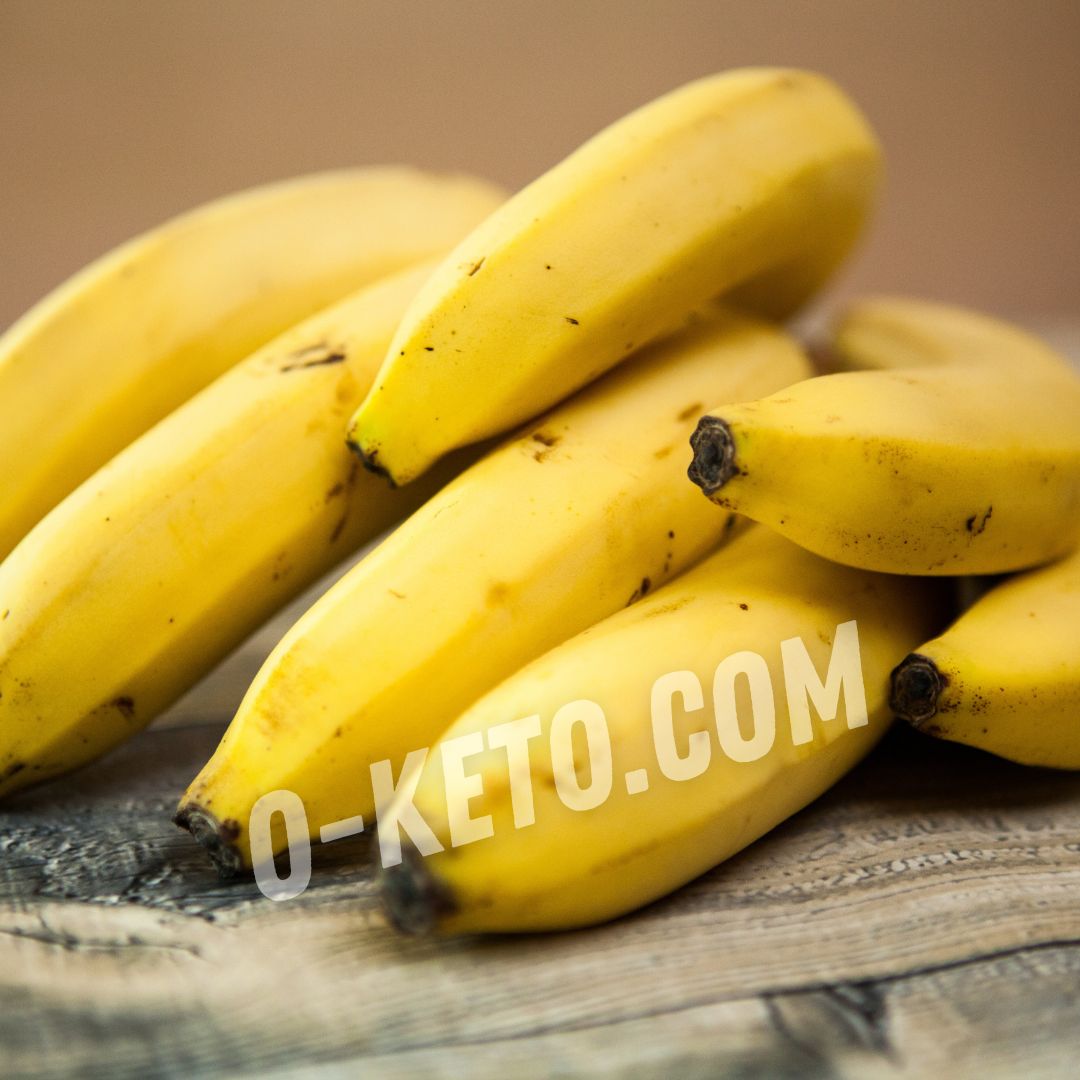

Banana is a sweet tropical fruit with soft starchy-creamy flesh. It is eaten fresh and added to smoothies, porridge, baking, desserts, ice cream, sauces, and sports snacks. The riper the fruit, the brighter the sweetness and the softer the texture; greenish bananas are firmer, less sweet, and more astringent.
In low-carb eating, banana is a complicated product. It is natural, convenient, and nutrient-dense, but it contains a lot of carbohydrates for a keto diet. It should therefore be judged not as “fruit in general,” but as a specific portion: a whole banana, half, a few slices in dessert, or a small amount for aroma create very different carbohydrate loads.
Nutritional value
Per 100 g, banana provides about 89 kcal, around 1.1 g protein, 0.3 g fat, and 22–23 g carbohydrates. A significant part of the carbohydrates comes from natural sugars and starch. A medium banana weighing about 118 g can provide around 27 g of carbohydrates, including about 14 g of sugars. For strict keto, that is already a lot.
Banana contains potassium, vitamin B6, vitamin C, magnesium, and fiber. Food tables often list about 358 mg potassium, 8.7 mg vitamin C, 0.4 mg vitamin B6, and 27 mg magnesium per 100 g. These numbers are useful as orientation, but they do not change the main limitation: banana remains a carbohydrate-rich fruit.
Ripeness and carbohydrates
As a banana ripens, part of its starch turns into sugars, so the taste becomes sweeter and the flesh softer. A greenish banana is usually less sweet, but that does not automatically make it low-carb. An overripe banana with brown spots is easier to mash into batter or cream, but its sweetness is more pronounced.
The glycemic index depends on ripeness and is usually in the moderate range. Greener fruit tends to be lower, while ripe fruit is higher. For keto, however, the amount of carbohydrates in the portion matters as much as the index. Even a moderate-index product may not fit if the portion is large.
Fits keto and LCHF
For strict keto, a whole banana usually does not fit. It can take almost the entire daily carbohydrate limit or a large part of it. In LCHF with a more flexible limit, a small portion is sometimes used: a few thin slices in unsweetened yogurt, half a small banana after training, or a little puree for flavor in dessert.
If banana is included, it is better paired with protein and fat: unsweetened Greek yogurt, cottage cheese, sugar-free nut butter, cream, eggs in baking, or chia seeds. This makes the dish more filling and spreads the sweetness through the whole portion.
How to use
In keto cooking, banana is more often used as an aromatic ingredient than as a standalone fruit. A few slices can be added to cottage-cheese cream, low-carb pudding, yogurt, nut porridge, a protein smoothie, or homemade sugar-free ice cream. In baking, banana puree gives sweetness, moisture, and aroma, but it sharply increases the carbohydrates in the recipe.
For portion control, slice banana thinly and freeze it. Then it is easier to take 3–5 pieces for a smoothie or dessert instead of using the whole fruit. In family recipes, banana can be added to the shared mixture while your own portion is counted separately.
Pairings
Banana pairs well with cocoa, sugar-free peanut or almond butter, Greek yogurt, cottage cheese, cream, coconut, cinnamon, vanilla, coffee, walnuts, chia, and flax. It is used less often in savory dishes, but a small amount can soften a spicy curry sauce or marinade.
With honey, syrups, sweet granola, dates, and regular flour, banana quickly turns into a very high-carbohydrate dish. If the goal is a low-carb dessert, it is better to keep banana as the only sweet fruit and avoid adding other sugar sources.
How to choose and store
For eating right away, choose yellow bananas without large dark soft patches. For baking and creams, riper fruit with brown speckles works well. Greenish bananas ripen at room temperature. In the refrigerator, the peel darkens, but the flesh may stay firm longer.
Peeled banana darkens quickly in air. Sliced pieces are best used immediately or frozen on a tray and then transferred to a bag. Frozen banana is convenient for smoothies and ice cream, but after thawing it becomes soft and does not work where a fresh texture is needed.
Substitutes
If you need a sweet fruit accent with fewer carbohydrates, berries are usually easier: strawberry, raspberry, blackberry, or blueberry in a small portion. For creamy texture in smoothies, use avocado, Greek yogurt, cottage cheese, or frozen cauliflower with vanilla and sweetener. Vanilla, cinnamon, and sugar-free banana flavoring can partly imitate the aroma, but they do not fully repeat the real taste.