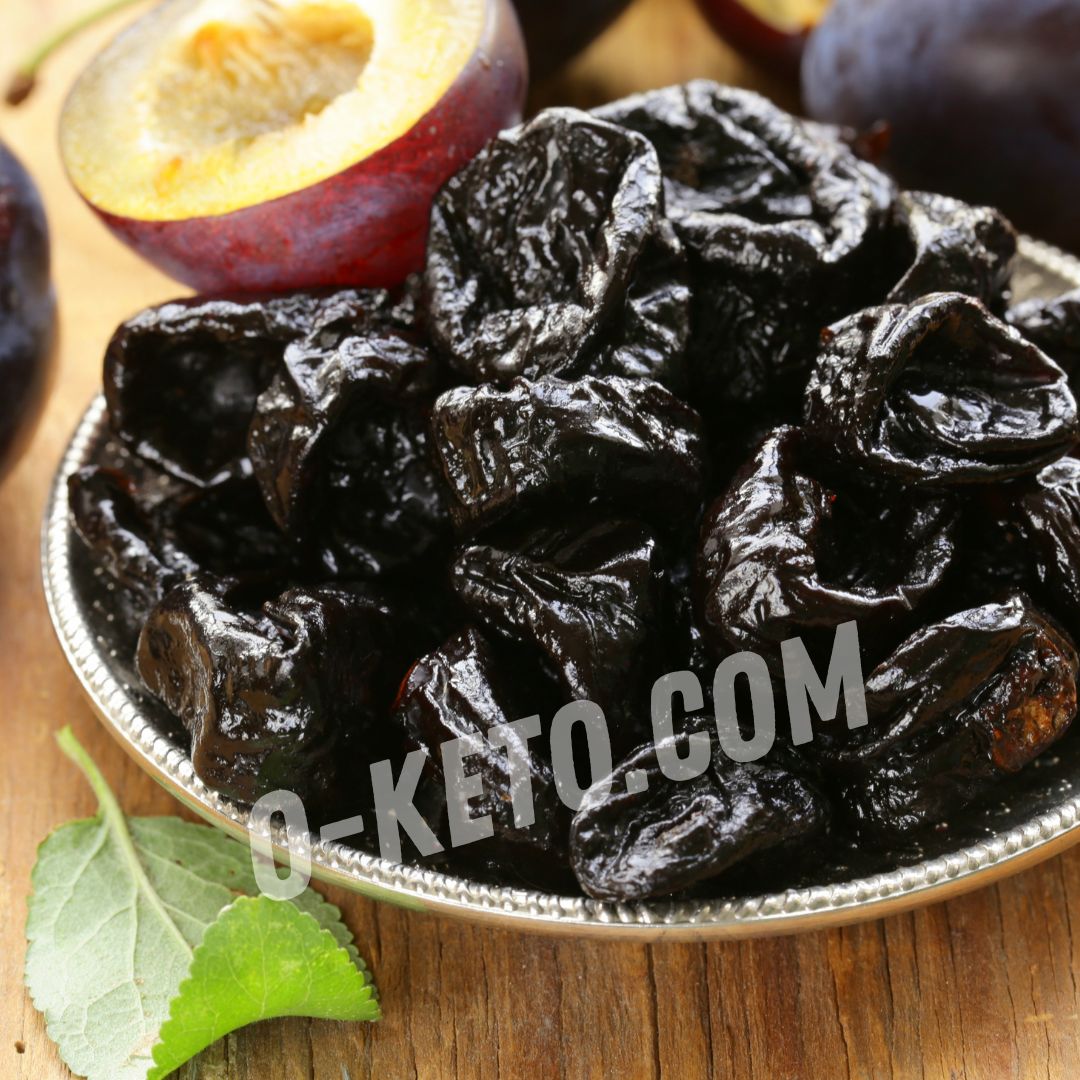

Prunes are dried plums with dense sweet flesh, pronounced fruit flavor and a high concentration of carbohydrates. They are added to desserts, meat dishes, sauces, compotes, porridges and snacks. In ordinary cooking they are useful as a sweet-sour ingredient, but for strict keto they are almost always problematic: water has left the fruit, while sugars remain in a small volume.
Per 100 g of prunes, common values are about 240 kcal, 2.2 g of protein, 0.4 g of fat and around 63.9 g of carbohydrates. The glycemic index is often listed around 29, and glycemic load around 9. They contain fiber, vitamins A, C and K, potassium, magnesium and iron, but these facts do not make prunes low-carb.
Nutrition
The main feature of prunes is concentrated sweetness. Compared with fresh plums, they take less space, keep longer and are easier to eat without noticing. That is why the portion quickly gets out of control: several soft fruits look small, but by carbohydrates they are already a meaningful addition.
Prunes do contain fiber, but fiber does not remove sugar. For keto, both glycemic index and total carbohydrates matter. A low or moderate GI does not turn dried fruit into a safe product for a strict low-carb diet, especially when eaten on its own.
Are They Keto-Friendly?
For strict keto, prunes usually do not fit. Even 1-2 pieces can take a noticeable part of the daily limit, while 100 g contains an amount of carbohydrates that is incompatible with most strict keto plans. If prunes are used at all, the portion should be weighed, rare and counted in advance.
In more flexible LCHF, prunes can only be treated as a sweet accent, not as a snack. It is better to use half or one small fruit in a dish with protein and fat, for example in a meat sauce or salad. Eating prunes from the bag as a “better sweet” is the riskiest scenario for carbohydrate control.
How to Use Them
If prunes are needed in a recipe, it is better to chop them finely and distribute them through the dish. This makes the sweetness more noticeable while the actual portion stays small. In keto-style meat dishes, 5-10 g per serving is usually enough, not a handful of dried fruit.
Practical options, when carbohydrates are counted in advance, include:
- a few thin pieces in sauce for duck or pork;
- half a prune in a salad with cheese and nuts;
- a small addition to stewed meat instead of sweet sauce;
- an aromatic accent in a savory filling;
- a rare tasting portion, not a daily snack.
How to Choose and Store
Choose prunes without added sugar, syrup, glaze or unnecessary oil. The ingredient list should contain only dried plums, sometimes with a technological preservative. Very shiny sticky prunes are often treated with oil or syrup. Strong fermented smell, mold, unknown crystals and wet stickiness are bad signs.
Store prunes tightly closed, in a cool dry place or refrigerator if the package says so. After opening, do not keep the bag next to nuts and other snacks: dried fruit is easy to eat automatically. For portion control, set aside the needed 5-15 g and put the rest away.
Limits and Substitutes
Prunes may be inconvenient for sensitive digestion, especially in a large portion. For keto, the main limit is not tolerance but carbohydrates. Prunes in chocolate, syrup, bars, muesli and “fitness” desserts are usually even worse because other carbohydrate ingredients are added to the dried fruit sugars.
If a sweet-sour accent with fewer carbohydrates is needed, a few berries, lemon juice, sugar-free vinegar, cinnamon, smoked paprika or a small amount of sugar-free sauce are often easier. If prune flavor itself is needed, use a micro-portion inside a dish rather than a separate serving of dried fruit.
Reducing the Portion in a Recipe
Prunes are easier to fit into a dish when used like seasoning rather than as a separate fruit. One prune can be finely chopped, mixed with an acidic ingredient, spices and fat, then distributed across several servings of meat or salad. The flavor remains recognizable while the amount of sugar is far lower than in a handful of dried fruit.
For meat sauces, acidity and smoky spices work well: sugar-free vinegar, lemon, smoked paprika, black pepper, rosemary or a little mustard. They support the dark sweet-sour profile of prunes without requiring more dried fruit, honey or syrup.