


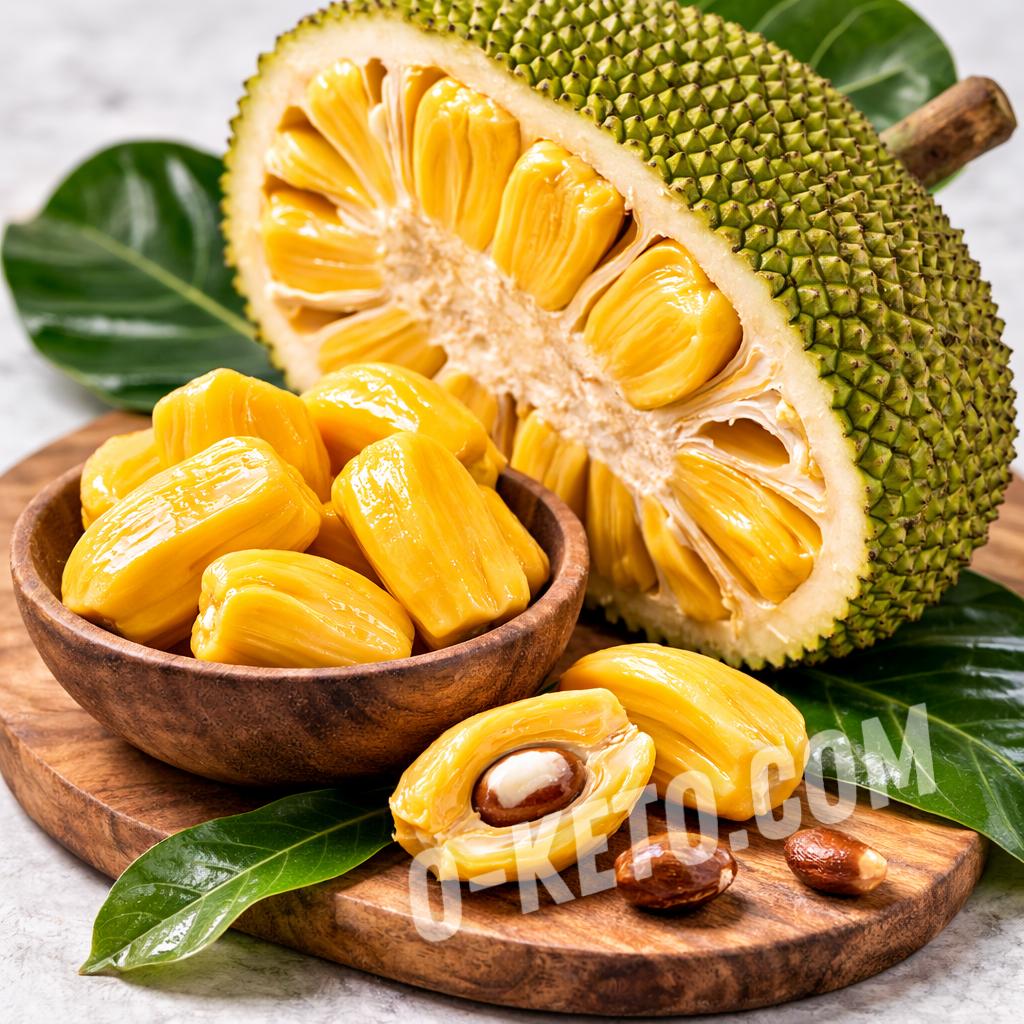

Jackfruit — a large tropical fruit that is considered one of the biggest fruits growing on trees. It is widespread in the countries of South and Southeast Asia and is valued for its aromatic flesh and versatility in cooking. When ripe, jackfruit has a sweet taste, while the unripe fruit is often used in dishes as a plant ingredient with a dense, fibrous texture.
History and Origin
The jackfruit is believed to have originated in South Asia, primarily in the territory of India and Bangladesh. The plant belongs to the mulberry family and has been cultivated in tropical regions for many centuries.
Over time, jackfruit spread throughout Southeast Asia, as well as to Africa and South America. Due to its high yield and large fruits, it has become an important agricultural crop in tropical countries.
Nutritional Value
The flesh of jackfruit contains natural sugars, fiber, and various vitamins and minerals. When ripe, the fruit has a relatively high carbohydrate content compared to most other plant foods.
| Calories | 90–100 kcal |
| Proteins | 1.5–2 g |
| Fats | 0.5–0.7 g |
| Carbohydrates | 22–24 g |
The main part of the carbohydrates consists of natural sugars and dietary fibers.
Main Vitamins and Minerals:
- Vitamin C participates in the antioxidant protection of the body;
- Potassium helps regulate water-electrolyte balance;
- Magnesium is involved in metabolic processes;
- Vitamin A supports vision;
- B vitamins are involved in energy metabolism.
Health Benefits
Jackfruit contains dietary fibers that aid in the functioning of the digestive system. Additionally, the fruit contains various plant compounds, including polyphenols and carotenoids.
The mineral composition of jackfruit includes potassium and magnesium, which are involved in regulating metabolic processes and muscle function.
Jackfruit in a Low-Carbohydrate Diet
Due to its high carbohydrate content, jackfruit is usually limited in carbohydrate-controlled diets. It is more often used in small amounts to add flavor and texture to dishes.
In some cuisines, unripe jackfruit is used as a plant ingredient in hot dishes due to its fibrous structure.
Culinary Uses:
- Adding to fruit desserts;
- Using in tropical drinks;
- Making jams and sweet dishes;
- Using unripe fruit in hot dishes;
- Adding to sauces and spicy dishes.
Thanks to its large fruits, rich flavor, and versatility in cooking, jackfruit remains one of the most recognizable tropical fruits.


