


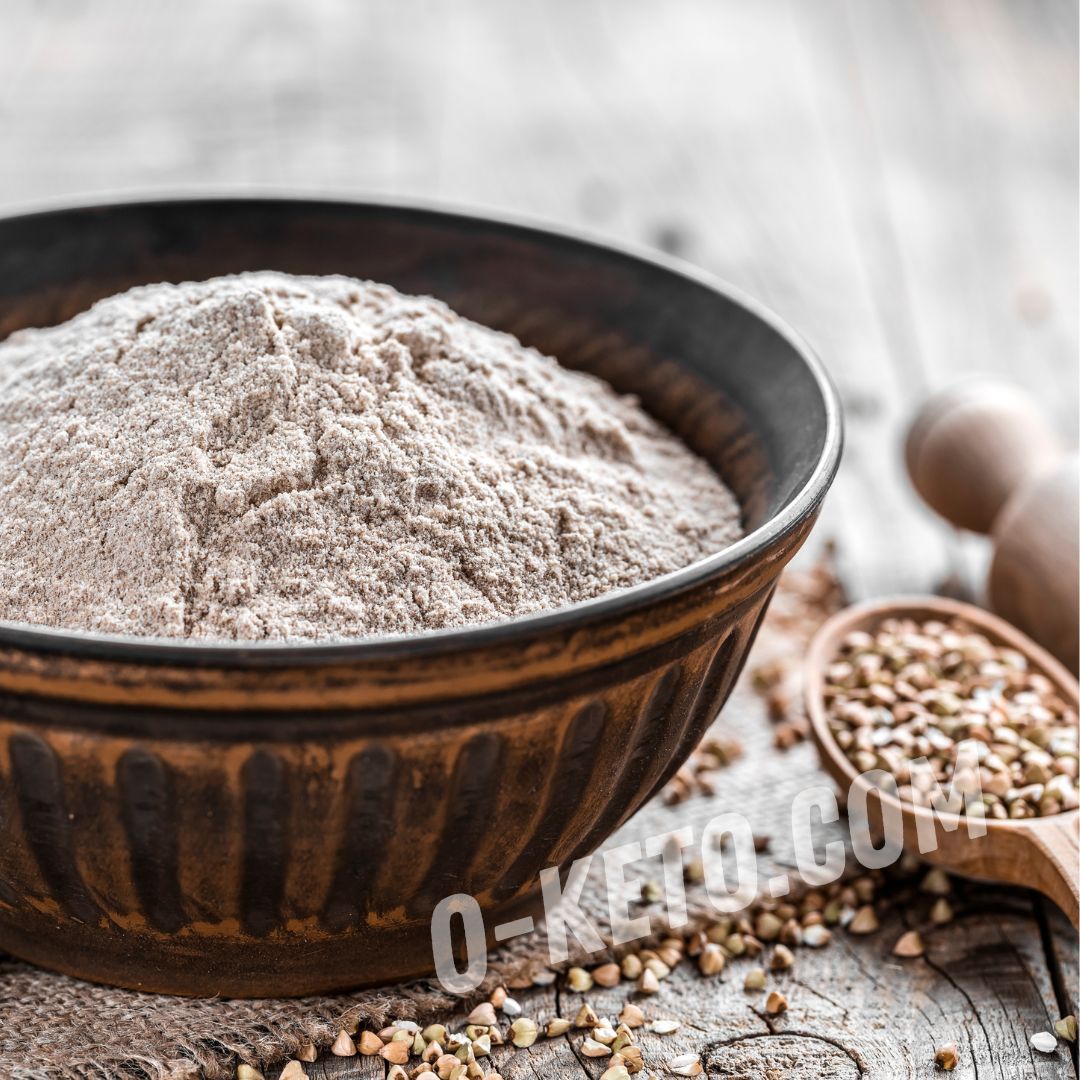

Green buckwheat flour is made from ground unroasted buckwheat seeds. It is lighter and milder than flour made from roasted dark buckwheat because the grain has not been toasted. The aroma is grassy, nutty, and slightly earthy. In cooking, it is used for pancakes, flatbreads, crispbreads, cookies, noodles, thick sauces, and gluten-free blends.
Buckwheat is not wheat and naturally contains no gluten. This makes green buckwheat flour useful in gluten-free cooking, but it does not make it a low-carb product. By composition, it is closer to starchy grains and flours than to nut or seed flours. For keto, this is the key point.
Nutrition
In 100 g of green buckwheat flour, there are usually about 330-350 kcal, 12-14 g of protein, 2-4 g of fat, and a large amount of carbohydrates. Some carbohydrates are fiber, but the base is still starchy. It also contains magnesium, phosphorus, manganese, iron, B vitamins, and plant polyphenols.
The old idea that most of its carbohydrates are fiber is too optimistic for this flour. Green buckwheat does contain fiber, but in a recipe it behaves like carbohydrate flour: it gives dough density, binds water, browns, and noticeably changes the final carbohydrate load.
Keto and LCHF
Green buckwheat flour is usually not suitable for strict keto. Even a small amount in pancakes, bread, or cookies adds starch quickly. On a more flexible LCHF approach, it can be used rarely and in small portions if planned into the day. It should not be treated as a direct replacement for almond or coconut flour.
For portion control, weigh the flour before mixing the batter, not after the finished dish is cut. Once it is blended with eggs, liquid, and other flours, it becomes harder to understand how much buckwheat went into one serving.
If you want a buckwheat note in a low-carb recipe, use a very small share of green buckwheat flour for aroma while building the base from almond flour, coconut flour, flax, psyllium, eggs, and curd cheese. This will not make the dish fully buckwheat-based, but it keeps carbohydrates easier to control.
How to use it
Green buckwheat flour works well in pancakes, fritters, galettes, savory flatbreads, and thick batters. It absorbs water differently from wheat flour, so the batter often needs time to hydrate. After 10-15 minutes it may become thicker than it was right after mixing. If all liquid is added at once, the mixture can become too thin.
In bread and cookies, green buckwheat gives a dense crumb and a characteristic flavor. Without gluten, dough holds gas less easily, so it is often supported with eggs, psyllium, seeds, baking powder, or a blend of different flours. For noodles and pasta, this flour needs a binder, otherwise the dough may tear.
How to choose
Good flour smells of fresh grain, nuts, and a little grass. A musty smell, bitterness, gray damp clumps, or insect traces are bad signs. The finer the grind, the smoother the batter; the faster it also loses aroma. Coarser flour is more interesting in flatbreads and crispbreads where a grainy texture is welcome.
Buy small packs if you do not use it often. Buckwheat is not very fatty, but whole-grain flour still ages faster than refined starch. If the product is needed for medically strict gluten-free cooking, look for a label about gluten cross-contact control: buckwheat itself is gluten-free, but milling and packing may happen near wheat.
Storage and substitutes
Store the flour in a tightly closed container, in a dry cool cupboard, away from spices and moisture. For longer storage, use the refrigerator or freezer, especially in summer. Before use, let cold flour warm up in the closed container so condensation does not form.
In ordinary gluten-free baking, it can be replaced with roasted buckwheat flour, rice flour, certified gluten-free oat flour, or sorghum flour. In keto recipes, almond flour, coconut flour, flax meal, ground seeds, and psyllium are closer by role, but they need different amounts of liquid and eggs. One-to-one substitution almost never works.
For a milder taste, green buckwheat flour can be mixed with a neutral gluten-free base. For a stronger buckwheat aroma, a small portion can be warmed briefly in a dry pan while stirring. This does not change the carbohydrate count for keto, but it can help use less flour for aroma.
Substitution options in recipes
Amaranth flour. Both pseudo-grains are gluten-free and rich in lysine. Amaranth is slightly bitter—reduce its proportion by 10% and add ½ tsp of erythritol per 100 g if you're baking something sweet.


