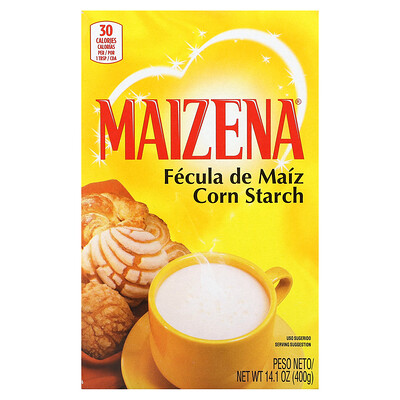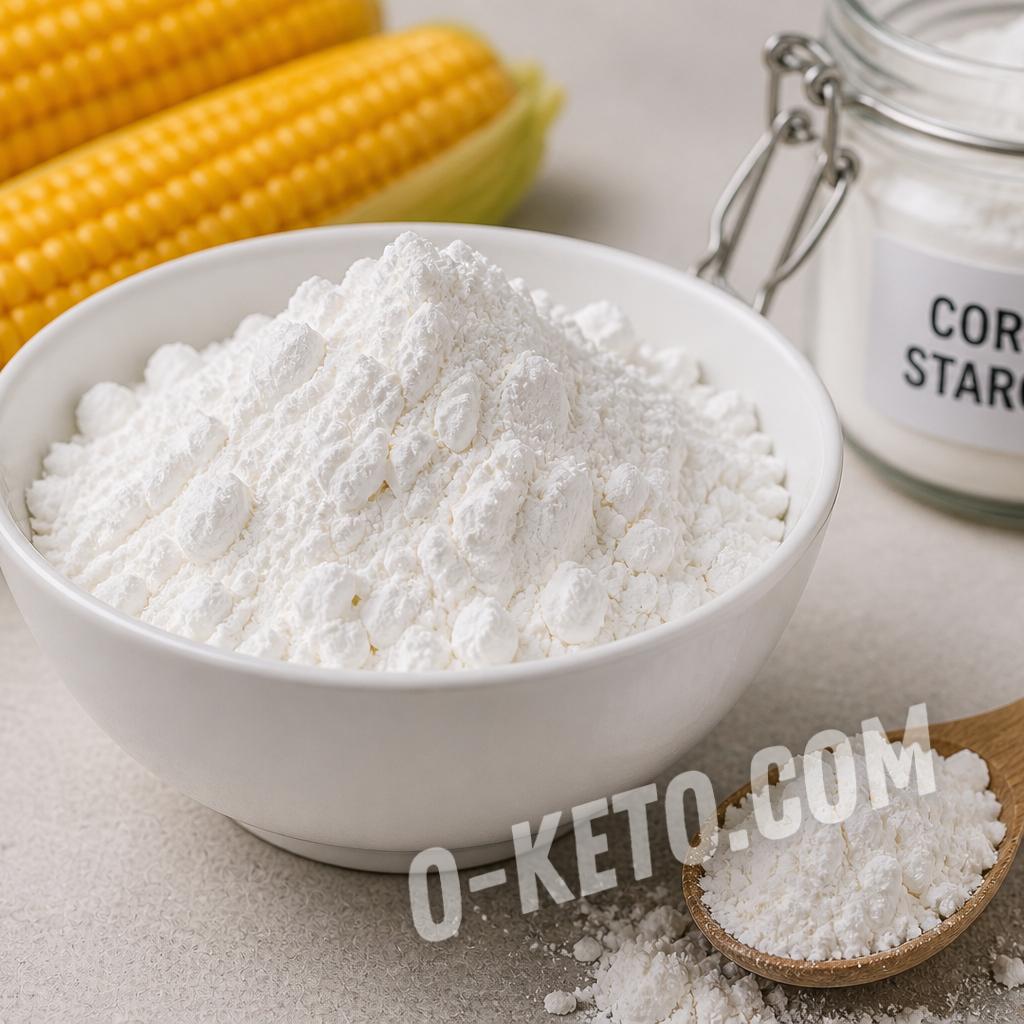

Cornstarch is a white powder made from corn grain and composed almost entirely of starch. In cooking, it is used not for flavor but for texture: it thickens sauces, fruit gels, creams, fillings, soups, gravies, and can make dough softer or more crumbly. In hot liquid, starch swells and gives a smooth thickness.
For keto and LCHF, cornstarch is a difficult ingredient. It is a concentrated carbohydrate with very little protein, fat, or fiber. Even if a recipe uses only one or two spoons, that amount can matter in strict low-carb eating, especially when the final portion is small.
Nutritional value
Per 100 g, cornstarch usually contains about 380 kcal and around 90 g of carbohydrates. Protein, fat, and fiber are almost absent. One tablespoon can provide about 7-10 g of carbohydrates depending on the spoon weight, so “a little for thickness” becomes noticeable quickly in a keto recipe.
Starch is made mainly of amylose and amylopectin. It does not behave like almond or coconut flour, which contain fat, protein, and fiber. Cornstarch is almost a pure starch fraction, so replacing flour with it in keto baking is usually a poor idea.
Place in keto and LCHF
For strict keto, cornstarch usually does not fit. It can raise carbohydrates sharply in a sauce, soup, dessert, or coating, even when the product looks like a small spoonful of powder. If the goal is to keep carbohydrates low, other thickening methods are better.
In more flexible low-carb eating, some people use a pinch of starch in a large pot or a sauce split into many servings, but that depends on the personal limit. The whole recipe matters: one spoon divided into eight servings is different from a sauce for one plate.
How it is used
Cornstarch is first mixed with cold water, broth, or milk, then added to hot liquid. If the powder is poured straight into boiling sauce, it often forms lumps. After adding it, the sauce is heated until thick, but long boiling can weaken the texture.
In regular cooking, cornstarch is used for Chinese-style sauces, fruit gels, custards, berry fillings, gravies, and coatings. In keto versions, almost every such use needs rethinking: sweet sauce, dessert, or coating often contains not only starch but also sugar, flour, or syrups.
Starch is especially easy to miss in ready-made mixes: gravy seasonings, instant soups, teriyaki sauces, marinades, sausages, and coating blends. If a product needs to be keto, check not only sugar but also words such as “starch”, “modified starch”, and “corn starch”.
How to choose
Plain cornstarch should be dry, white, without lumps, musty smell, or traces of moisture. Ideally, the ingredient list contains only cornstarch. If the product is sold as a sauce, pudding, or baking mix, it may contain sugar, flavorings, milk powder, and other additives.
Do not confuse cornstarch with corn flour or polenta. Corn flour contains more parts of the grain and behaves differently, while polenta is a coarse grain product. For keto, all of them remain carbohydrate-heavy, but in recipes they do not replace one another one for one.
Storage
Store starch in a dry cupboard, in a tightly closed package, away from steam and strong smells. Moisture causes clumps and can spoil the product. Use a dry spoon and do not hold an open package over a boiling pot.
If the powder becomes damp, smells musty, or shows insect traces, do not use it. A jar with a lid is convenient after opening. Label the jar so it is not confused with powdered sweetener, sugar powder, or flour.
Substitutes
For keto thickening, xanthan gum, guar gum, ground psyllium, gelatin, cream cheese, egg yolks, reducing liquid, or cauliflower puree are used more often. Almond and coconut flour can add body, but they do not create the same smooth translucent texture. The substitute depends on the task: sauce, cream, soup, and dough need different solutions.
Gums are added in very small amounts and should be dispersed with a whisk or blender; otherwise they form lumps and a slippery texture. Egg yolks work for warm sauces but need gentle heat. Reducing liquid takes longer, but adds no carbohydrates and often gives the cleanest taste.