


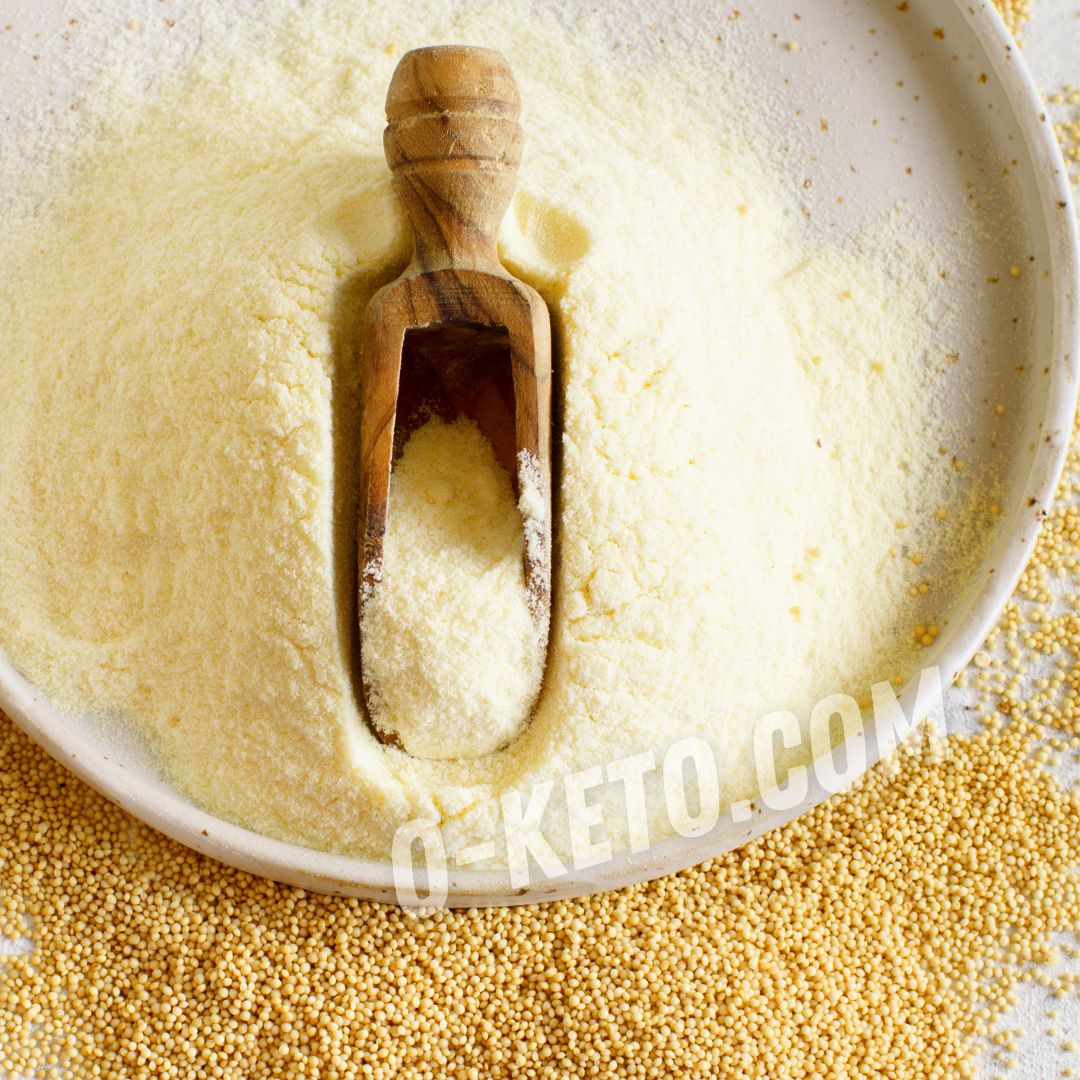

Amaranth flour is made from amaranth seeds, a pseudocereal with a nutty, grassy flavor and a fine, slightly dense texture. In ordinary cooking it is used for bread, pancakes, flatbreads, galettes, porridge, breading and gluten-free mixes. It gives baking a darker color, a light earthy note and good nutrient density, but by carbohydrates it is closer to grain flour than to almond or flax flour.
For low-carb eating, amaranth flour must be judged carefully. Approximate values per 100 g may be about 371 kcal, 13.6 g of protein, 7 g of fat and 65 g of carbohydrates. The glycemic index is often listed around 70. Values differ by producer, but the main point remains: this is not a basic keto flour, but an ingredient for rare and very small additions if a looser LCHF approach is acceptable.
Nutrition
Amaranth contains plant protein, fiber, magnesium, iron, phosphorus, manganese, B vitamins and natural plant compounds. Its amino acid profile is more interesting than that of many grains, but this does not remove the high share of starchy carbohydrates. Useful micronutrients do not make amaranth flour free for strict keto.
In recipes, the real serving matters more than the table per 100 g. One tablespoon may provide far fewer carbohydrates than a portion of bread made from this flour, but several spoonfuls in dough already affect the daily limit. If net carbohydrates are counted, the label should be checked: some carbohydrates may come from fiber, yet most amaranth flour still remains a carbohydrate-rich product.
Is It Keto-Friendly?
For strict keto, amaranth flour is usually unsuitable as a base. It cannot be used like almond, coconut, flax flour or psyllium. Even without gluten it remains starchy, and gluten-free does not mean low-carb.
In moderate LCHF, 1-2 teaspoons may be used for flavor, color or structure, especially when the rest of the mix is built from low-carb ingredients. A good approach is to add amaranth flour as a small part of the dry mix, not to replace all flour in a recipe. After such a change, carbohydrates per serving should be recalculated.
How to Use It
Amaranth flour absorbs liquid, makes dough denser and can add slight crumbliness. Its flavor pairs with eggs, butter, cottage cheese, cheese, seeds, nuts, cinnamon, cocoa, lemon zest and plain yogurt. In savory baking it works with sesame, flax, caraway, paprika and aged cheeses.
Practical options include:
- a teaspoon in a mix for low-carb flatbreads;
- a small share in pancakes with eggs and cottage cheese;
- an addition to almond or flax flour for a more bread-like flavor;
- light breading for a meal outside strict keto;
- part of a mix for savory seed crackers.
How to Choose and Store
The ingredient list should contain only flour from amaranth seeds. Sugar, wheat flour, starch, milk powder, flavorings and ready pancake or bread mixes are undesirable. If the product is sold as a gluten-free mix, check whether it is based on rice, corn or potato ingredients.
Fresh amaranth flour smells mild, grain-like and a little nutty. Bitterness, mustiness, damp lumps and a sharp odor point to poor storage. At home, keep it tightly closed in a dry cool place; a large package is better refrigerated or frozen if used rarely.
Limits and Substitutes
The main limit is carbohydrates. The second is flavor: amaranth flour is not neutral and can add a grain-like note to delicate desserts. The third is texture: when used in a large share, dough becomes dense, and without gluten it often needs eggs, psyllium, dairy protein or another binder.
For strict keto, almond, coconut, flax, sesame, pumpkin seed flour and psyllium are usually better. If a more bread-like flavor is needed, a little amaranth flour can be mixed with flax and almond flour, but it should remain a secondary ingredient. If neutral structure is needed, psyllium or coconut flour in a tested recipe is usually more reliable.
Portion and Common Mistakes
The most common mistake is treating amaranth flour as keto simply because it is gluten-free and comes from a nutritious plant. In a low-carb menu, the deciding point is not the ingredient’s reputation but carbohydrates in the finished serving. It is safer to start with 5-10 g for the whole recipe and see how it changes both flavor and calculation.
The second mistake is adding liquid too early. Amaranth flour does not thicken instantly, so dough benefits from resting for 5-10 minutes. After that, it becomes clear whether water, cream or egg is needed. If too much liquid is added at the start, the finished bake may turn wet and heavy.
Substitution options in recipes
Quinoa. Ground into flour. In a one-to-one ratio. Both are rich in lysine and gluten-free. Quinoa has a slight bitterness—rinse the grain thoroughly before grinding or add ½ tsp of lemon juice to 100 g of dough to "neutralize" the saponins.


