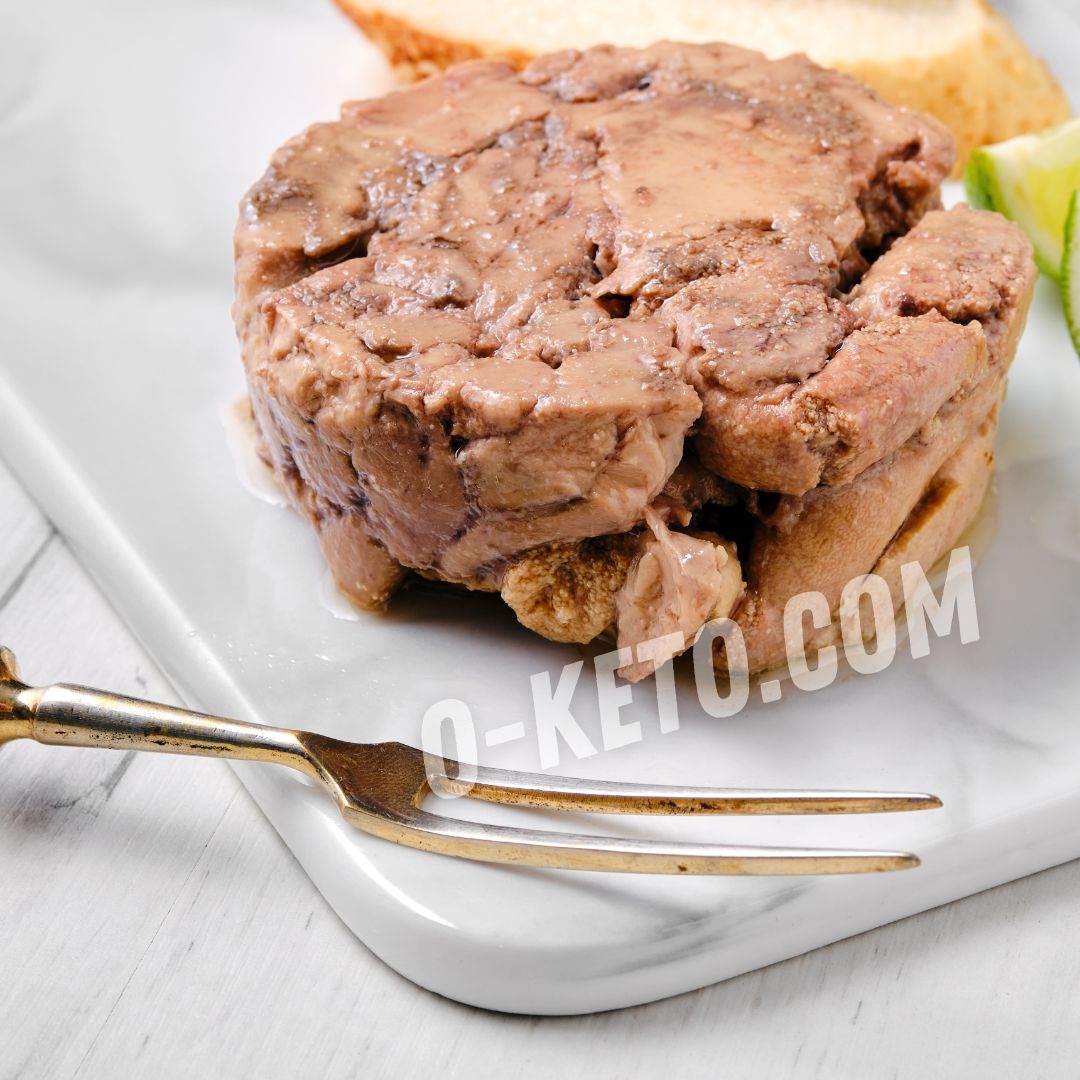

Pollock liver is a fatty fish offal with a very rich taste and a soft, almost pâté-like texture. It is most often sold canned: in its own fat, with salt, sometimes with spices. In culinary role it is closer to cod liver than to ordinary fish fillet: it is eaten in small portions, added to appetizers, spreads, salads, and served with eggs, herbs, or low-carb crispbreads.
This product is valued for its high fat content, vitamins A and D, and the omega-3 fatty acids EPA and DHA. But because fat-soluble vitamins are concentrated in it, pollock liver should not be treated as a “more is better” food. It can be included carefully, especially when a dense fatty appetizer without sugar or starch is needed.
Nutritional value
Values depend on the producer, packing liquid, and how much fish fat remains in the can. On average, 100 g of pollock liver may provide about 600 kcal, roughly 4 g of protein, 60–66 g of fat, and about 1 g of carbohydrates. Most calories come from fat, so a usual serving is often smaller than 100 g: a few pieces, a spoonful for a spread, or part of a salad.
The fats include saturated, monounsaturated, and polyunsaturated fractions. For marine fish, EPA and DHA are especially relevant, but the exact omega-3 share depends on the raw material and batch. Pollock liver also contains vitamin A, vitamin D, phosphorus, a little iron, and magnesium. The carbohydrate load of a plain product is minimal if there are no sauces, sugar, starch, or flour-based additions.
Is it suitable for keto?
For keto and LCHF, pollock liver fits well by macronutrients: a lot of fat, very few carbohydrates, and a moderate amount of protein. It can replace sweeter or starchier appetizers and quickly make a dish more filling. Good pairings are eggs, cucumber, avocado, green onion, dill, lettuce leaves, lemon juice, butter, sugar-free mayonnaise, and keto crispbreads.
The main point is to remember that it is a concentrated product. Eating the whole can together with all the fat gives a large portion of calories and vitamin A. For strict tracking, it is more convenient to separate a portion in advance and count not only the liver, but also the oil from the can if it goes into a salad or sauce.
How to use it
Pollock liver is best served cold or slightly brought to room temperature. With strong heating, it quickly loses its tender texture and may develop a heavy smell. The simplest option is to mash it with a fork with egg, herbs, and a little lemon juice. This makes a spread for cucumber slices, lettuce leaves, or low-carb crispbreads.
In salads, pollock liver pairs with eggs, fresh cucumber, radish, celery, avocado, lettuce leaves, sugar-free pickles, and herbs. Acid and freshness balance the taste well: lemon, lime, sugar-free vinegar, capers, green onion, parsley, dill, and black pepper. Add salt carefully because canned products may already be salty.
If the taste feels too dense, part of the fat from the can can be left out, and the liver can be mixed with lighter ingredients: cucumber, herbs, egg, or high-fat unsweetened yogurt. For a pâté texture, butter or cream cheese can be used, but the portion becomes even more energy-dense.
How to choose
The best guide is a short ingredient list: pollock liver, salt, its own fat or oil, sometimes bay leaf and pepper. The can does not need sugar, starch, flour, thickeners, or sauces with an unclear base. Good pieces should be light or beige-cream in color, without a sharp rancid smell or metallic bitterness.
Check the production date, can integrity, and storage conditions. Swollen, rusty, seam-dented, or leaking cans are not suitable. After opening, the product should smell of marine fish and fat, not sour fermentation. If the fat is cloudy in an unusual way, the smell is unpleasant, or the texture is slimy, it is better not to use it.
Limitations
The main limitation is vitamin A. Liver from marine fish contains a lot of it, so large portions and frequent use are undesirable, especially for pregnant women, children, and people already taking retinol supplements. If there are medical limits on vitamin A or D, such products should be discussed with a specialist.
Like other seafood, pollock liver may not suit people with fish allergy. Heavy metals and contaminants depend on raw material and producer control; therefore it is better to choose reliable brands and not make this product an everyday base of the diet. Because of salt, canned liver also requires caution when sodium is limited.
How to store it
An unopened can is stored according to the producer’s instructions, usually in a cool dry place. After opening, transfer the liver to a glass or food container, close it, and keep it in the refrigerator. It is best used within 1–2 days. Do not leave the product in an open tin can: the taste worsens quickly, and the smell spreads to nearby foods.
What can replace it?
The closest replacement is cod liver. For a similar fatty fish appetizer, sardines, mackerel, burbot liver, sugar-free fatty fish pâté, or canned tuna mixed with oil and egg can work, though the taste will be less tender. If only fat is needed in a salad, avocado, olive oil, or sugar-free mayonnaise can be used, but they will not replace the marine flavor.