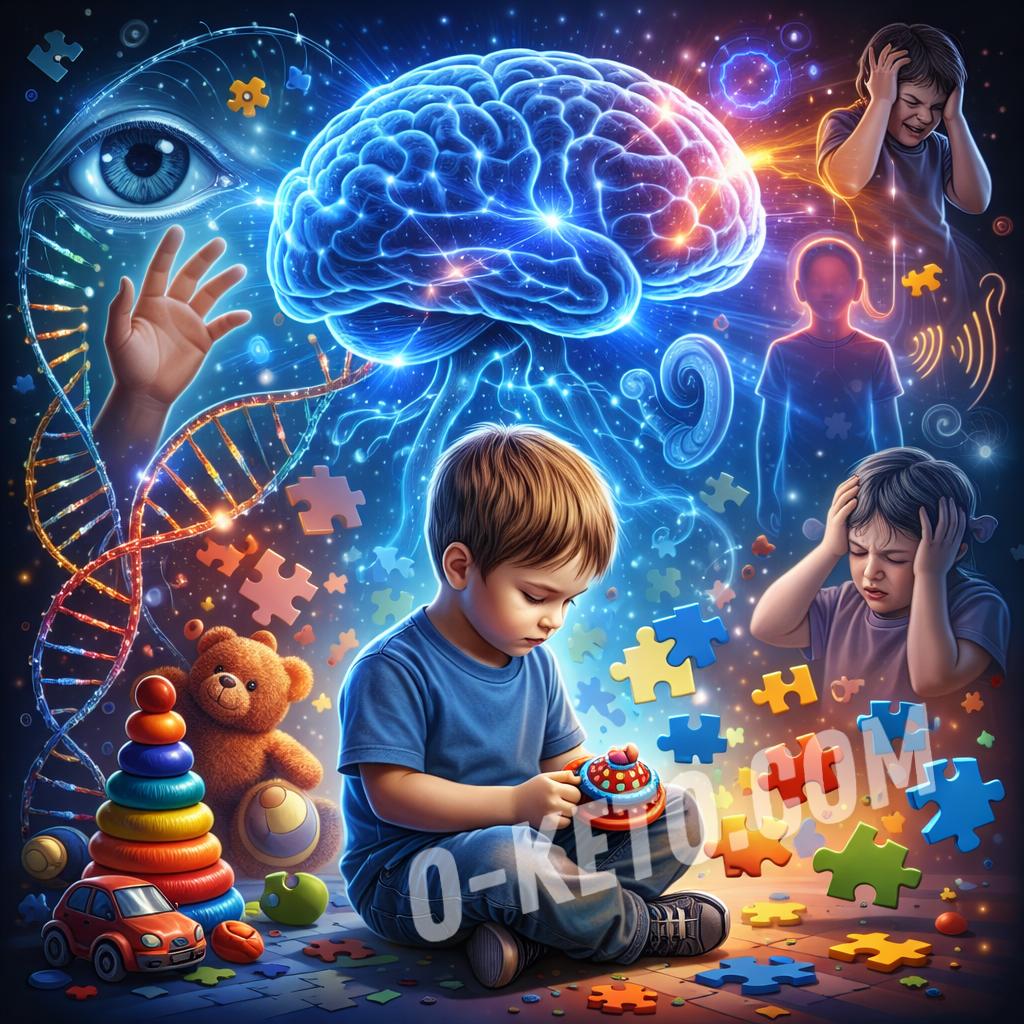
Autism — is a neurodevelopmental condition associated with the peculiarities of brain formation and functioning, where the processing of sensory information, social interaction, and communication is altered. Autism is not a disease in the classical sense and does not «appear suddenly» — it develops in the early stages of the nervous system’s development and accompanies a person throughout their life.
Modern understanding of autism views it as a spectrum of conditions that differ in the severity of symptoms, level of cognitive development, and ability to adapt socially. The key factor is not brain damage, but a different organization of neural connections and regulation of excitation and inhibition in the nervous system.
Signs of Autism
Manifestations of autism can vary significantly; however, a number of characteristic features are identified:
difficulties in social interaction and establishing contacts;
peculiarities of verbal and non-verbal communication;
limited interests and a tendency towards repetitive behaviors;
increased or decreased sensitivity to sounds, light, and touch;
the need for predictability and structure in the environment.
It is important to understand that the severity of these signs can change with age and with proper support.
Social Features. People with autism often perceive social signals differently. They may find it difficult to recognize emotions from facial expressions, intonation, or gestures, as well as to understand the unspoken rules of communication. This is not related to a lack of interest in people, but is due to the peculiarities of how the brain processes social information.
Communication Features. Communication in autism can develop in various scenarios. Some individuals do not use spoken language, while others have speech but struggle with dialogue, transferring meaning, or understanding context. Echolalia, literal understanding of phrases, and difficulties with abstract concepts are possible.
Causes and Neurobiological Mechanisms
Autism is considered a multifactorial condition. Among the key factors are:
genetic features affecting the development of neural networks;
disruption of the balance of excitatory and inhibitory neurotransmitters;
changes in sensory integration;
metabolic and mitochondrial features;
the influence of environmental factors during critical periods of development.
Particular attention is given to the role of deficiencies in magnesium, B vitamins, fatty acids, and disruptions in detoxification processes, which may exacerbate manifestations of the autistic spectrum.
Diagnosis
The diagnosis of autism is based on the assessment of behavior, communication, and development. It includes:
observation of social interaction and speech;
assessment of sensory responses;
analysis of developmental history;
work of an interdisciplinary team of specialists.
Early diagnosis allows for timely initiation of corrective and supportive measures, significantly improving the prognosis for adaptation.
Approaches to Support and Correction
Support for people with autism is aimed not at «correcting» but at developing skills and adapting to the environment:
behavioral and developmental programs;
speech therapy and sensory therapy;
training in communication skills;
creating a predictable and safe environment;
support for families and training for parents.
In some cases, medications may be used to correct accompanying conditions such as anxiety, sleep disorders, or hyperactivity.
Quality of Life and Prospects
With proper support, many people with autism are capable of learning, working, building relationships, and realizing their potential. A key role is played by understanding individual characteristics, respecting neurodiversity, and creating conditions in which a person can feel safe and confident.
Autism requires a comprehensive and long-term approach that combines neuropsychological, educational, and family support, as well as attention to the physiological and metabolic aspects of the nervous system’s functioning.
Any remaining questions? Ask chatGPT.:
If you have any questions о термине "Autism", you can ask them to our bot.
Only verified information backed by research, physiology, and biochemistry about your health.
Why diseases occur, how to heal with proper nutrition, vitamins, and minerals, what therapeutic doses to take, and which diet is optimal for your health. What tests to take and how to interpret the results.
In the settings, you can also enable knowledge based on GNM and homeopathy.
We use cookies to ensure the best presentation of our website. If you continue to use the site, we will assume that you are satisfied with it.