


Telomerase
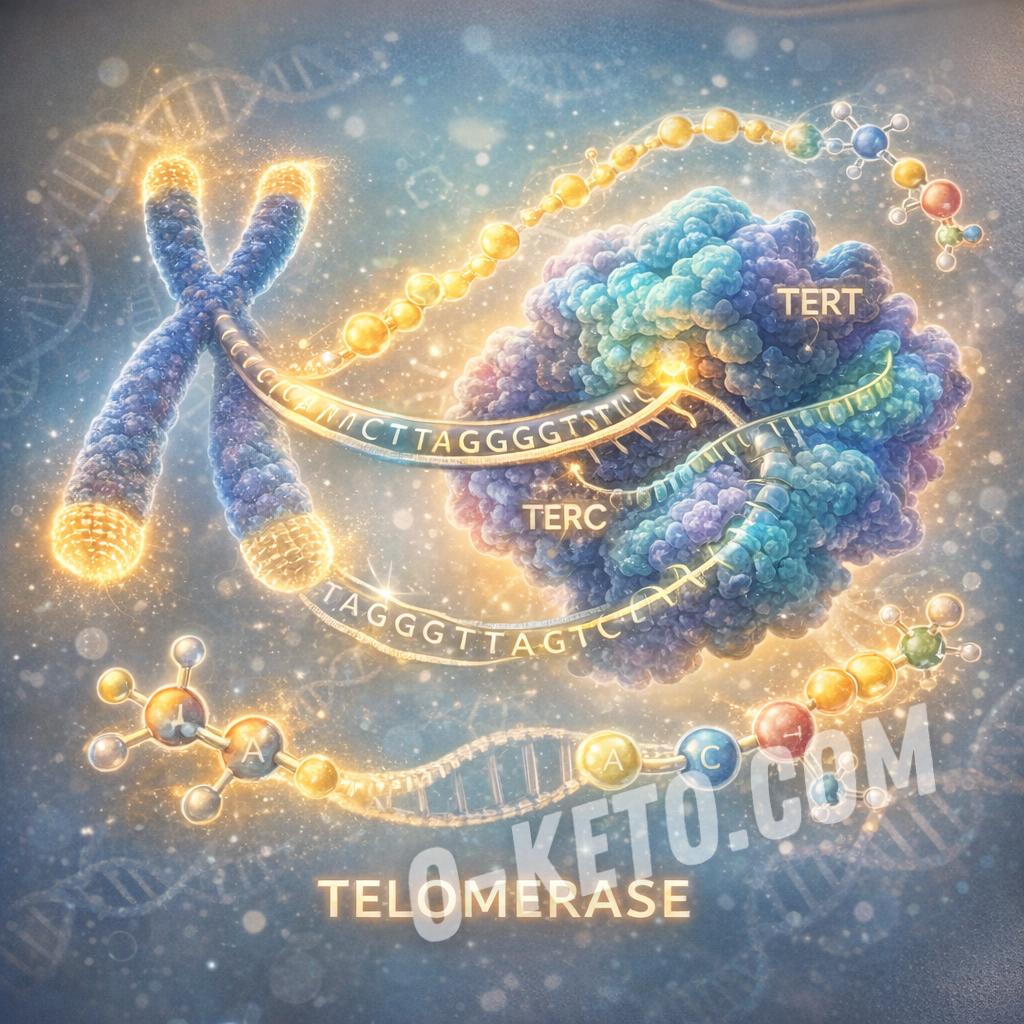
Telomerase is a ribonucleoprotein enzyme complex that maintains the length of telomeres, the end regions of chromosomes. Telomeres serve a protective function by preventing the loss of genetic information during each cell division. The shortening of telomeres is a natural process of cellular aging, and telomerase partially compensates for this shortening.
Structure and Mechanism of Action
Telomerase consists of two key components: the catalytic subunit TERT and the RNA component TERC. TERT functions as a reverse transcriptase, while TERC serves as a template for synthesizing repeating telomeric sequences. The complex uses nucleotides as substrates and elongates the ends of chromosomes, compensating for their shortening after DNA replication.
Without telomerase activity, telomeres gradually shorten to a critical length, after which the cell enters a state of senescence or apoptosis. This mechanism protects the organism from the accumulation of damaged cells.
Where Telomerase is Active
The activity of the enzyme varies depending on the type of cells:
- high activity is observed in stem cells;
- is maintained in germ cells;
- occurs in certain populations of immune cells;
- is significantly increased in most malignant tumors;
- in most somatic cells, activity is low or absent.
This distribution ensures a balance between the ability of tissues to regenerate and the limitation of uncontrolled proliferation.
Biological Role and Consequences
Telomerase is involved in maintaining the regenerative potential of tissues. Insufficient activity accelerates telomere shortening, which is associated with age-related changes in cells. Excessive or uncontrolled activity, on the other hand, increases the risk of tumor growth, as it allows cells to bypass natural division limits.
The length of telomeres depends not only on the activity of the enzyme but also on the level of oxidative stress, inflammation, metabolic state, and mitochondrial function quality.
Lifestyle Factors and Telomere Dynamics
Currently, there are no proven methods for directly regulating telomerase through diet. However, factors affecting cellular stress may indirectly reflect on the rate of telomere shortening:
- reduction of chronic inflammation;
- control of glycemic load;
- maintenance of mitochondrial metabolism;
- adequate sleep;
- moderate physical activity.
These elements support cellular stability, which theoretically contributes to slower telomere dynamics.
Ketogenic Diet and Telomerase
There is insufficient direct clinical evidence regarding the impact of the ketogenic diet on telomerase activity in humans. Nevertheless, ketogenic metabolism may reduce oxidative stress, lower chronic inflammation levels, and improve cellular energy flexibility.
Potential indirect mechanisms include:
- reduction of insulin resistance;
- decrease in protein glycation;
- increased mitochondrial efficiency;
- reduction of systemic inflammation.
These factors may slow cellular aging processes; however, the ketogenic diet is not considered a method for directly managing telomerase activity.
Key Conclusions
- telomerase maintains telomere length and influences the ability of cells to divide;
- activity is limited in most somatic cells;
- hyperactivation is characteristic of malignant tumors;
- lifestyle affects telomere dynamics indirectly through the reduction of cellular stress;
- currently, there are no proven nutritional methods for direct activation of telomerase.
Telomerase is a key element in regulating cellular aging and genetic stability. Maintaining metabolic health and reducing chronic stress remain the most substantiated strategies for preserving cellular function.
If you have any questions о термине "Telomerase", you can ask them to our bot.
List of videos from YouTube by request "Telomerase":


