


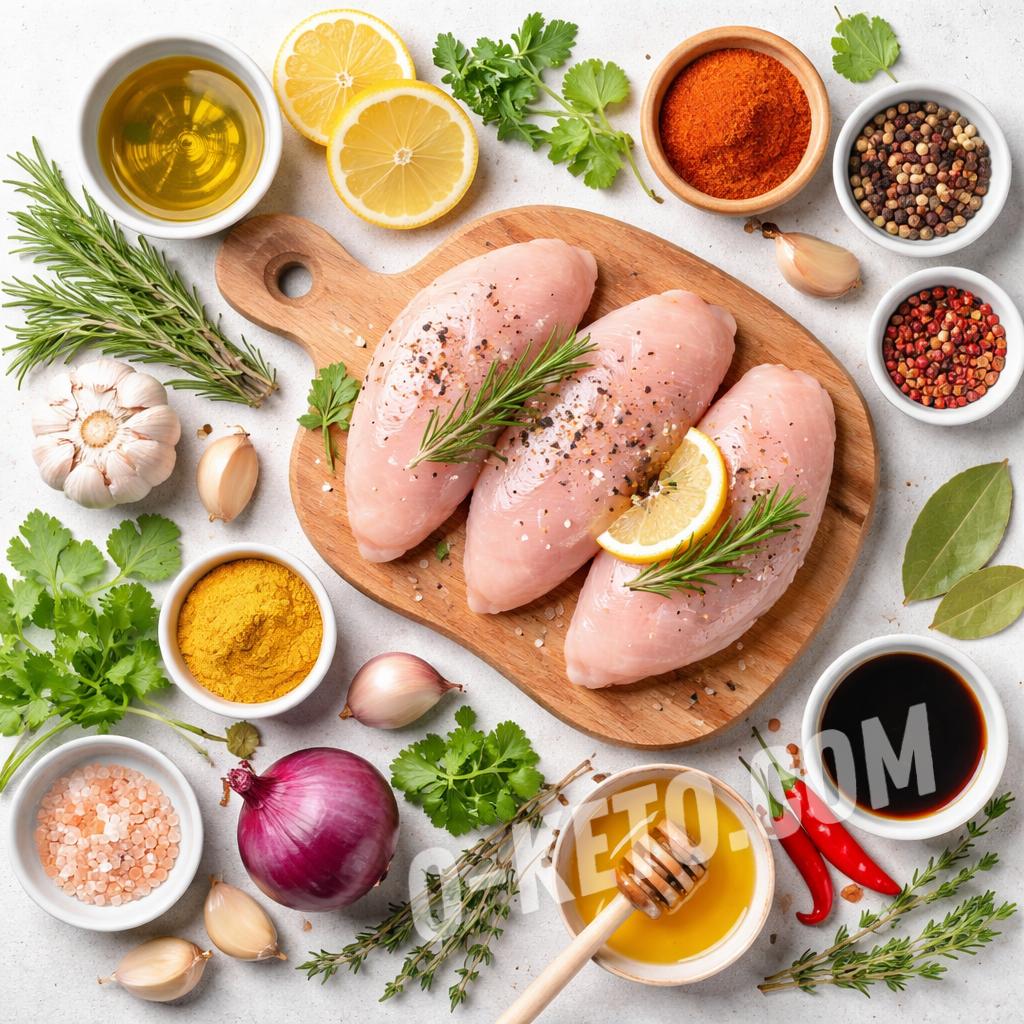

Chicken meat has a neutral taste, so spices and herbs shape its character. Properly selected spices enhance the aroma, emphasize juiciness, and create a recognizable dish profile without overpowering the bird’s own flavor.
Below is a systematic list of the most successful combinations and principles for their use in chicken dishes.
Basic Aromatic Accents
Garlic. Suitable for frying, baking, and marinades. When sautéed, it flavors the oil and enhances the crust. In marinades, it is used as a puree or dried powder.
It pairs especially well with soy sauce and Asian flavor profiles.
Black pepper. A universal spice for all cooking methods. Added to marinades, broths, and finished dishes. Freshly ground is preferred for a more vibrant aroma.
Paprika. Gives the dish a sweetish taste, a slight bitterness, and a rich red hue. Smoked paprika adds a hint of smokiness. It is introduced at the end of cooking to avoid bitterness.
Chili pepper. Used in marinades and sauces to add heat. It highlights the flavor of chicken, especially when combined with a tomato base or Asian spices.
Fresh Herbs
Thyme. Suitable for frying and baking. Added to marinades or oil when sautéing. Pairs well with garlic and lemon.
Rosemary. Has a strong pine aroma. Best used for dark meat or grilling. It’s important to use it sparingly to avoid overpowering the chicken’s flavor.
Oregano. In dried form, the aroma becomes richer. Suitable for sauces and Mediterranean combinations, especially with lemon and olive oil.
Salvia. Has a pronounced aroma but does not overpower the meat’s flavor. Used in frying and baking. Fried leaves can serve as a fragrant accent and a serving element.
Spices of Eastern Profile
Coriander. Ground seeds are used in marinades and spice blends. Pairs well with cumin and turmeric.
Cumin. Added to marinades for kebabs and curries. Provides a warm spicy note, different from caraway.
Turmeric. Gives the dish a yellow-orange color and a mild aroma. Suitable for marinades, stews, and curries.
Ginger. Fresh root is used in marinades. Adds a slight heat and refreshing aroma. It’s best to remove any remnants from the meat’s surface before cooking.
Acidic and Sweet Components
Lemon juice and zest. Juice is used for marinades and final dish refreshing. Zest adds a bright citrus aroma without excessive acidity. Lime can be used as a substitute.
Soy sauce. The base of many marinades. Enhances flavor through umami, well-suited for wings and meat on the bone.
Honey. Creates a balance of sweet and salty, especially when combined with soy sauce, garlic, and ginger. Promotes caramelization of the crust.
Non-obvious but Effective Components
Yogurt. Used as a marinade base. Provides a gentle effect on the meat and an even coating of pieces. Suitable for baking and stewing.
Bay leaf. Essential for boiling broths and stewing. Added to liquid dishes and removed before serving.
Butter. Used in frying and baking to enhance aroma and create a golden crust. For marinades, vegetable oil is preferred.


