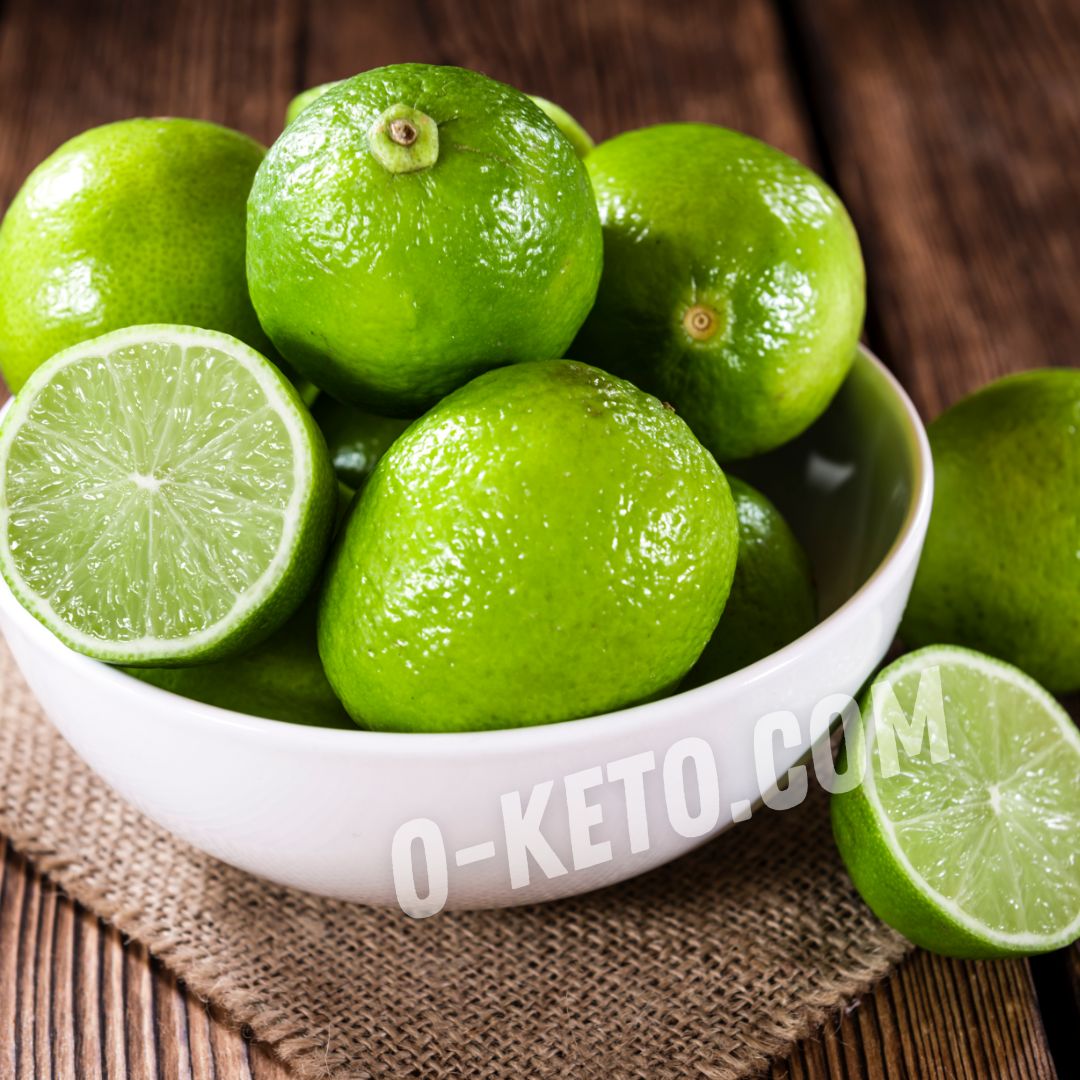

Lime is a small green citrus fruit with bright acidity, a sharp zest aroma and a more piercing flavor than lemon. In food it is used not as a fruit for a large serving, but as a seasoning: the juice goes into sauces, marinades, salads, fish, seafood, meat, vegetables, sugar-free drinks and creams. A few drops often change a dish more than a large spoonful of sauce.
Lime is valued for the combination of acidity and essential oils in the peel. The juice adds freshness, the zest adds aroma, and a wedge on the plate can brighten fatty and salty foods. For keto it is convenient because a normal culinary portion contains little carbohydrate. But if a lot of juice, ready syrups or sweet lime drinks are used, the calculation changes.
Nutrition
Per 100 g of lime, tables usually list about 30 kcal, around 11 g of carbohydrates, 0.99 g of protein and 0.11 g of fat. The glycemic index is often given around 20. One lime may contain about 7 g of carbohydrates, but it is rarely eaten whole: more often 5-15 ml of juice or a little zest is used.
Lime contains vitamin C, potassium, magnesium, organic acids and aromatic compounds in the peel. Its practical role in the diet is not to replace vegetables or a full meal, but to add acidity and aroma without sugar. Therefore, the part actually used should be counted: juice, zest or wedges.
Is It Keto-Friendly?
Lime fits keto and LCHF well as a seasoning. The juice can be added to water, sauces, guacamole, salads, fish, shrimp, chicken, pork, beef, cottage cheese sauces and sugar-free mayonnaise. A couple of teaspoons of juice usually give strong flavor with little carbohydrate.
Caution is needed with drinks. Lime in water or unsweetened tea is one thing; lemonade, cocktail mix, syrup, sugared juice or ready “lime” sauce is another. In such products, carbohydrates usually come not from lime, but from sugar, syrups and fruit concentrates.
How to Use It
Lime juice is best added at the end or after cooking to keep the fresh aroma. In marinades it works quickly: acidity changes the texture of fish and meat, so delicate products should not sit in the juice too long. Zest should be taken only from a well-washed fruit, avoiding the bitter white layer.
Practical options include:
- juice in guacamole, sugar-free salsa or fish sauce;
- zest in cream, cottage cheese or unsweetened yogurt;
- a wedge with fatty fish, shrimp or chicken;
- a few drops in water, sparkling water or cold tea;
- marinade with olive oil, garlic, cilantro and pepper.
Juice and Zest
Juice gives acidity and moisture, while zest gives aroma with almost no meaningful carbohydrates. If a dish does not need extra liquid, zest is often better. If a fresh tart note is needed, use juice. In sugar-free desserts, zest and a few drops of juice are often enough to brighten the flavor.
Lime can become bitter if the white part of the peel is grated or if wedges sit too long in a hot drink. In dairy-based sauces, add juice gradually: acidity can change the texture of cream, yogurt and cottage cheese.
How to Choose and Store
A good lime is heavy for its size, firm, aromatic and has smooth skin without mold. A very hard dry fruit may give little juice. A yellowish shade is not always bad, but often means the flavor is riper and less sharp.
Whole limes can be kept in the refrigerator or at cool room temperature if they will be used quickly. A cut fruit should be covered and refrigerated. Zest can be frozen in small portions, and juice can be frozen in an ice cube tray.
Substitutes
The closest substitute is lemon, though the flavor will be softer and more familiar. For sharper acidity, a little apple cider or wine vinegar can work; for citrus aroma, use lemon zest. In Mexican and Thai dishes, lime is harder to replace because it gives both acidity and a distinctive green aroma.
If lime is needed only to balance richness, lemon juice or vinegar can work. If aroma is needed in cream or a drink, lime zest, lemon zest or a few mint leaves are better.
Serving in Recipes
For accurate tracking, it is easier to count lime juice in teaspoons or milliliters rather than as “half a lime.” Different fruits give different volumes: one dry lime barely changes the carbohydrate count of a dish, while a large juicy fruit can give much more juice. Zest is usually used in pinches, and its carbohydrate contribution is minimal.