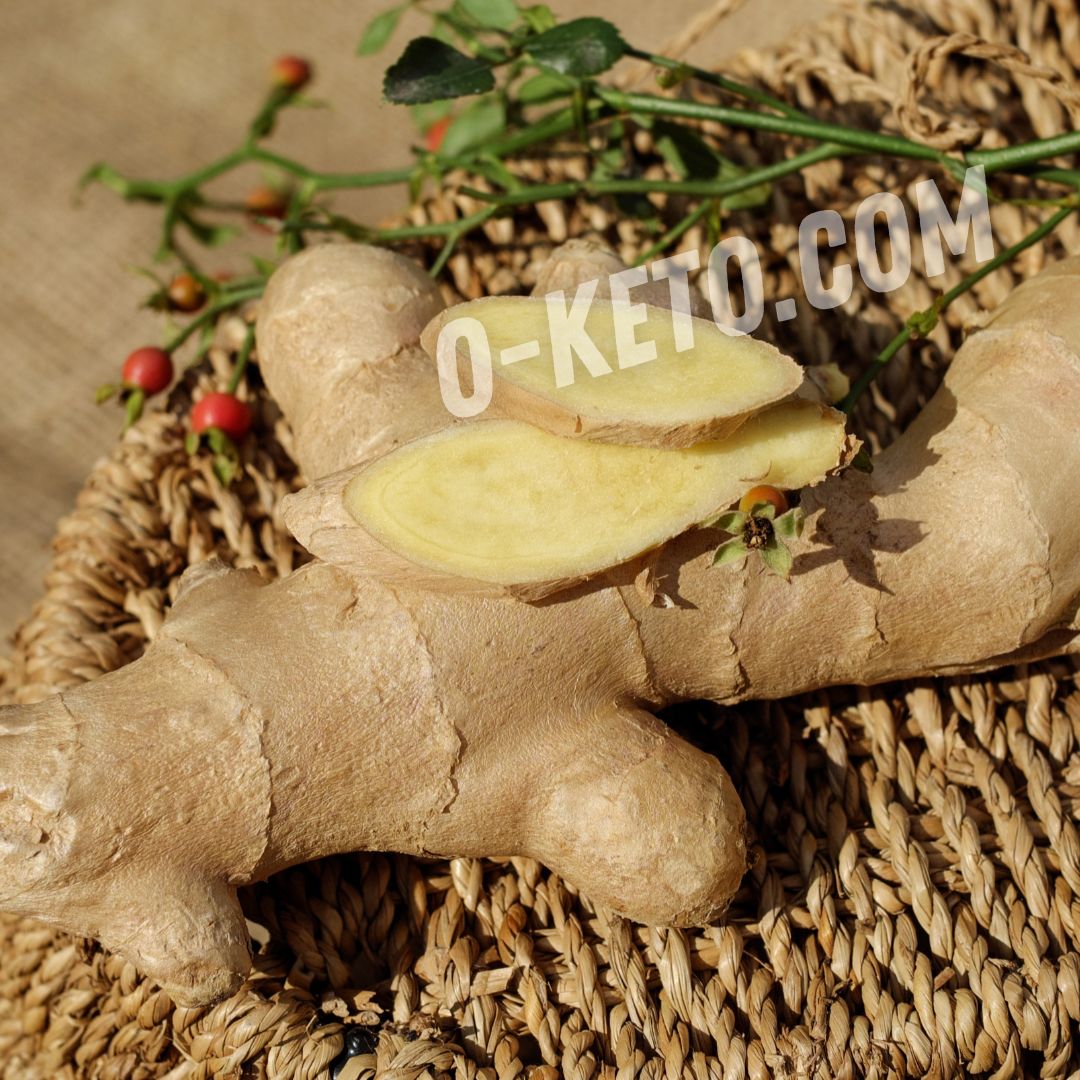

Ginger is a spicy root with a hot taste and a citrusy, woody aroma. It is used fresh, dried, ground, pickled, and in infusions, sauces, soups, meat, and fish dishes.
Its characteristic taste comes from gingerols and shogaols. Ginger also contains small amounts of potassium, magnesium, phosphorus, and vitamin C, but it is usually eaten in small quantities, so it matters more as a spice than as a major nutrient source.
Nutrition
Fresh ginger provides about 80 kcal, 1.8 g protein, 0.8 g fat, and around 18 g carbohydrates per 100 g. In practice, a serving is often 2-10 g, so its carbohydrate contribution is usually small. The glycemic load at these amounts is low.
Is It Keto-Friendly?
Ginger is suitable for keto as a seasoning. It makes rich dishes taste fresher and brighter and pairs well with fish, pork, chicken, beef, coconut milk, lemon, garlic, and chili pepper.
How to Use
Fresh root can be grated into a marinade, sauce, soup, or unsweetened tea. Ground ginger is convenient for baking with almond or coconut flour, but its flavor is drier and warmer. Pickled ginger should be chosen carefully because ready-made versions often contain sugar.
How to Choose and Store
Fresh ginger should be firm, heavy for its size, and free from mold or wet soft spots. Store it in the refrigerator wrapped in paper or in a container. For longer storage, peeled ginger can be frozen and grated straight from the freezer.
Limits
The sharp taste may irritate the stomach in people with sensitivity, reflux, or when eaten in large amounts. If there are individual limits on hot spices or a prescribed eating plan, it is better to use ginger as a small culinary addition.
Fresh, Ground and Pickled
Fresh ginger gives juicy heat and a citrus note. Ground dried ginger is warmer, drier and easier to distribute in spice blends, dough and dry marinades. Pickled ginger is convenient as a condiment, but the ingredient list needs checking: sugar is common in this product.
For keto, fresh root or plain powder without sugar is usually most convenient. Fresh ginger can be grated directly into sauce, soup, minced meat, tea, fish marinade or an oil-and-lemon dressing. Powder is better added gradually because it quickly becomes dominant.
What to Pair It With
Ginger works well with fatty and rich foods because it makes the flavor feel lighter. It suits pork, duck, chicken, beef, shrimp, salmon, coconut milk, lime, garlic, chili, sesame oil and sugar-free soy sauce.
In sugar-free desserts, ginger pairs with cinnamon, cardamom, cocoa, lemon, coconut flour and almond flour. Because of its heat, it is better used as an accent rather than the main flavor.
Portion and Caution
In culinary amounts, ginger usually adds few carbohydrates, but large portions can make a dish harsh. When cooking for several people, start with a small amount and serve extra grated ginger separately.
With a sensitive stomach, reflux or reactions to hot spices, ginger can feel unpleasant even in small amounts. In that case, replace it with gentler aromatics: lemon zest, herbs, garlic, turmeric or a little black pepper.
Common Mistakes
Pickled ginger is often treated as a light condiment, but ready-made jars can contain sugar, sweet vinegar and colorings. If ginger is served with fish or meat on keto, the marinade matters as much as the root itself.
A second mistake is measuring ground ginger the same way as fresh ginger. Powder is drier and more concentrated, and it quickly overwhelms a dish. Fresh root is better for juiciness and aroma; powder is better for a warm spice note.
Substitutes
There is no complete substitute for ginger, but the flavor direction can be rebuilt depending on the task. For freshness, use lemon, lime and herbs; for warm spice, cinnamon, cardamom, black pepper or turmeric; for heat, chili or a little horseradish.
How to Keep the Aroma
Fresh ginger loses juiciness quickly after cutting, so a small piece is best stored away from wet vegetables and grated as needed. For freezing, the root can be peeled, cut into small pieces and kept in a closed bag. Frozen ginger grates easily straight into sauce or marinade, while the rest does not dry out.
In hot dishes, ginger works well in two stages: some at the beginning for depth and some near the end for fresh aroma. In cold dressings, mix it with oil, lemon or sugar-free vinegar so the heat spreads more evenly.
Fresh, dried and candied ginger
The form of ginger changes both flavour and composition. Fresh rhizome is rich in gingerols; drying and heating convert part of these compounds into shogaols, while pickled ginger may contain sugar or a sweet marinade. Candied ginger is unsuitable for keto because of added sugar, not because of the root itself.
Clinical studies have mainly examined ginger in the context of nausea, but a culinary amount of spice is not the same as an extract dose. People taking medicines that affect clotting should be cautious with regular high-dose use.