


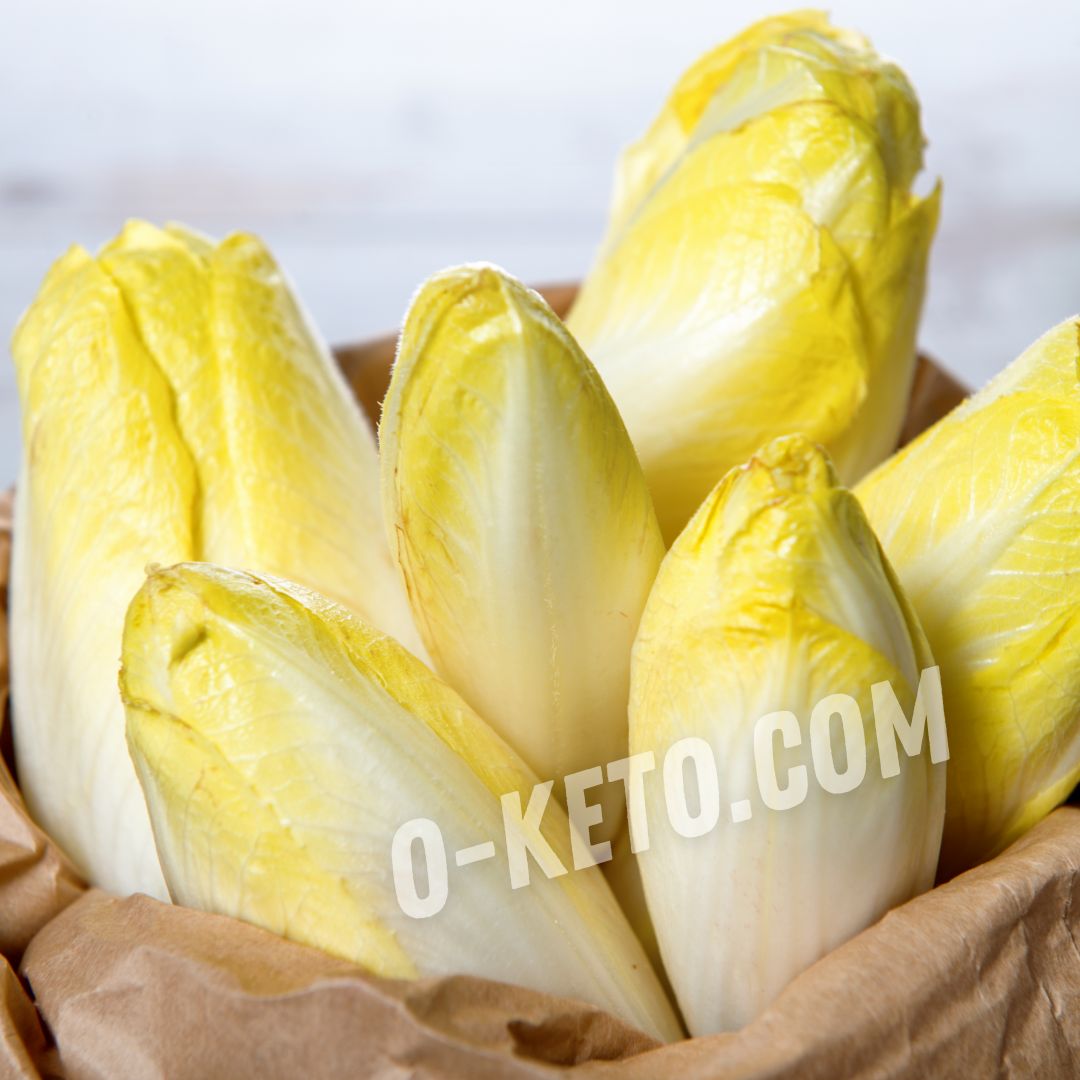

Endive is a leafy chicory vegetable with mild bitterness and a crisp texture. Different forms may be sold under this name: curly endive, escarole or Belgian endive with pale tight heads. In all forms, it is a low-carb green used in salads, appetizers, warm sides and little boats for fillings.
For keto, endive is useful because it adds crunch and bitter freshness without starch or sugar. It can replace bread-like bases for appetizers, add volume to salads and balance fatty foods such as cheese, creamy sauces, fish and meat.
Nutrition
Per 100 g, endive usually contains about 15-20 kcal, around 1-1.5 g of protein, very little fat and about 3 g of carbohydrates, much of which is fiber. Its glycemic load is low, so a normal portion fits keto well.
Endive contains vitamin K, vitamin A, folate, manganese, potassium and inulin, a type of fiber that may feed gut microbiota. But in people sensitive to FODMAPs, inulin can cause bloating, so personal tolerance matters more than attractive words about dietary fiber.
Is Endive Keto-Friendly?
Yes, endive fits keto and LCHF well. It can be used as salad greens, crisp boats for fillings, a cracker replacement for appetizers or a light side dish. It is especially useful when freshness is needed next to a rich meal.
Carbohydrates usually come not from endive but from fillings: sweet sauces, honey, dried fruit, caramelized nuts, breadcrumbs and starchy dressings can make a dish non-keto. Cheese, fish, eggs, meat, sugar-free mayonnaise and olive oil fit better.
How to Use It
Raw leaves can be added to salads or used as small spoons for pâté, egg salad, cream cheese, tuna, salmon or avocado. Bitterness is balanced by fat, acidity and salt. Cooked endive can be quickly sautéed or baked to soften the flavor.
Practical options include:
- leaf boats with tuna, egg or cream cheese;
- salad with olive oil, lemon and cheese;
- a warm side for chicken, fish or bacon;
- a mix with radicchio, romaine and mild greens;
- baked endive with butter and herbs.
How to Choose and Store
Leaves should be firm and fresh, without slime, darkening or sharp smell. Belgian endive heads are usually pale; the more they green in light, the stronger the bitterness may become. Store endive in the refrigerator, protected from excess moisture and light.
Portion and Pairings
Endive can be eaten fairly freely if it does not cause discomfort. A salad portion of 50-100 g gives good volume with low carbohydrates. For appetizers, the leaves are useful because the amount of filling is visible and easier to control.
Best pairings are fatty and salty foods: blue cheese, goat cheese, eggs, tuna, salmon, bacon, chicken, olive oil, sour cream and sugar-free mayonnaise. Sweet fruit in classic salads is better replaced with a small amount of berries or a tart dressing.
Limitations and Substitutes
Bitter leaves may not appeal to children or people with sensitive stomachs. Inulin and fiber may cause gas in some people. If endive does not suit you, use romaine, lettuce, radicchio, frisée, Napa cabbage, arugula or cucumber for crunch.
Common Mistakes
Endive is easy to spoil with a filling that is too sweet or too heavy. The leaves are small, and if a lot of sauce, dried fruit or glazed nuts are added, the appetizer quickly becomes dessert-like in carbohydrates. Salty, fatty sugar-free fillings work better.
Another mistake is dressing an endive salad too early. The leaves quickly lose crunch and become wet. For a good presentation, keep the leaves dry and add sauce just before eating.
If the bitterness seems too strong, sugar is not the best solution. Lemon, salt, olive oil, cheese, fish or egg usually work better. Bitter greens often become more pleasant next to fatty and salty foods.
How to Soften Bitterness
If endive tastes too bitter, it does not need sugar. Acid, fat and salt work better: lemon juice, wine vinegar, olive oil, cream cheese, egg, fish or bacon. With Belgian endive, the dense base can be trimmed because bitterness is often stronger there, and the leaves are best served cold and dry.
For appetizers, fill the leaves just before serving. If the filling sits too long, endive loses crunch and releases water. For a buffet, it is more convenient to keep dry leaves and the sugar-free filling separately, then assemble them at the last moment.


