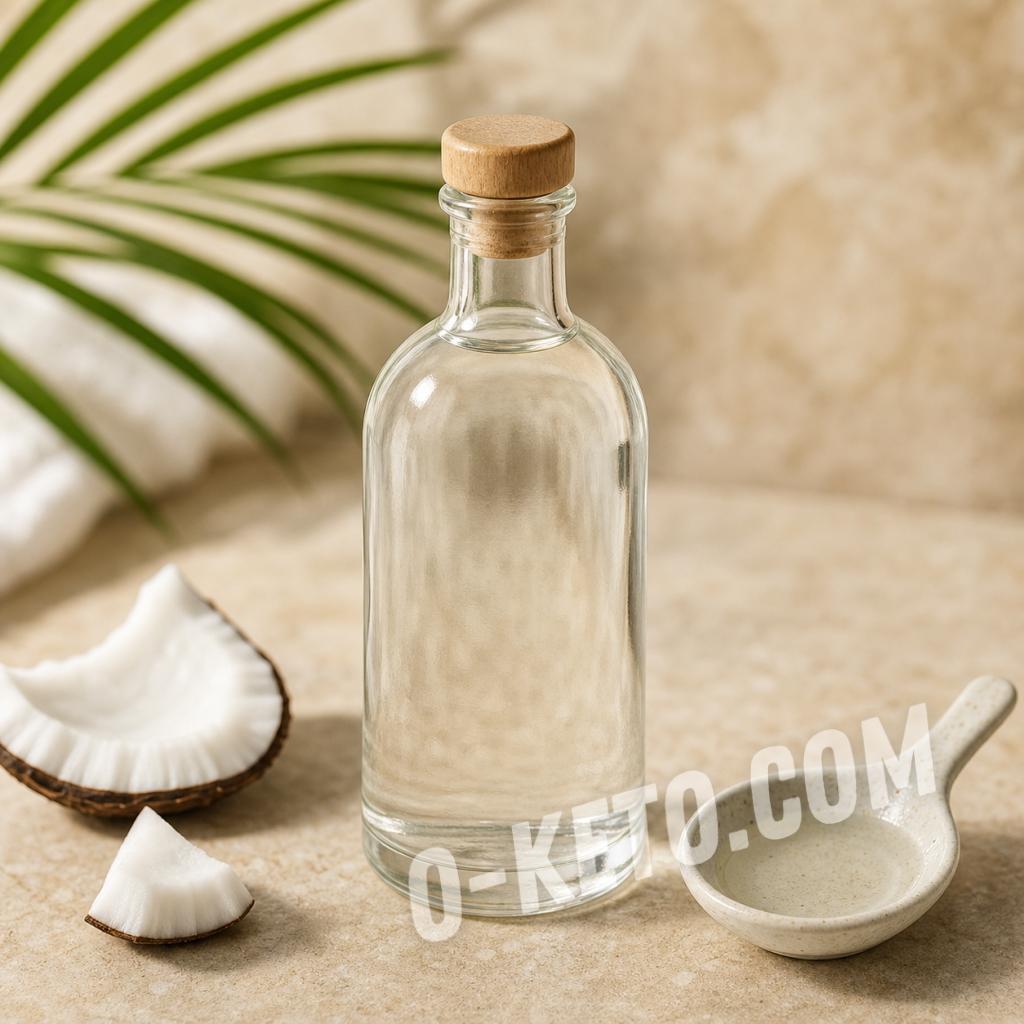

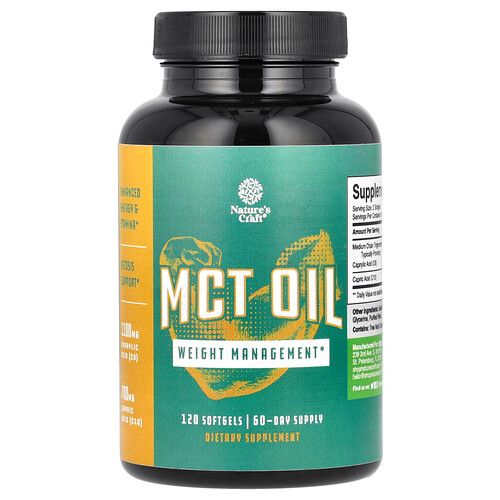
MCT oil is a dietary fat made mainly of medium-chain triglycerides. It is produced from coconut or palm-kernel oil, but purification leaves much more caprylic C8 and capric C10 than ordinary coconut oil.
What it is
MCT oil is a dietary fat made mainly of medium-chain triglycerides. It is produced from coconut or palm-kernel oil, but purification leaves much more caprylic C8 and capric C10 than ordinary coconut oil.
How it relates to ketones
These fats reach the liver more readily and can be used to produce ketones. MCT can raise ketones without prolonged fasting, but the result depends on dose, diet, and individual metabolism. This effect is not proof that it treats disease.
How to choose and use
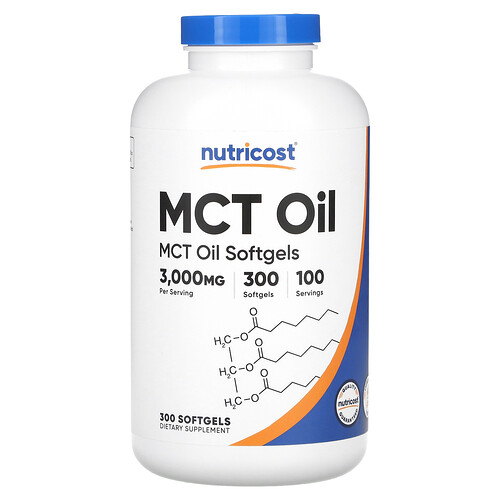
MCT oil is liquid and nearly neutral. Add it to finished food, a dressing, sauce, or drink; it has no special advantage for frying. Start with a small serving because too much may cause nausea, cramps, or loose stools. With gastrointestinal, liver, or gallbladder disease, discuss it with a clinician. The label should state C8, C10, or a blend; sugar and syrups are unnecessary. Keep it tightly closed away from light and strong heat.
Sources
- Medium-chain triglyceride oil consumption and ketosis in healthy adults: randomized crossover trial
- Medium-chain triglycerides and cognitive function: systematic review and meta-analysis
Substitution options in recipes
Coconut oil. The profile of medium-chain fats is similar, but the melting temperature is higher — in glazes and chocolate, the mass solidifies more slowly.