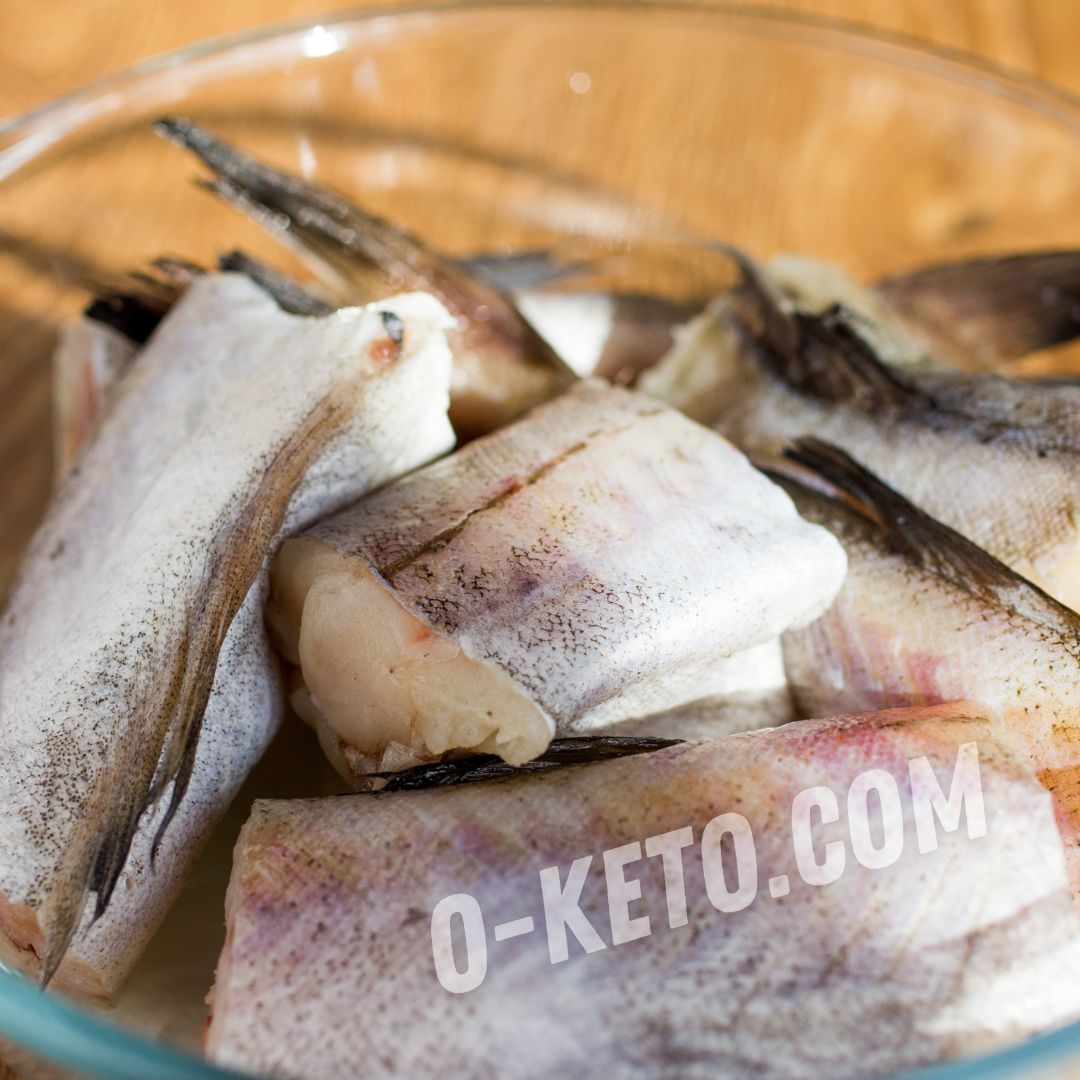

Pollock is a white sea fish from the cod family. It lives in the cold waters of the northern Pacific and is often sold as frozen fillets, whole cleaned fish, mince, fish sticks, or surimi. Pollock has a mild taste, tender flaky flesh, and very little natural fat, so it easily takes on the flavor of sauce, butter, spices, and side dishes.
For keto and LCHF, pollock is convenient as a carbohydrate-free protein source, but there is one important detail: the fish itself is very lean. If it is cooked without added fat, the dish can turn dry and not very filling. In low-carb meals, pollock works better with butter, olive oil, cream sauce, eggs, cheese, avocado, or vegetables dressed with fat.
Nutritional value
Per 100 g, pollock usually contains about 70-80 kcal, 18-20 g of protein, 0.5-1 g of fat, and 0 g of carbohydrates. The glycemic index is zero because fish contains no carbohydrates. A 150-200 g serving provides a substantial amount of protein and fits keto well when paired with enough fat and a low-carb side.
Pollock contains vitamin B12, selenium, phosphorus, and a small amount of omega-3 fatty acids. It is much leaner than salmon, mackerel, or herring, so it should not be expected to feel as rich. Its strengths are accessible protein, neutral flavor, and convenience for simple meals.
Place in keto and LCHF
Plain pollock fits keto because it has no carbohydrates and plenty of protein. The problem is usually in ready-made products. Fish sticks, breaded cutlets, battered fillets, starch-containing semi-prepared foods, and sweet sauces may add a noticeable carbohydrate load. For strict keto, choose simple fish without coating or fillers.
Because pollock is lean, it is not best served as “fish plus dry salad.” A better plate is pollock with cream sauce, cauliflower with butter, salad with olive oil, egg, homemade mayonnaise, or a cheese crust. The meal stays low-carb but becomes more satisfying.
How to cook
Pollock dries out easily, so short cooking is best. Fillets can be simmered in cream, steamed with butter, quickly pan-cooked over moderate heat, baked under sauce, or used in fish cakes without bread. If the fish was frozen, thaw it in the refrigerator and pat it dry before cooking.
For frying, use a keto coating such as almond flour, sesame seeds, grated cheese, or crushed pork rinds if you want a crust. Pollock is also good without coating: salt, lemon, pepper, butter, dill, parsley, garlic, and a little cream give a clean flavor without extra carbohydrates.
What it pairs with
Pollock pairs well with cauliflower, broccoli, summer squash, zucchini, spinach, cucumbers, lettuce, mushrooms, eggs, butter, sour cream, cream, cheese, lemon, dill, and parsley. Suitable spices include black pepper, paprika, bay leaf, thyme, and a little garlic.
If you want a brighter dish, make a sauce: cream with lemon, sour cream with herbs, sugar-free tomato sauce, mustard sauce without sweet additions, or a butter sauce with capers. Pollock has neutral flesh, so the sauce often decides whether the dish feels plain or well-rounded.
How to choose
Frozen pollock should not have a thick layer of ice, yellow spots, dry white patches, or a sharp fishy smell. Fillets should look firm, without a lot of crumbs and snow inside the package. If the fish is glazed, check how much actual fish is listed on the label.
Mince and semi-prepared products need closer reading. They may contain starch, flour, sugar, vegetable oils, flavor enhancers, or breading. For keto, it is simpler to buy fillets or whole cleaned fish and add fat, sauce, and spices yourself.
Limits and storage
Like any fish, pollock needs careful storage. Thaw it in the refrigerator, do not leave it at room temperature for long, and avoid refreezing unless necessary. Store cooked fish in a closed container in the refrigerator and eat it within the next few days.
People with fish allergy should avoid pollock. If you limit salt, pay attention to prepared pollock products: fish sticks, cutlets, and surimi usually contain more salt than plain fish.
Substitutes
The closest substitutes are cod, hake, haddock, saithe, navaga, and other lean white fish. If you need a richer fish without adding much sauce, salmon, mackerel, or herring can work, but the taste and fat content will be different. In recipes, replace pollock with fish of similar thickness so the cooking time stays short.