


Increased anxiety
Persistent internal tension, difficulty relaxing, and sensitivity to stress may reflect a state of increased anxiety. Here it is important to take into account sleep, stimulants, somatic causes and, if necessary, seek professional help in time.


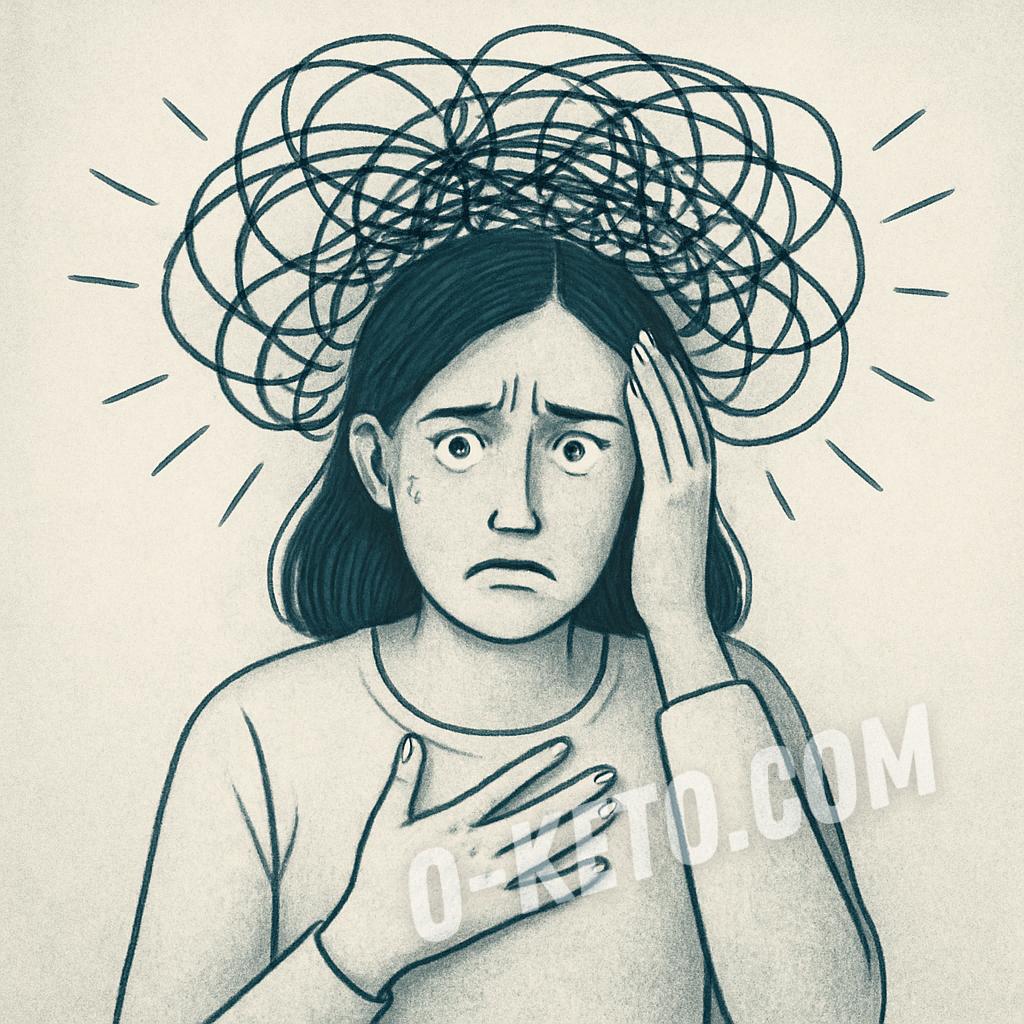
Increased anxiety is a condition in which a feeling of internal tension, expectation of an unfavorable outcome and increased vigilance occurs more often or stronger than the situation requires. This does not necessarily mean a developed anxiety disorder, but it already indicates that the nervous system is operating in a mode of increased mobilization. A person may remain outwardly collected and functional, but inside he constantly feels background anxiety, difficulty relaxing, an accelerated flow of thoughts, tension in the body, and poor sleep.
It is important to distinguish increased anxiety from ordinary excitement before real workload. Brief anxiety may be a normal adaptive response. The problem begins when tension becomes constant, interferes with concentration, impairs the tolerance of daily tasks, increases control over bodily sensations and gradually begins to control the pattern of sleep, eating, work and rest. In such cases, anxiety ceases to be just a personality trait and becomes a significant condition that is useful to work with meaningfully.
How does increased anxiety usually manifest itself?
The most common manifestations are internal restlessness, inability to completely relax, a tendency to replay negative scenarios, muscle tension, irritability, shallow sleep, increased sensitivity to noise and information overload. Some people experience more severe physical symptoms: palpitations, trembling, discomfort in the stomach, a feeling of shortness of breath, frequent urination due to stress, dizziness or sweating. Because of this, a person may think that the problem is more physical, although much of the symptoms are supported by the nervous system.
Increased anxiety often affects behavior. Someone begins to avoid conversations, decisions or places where they can become uncomfortable, someone checks and controls too much, and someone, on the contrary, overloads themselves with activities so as not to be left alone with internal tension. Both options support the problem because the nervous system does not gain the experience of sustainable security and recovery.
What most often worsens the condition?
Anxiety usually becomes stronger due to lack of sleep, chronic stress, excess caffeine, alcohol, irregular nutrition, large changes in blood sugar, overwork and constant information stimulation. Hormonal fluctuations also play a significant role in some people, especially if they already have a tendency to react sensitively to stress. Sometimes the condition worsens after a period of hard work without rest, emotional conflict, illness or strict dietary experiments.
It is also important to remember somatic causes that can look like anxiety or make it worse. Similar complaints occur with hyperthyroidism, iron deficiency, anemia, sleep disturbances, severe hypoglycemia, alcohol withdrawal, excess stimulants and certain drug effects. Therefore, when anxiety becomes persistent or is accompanied by vivid bodily symptoms, it is useful to evaluate the broader picture, and not limit ourselves to introspection.
How anxiety affects sleep and daily life
One of the most typical circles looks like this: a person is anxious, because of this he sleeps worse, and against the backdrop of poor sleep he becomes even more sensitive to stress and internal sensations. The higher your background alertness, the harder it is to switch off in the evening, the easier it is to wake up in the middle of the night, and the more exhausted you feel the next day. Because of this, concentration decreases, the craving for quick solutions and stimulants increases, and the nervous system goes even deeper into overload mode.
Over time, increased anxiety can even change eating behavior. Some people lose their appetite and eat irregularly, while others are more likely to reach for sweets or constantly snack as an attempt to quickly relieve stress. In the short term this can provide subjective relief, but in the long term it often worsens the stability of energy and increases the general background of dysregulation.
When is a professional assessment needed?
You should consult a doctor or psychotherapist if anxiety has become constant, interferes with sleep, relationships, work, or is accompanied by panic episodes, severe insomnia, depressive thoughts, or avoidance of normal life. A situation that requires special attention is when strong bodily symptoms come to the fore, which are frightening in themselves: a feeling of suffocation, palpitations, fainting, sudden weight loss or severe weakness. Here it is important to exclude somatic causes and then build an accurate strategy for help.
A professional assessment does not mean that something catastrophic is happening to a person. On the contrary, it helps us understand earlier what exactly we are dealing with: a reaction to overload, an anxiety disorder, a combination of anxiety and sleep disorders, or a condition that disguises itself as anxiety through bodily symptoms.
A practical approach to support
A combination of several strategies usually works best: more predictable sleep patterns, reducing excess stimulants, stabilizing food intake, moderate physical activity as tolerated, and working with psychotherapeutic tools. For some people, nutritional support can also be useful if it is built into the general tactics and is not used as an attempt to turn off a complex state of the nervous system with one substance.
Increased anxiety is an important signal that adaptation resources are working at or near their limit. The sooner a person notices a recurring pattern of tension and stops attributing it only to character or weak willpower, the easier it is to regain stability, sleep and a calmer daily life without the constant internal expectation of threat.
If you have any questions about the term "Increased anxiety", you can ask them to AI. Please note, a low-cost OpenAI model is used. It may answer questions about disease treatment with errors!


