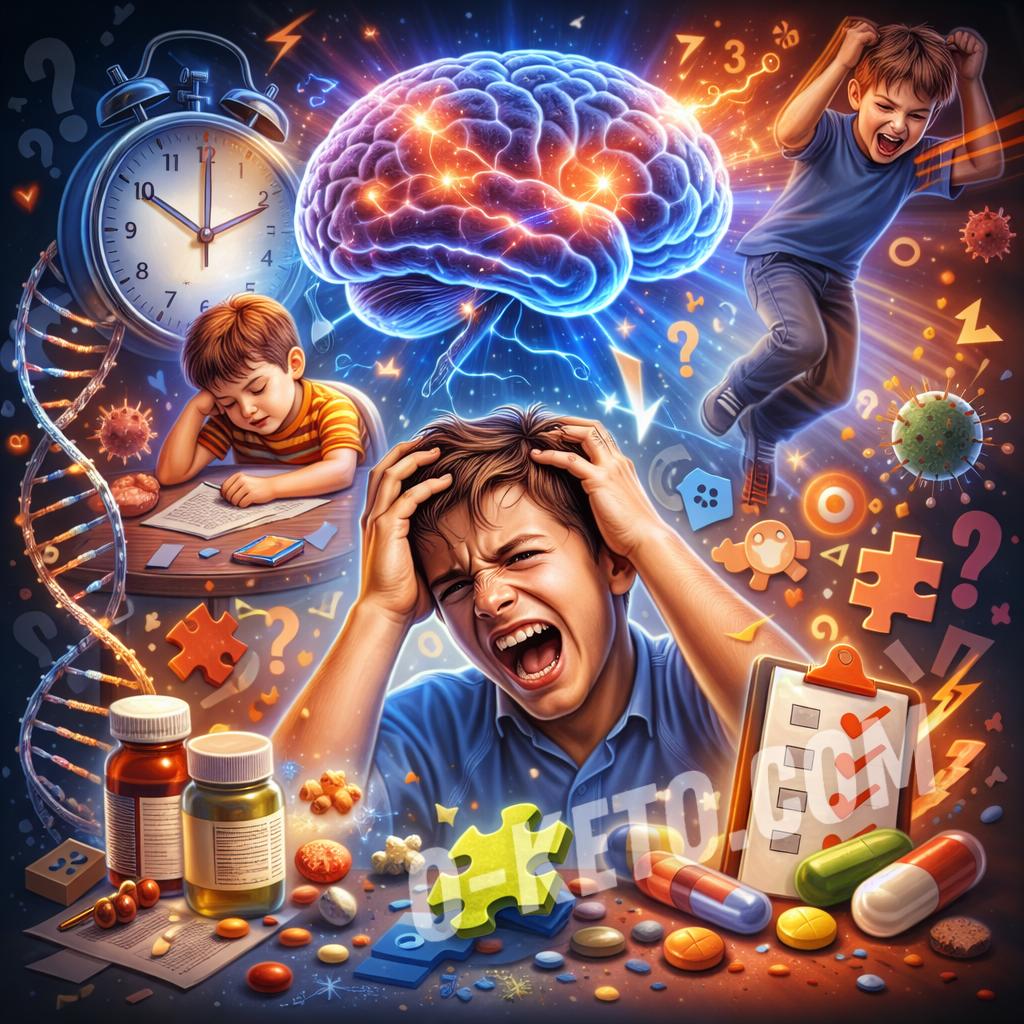
Attention Deficit Hyperactivity Disorder (ADHD) is a neurodevelopmental condition associated with the peculiarities of the nervous system’s functioning, attention regulation, impulses, and motor activity. ADHD develops in childhood; however, in a significant portion of individuals, its manifestations persist into adulthood, changing form but continuing to impact cognitive, emotional, and social spheres of life.
At the core of ADHD lies not “bad behavior” or a lack of upbringing, but functional features of the prefrontal cortex, dopaminergic, and noradrenergic systems responsible for self-control, motivation, and attention stability.
Causes of ADHD
ADHD is considered a multifactorial condition, the development of which is associated with a combination of biological and external factors:
genetic predisposition and inherited features of neurotransmitter systems;
immaturity or functional features of the frontal lobes of the brain;
It is important to understand that ADHD does not arise from a single factor but is formed as a result of their cumulative influence during critical periods of brain development.
Symptoms of ADHD
Manifestations of ADHD are conditionally divided into three main groups, with the severity of symptoms varying significantly.
Inattention;
difficulties in maintaining attention on tasks;
frequent mistakes due to distraction;
sensation of “noise in the head”;
forgetfulness and loss of items;
difficulties in planning and completing tasks.
Hyperactivity;
constant need for movement;
internal feeling of restlessness;
difficulties in relaxing;
increased talkativeness;
sensation of tension in the body.
Impulsivity.
sudden decisions without assessing consequences;
difficulties in waiting;
interrupting others;
emotional reactivity;
disruption of social boundaries.
In adults, ADHD often manifests not as external hyperactivity but as internal restlessness, procrastination, emotional burnout, and chronic fatigue.
Neurobiological Mechanisms
ADHD is associated with the disruption of neurotransmitter regulation, primarily dopamine and norepinephrine, which ensure:
attention stability;
motivation and reward;
impulse control;
working memory.
Additional roles are played by:
magnesium deficiency, which enhances neuronal excitability;
These mechanisms explain why ADHD is often associated with anxiety, sleep disturbances, and emotional instability.
Diagnosis of ADHD
Diagnosing ADHD requires a comprehensive approach and includes:
clinical assessment of symptoms;
questionnaires for parents, educators, and the patient themselves;
psychological testing;
assessment of cognitive functions;
exclusion of other conditions with similar symptoms.
Accurate diagnosis is particularly important, as ADHD manifestations can overlap with anxiety disorders, depression, and autism spectrum disorders.
Approaches to Correction and Support
Working with ADHD should be comprehensive and individualized:
psychotherapeutic and behavioral techniques;
training in self-regulation and planning skills;
correction of lifestyle and sleep patterns;
support of nutritional status;
medication therapy in certain cases.
Family support, adaptation of the educational environment, and understanding the peculiarities of a person with ADHD play a key role in improving quality of life.
Conclusion
ADHD is not a lack of discipline or a personal defect but a feature of the nervous system’s functioning. With timely diagnosis and proper support, individuals with ADHD can successfully learn, work, and realize their potential.
A comprehensive approach that considers neurobiology, psychology, and physiology allows for a significant reduction in symptom severity and an increase in adaptation levels in everyday life.
Any remaining questions? Ask chatGPT.:
If you have any questions о термине "ADHD", you can ask them to our bot.
Only verified information backed by research, physiology, and biochemistry about your health.
Why diseases occur, how to heal with proper nutrition, vitamins, and minerals, what therapeutic doses to take, and which diet is optimal for your health. What tests to take and how to interpret the results.
In the settings, you can also enable knowledge based on GNM and homeopathy.
We use cookies to ensure the best presentation of our website. If you continue to use the site, we will assume that you are satisfied with it.