


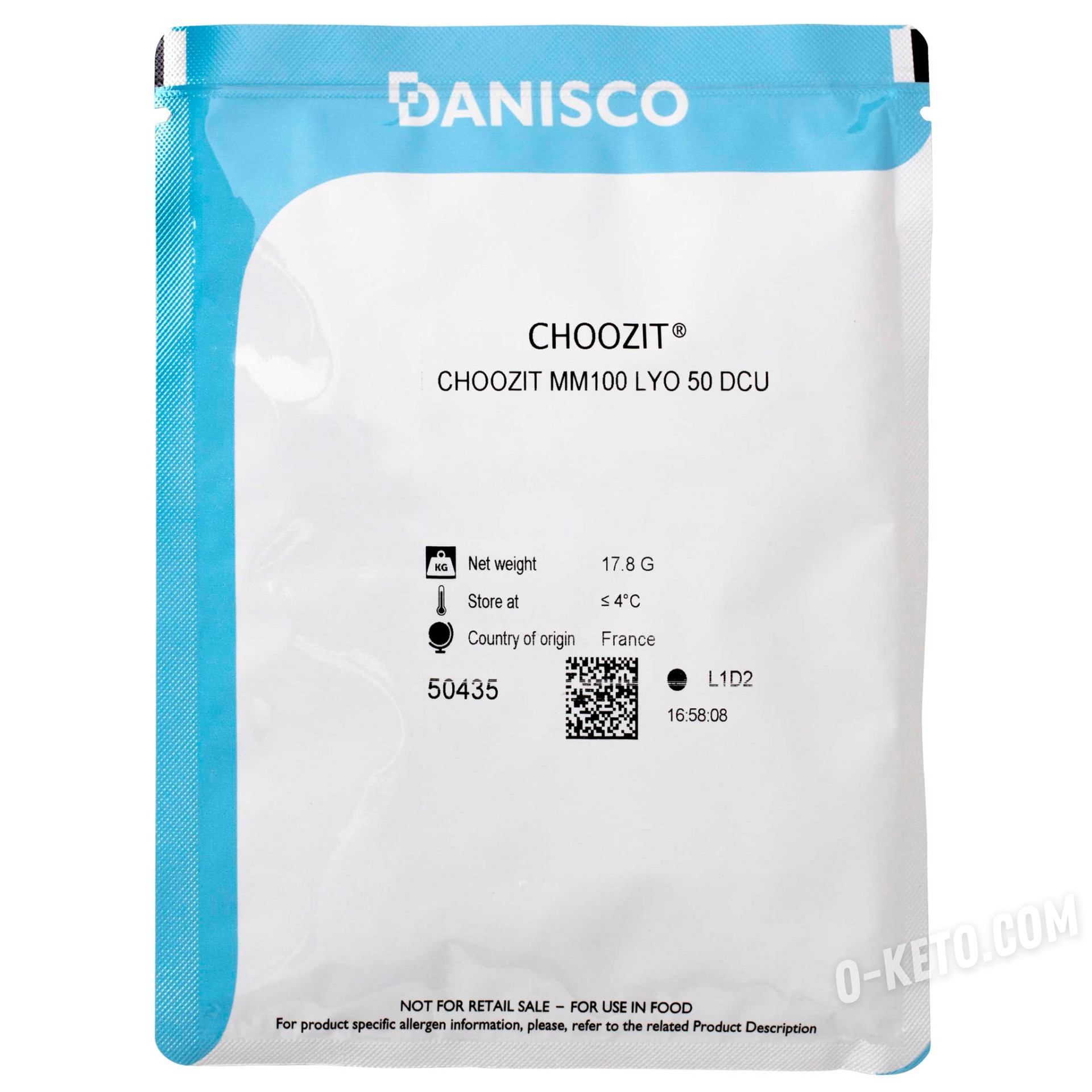

A mesophilic culture is a starter made of lactic acid bacteria that work actively at moderate temperatures, usually around 20–32°C. Such cultures are used in cheesemaking and fermented dairy products when mild acidity, flavor development, proper curd formation, and predictable ripening are needed.
Unlike thermophilic cultures, which prefer higher temperatures, mesophilic cultures are used for many cheeses made without strong heating: cheddar, gouda, edam, colby, feta, fresh cheeses, sour cream, cultured butter, and some soft cheeses. The final result depends not only on the culture, but also on milk, temperature, dose, salt, time, and rennet.
The starter is not a seasoning or a ready food to eat by the spoonful. It is a technical ingredient. Its role is to seed the milk with the right bacteria so they turn lactose into lactic acid and help form the flavor, aroma, and texture of the future product.
What it contains
Mesophilic cultures may include Lactococcus lactis subsp. lactis, Lactococcus lactis subsp. cremoris, Lactococcus lactis biovar diacetylactis, Leuconostoc, and other strains. Some mainly create acidity, others give creamy and nutty notes, and others help form a small amount of gas and a more open cheese body.
The package often lists culture type, purpose, dose, milk volume, and storage conditions. A universal mesophilic culture works for basic cheeses, but precise recipes are better made with a starter chosen for the specific style. A culture for sour cream and a culture for gouda may behave differently.
Is it suitable for keto?
The starter itself is used in a very small amount and almost does not affect the carbohydrate content of a dish. For keto, the final product matters more. In cheese, part of the lactose leaves with whey and part is processed by bacteria, so aged cheeses are usually more convenient for low-carb eating than milk.
However, a mesophilic culture does not automatically make every dairy product low-carb. Sweet yogurt, milk desserts, sweet cheese mixtures, or products with starch should be judged by the full ingredient list. In home cheesemaking, the keto logic is simpler: milk, culture, rennet, salt, and no sweet additions.
How to use it
The culture is added to milk at the temperature given in the recipe and instructions. Dry starter is usually sprinkled over the surface, left for a few minutes to hydrate, and then gently stirred in. The milk is then held for the needed time so the bacteria begin working before rennet or the next step is added.
Precision matters. Too high a temperature can damage bacteria, too low a temperature slows the process, too much starter gives harsh acidity, and too little gives weak curd and flat flavor. For repeatable results, write down the milk batch, temperature, time, dose, and final texture.
How to choose
Choose the culture by product type: cheese, sour cream, fresh cheese, butter, or a specific recipe. Check expiration date, shipping conditions, and storage requirements. Starters are sensitive to heat and moisture; if the packet has spent a long time in heat, activity may drop.
For beginners, small packets for a clear milk volume are convenient. Large professional packs are worth it only with frequent use and proper storage. If the culture contains additional molds, yeasts, or aroma strains, that should match the recipe rather than be a random purchase.
Limitations
A mesophilic culture works only when cleanliness is respected. Utensils, milk, hands, thermometer, and molds should be clean, otherwise unwanted microbes can spoil the product. Do not use starter with damaged packaging, unpleasant smell, moisture clumps, or expired date.
How to store it
Most dry cultures are stored in the freezer or refrigerator, tightly closed and dry. The packet should be taken out quickly, not left open on the table. Moisture and heat reduce activity. After opening, close the packet as tightly as possible or divide it into small portions.
What can replace it?
There is no full replacement in cheesemaking: the culture sets acidity and flavor. For some simple products, live buttermilk, additive-free sour cream, or yogurt can be used as a bacterial source, but the result will be less predictable. A thermophilic culture is meant for other temperatures and cheeses, so it is not a direct replacement for a mesophilic one.


