


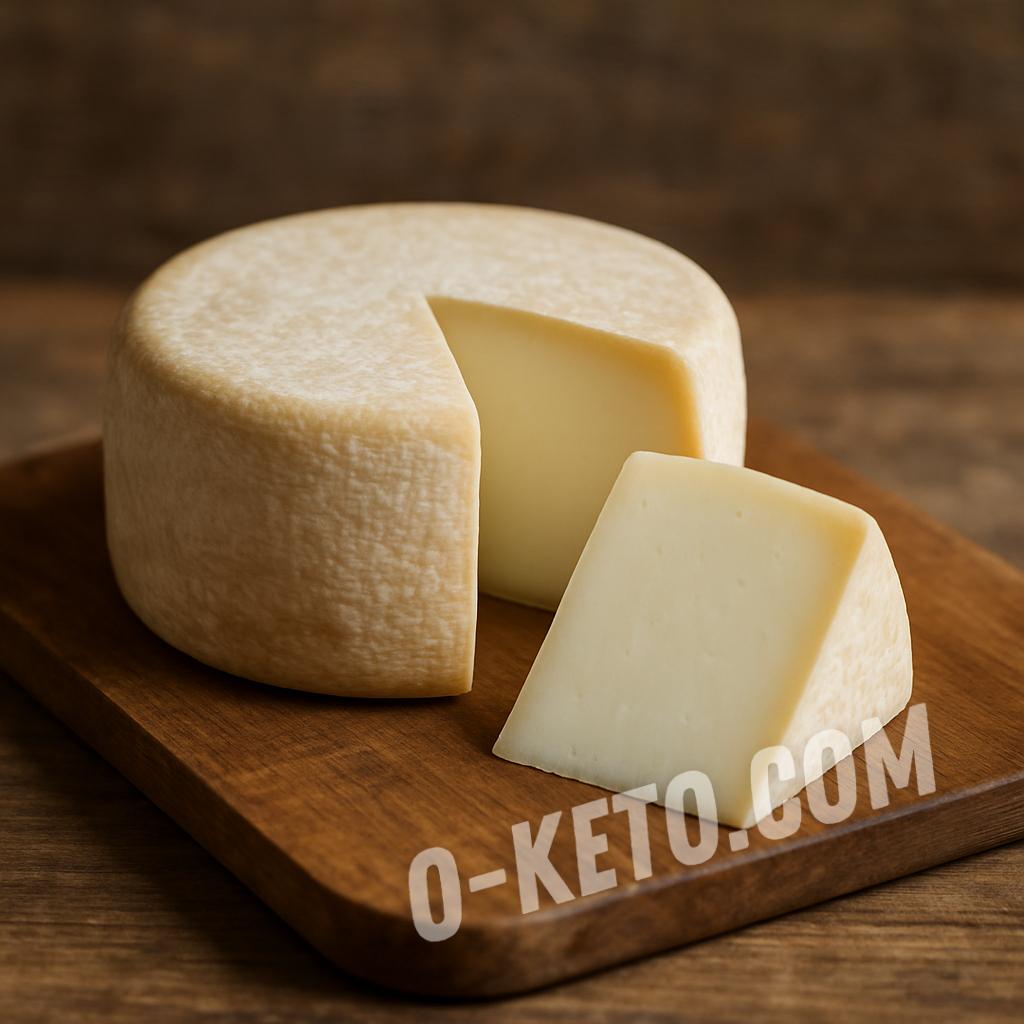
Simple semi-hard cheese made from goat’s milk
A source of protein and calcium, this goat milk cheese supports bone and dental health, as well as aids digestion thanks to probiotics. Its rich flavor and creamy texture make it an ideal addition to a variety of dishes.

Cheese Preparation
Heat goat’s milk (8 l) to 33-34°C. Add calcium chloride (0.8 g) and stir.
Add mesophilic culture (1 g), thermophilic culture (1 g), and if using, protective starter culture (1 g). Let the milk sit for 60 minutes for activation.
The exact dosages of starters and protective culture depend on the specific manufacturer. Refer to the package instructions for 8 l of milk.
Add rennet (1 g) and let it sit until the coagulation point for 10-15 minutes. After that, leave the curd until fully formed.
Adjust the amount of rennet so that the coagulation point falls within 10-15 minutes. For this cheese, the coagulation multiplier is 3.
Cut the curd into cubes of about 0.5-1 cm and let it firm up a bit. Then gently stir without heating, trimming any large pieces.
Gradually heat the curds to 43°C while stirring for 25-30 minutes, until they become small, elastic, about 4 mm in size, and start to squeak slightly.
Transfer the curds to a mold, let them self-press for 30 minutes, then press successively under a weight of 1 head weight for 60 minutes, 2 head weights for 60 minutes, and 4 head weights for 60-120 minutes.
Leave the cheese until it reaches the desired acidity. Typically, it takes 16-18 hours from milk to salting at a temperature of about 23-24°C. The finished cheese has a dense texture and a slight acidity in aroma.
Brine Preparation
For the brine, combine water (1 l), table salt (325 g), and calcium chloride (0.1 g). Wait until some of the salt stops dissolving: this is a sign of saturated brine.
Salting and Aging
Submerge the cheese in cold saturated brine at 12°C for 70-80 minutes for every 100 g of cheese. After salting, dry the cheese in the refrigerator at 80-85% humidity.
Cover the cheese with latex or leave it in its natural rind and age at 10-12°C for 30 days. Young cheese will be pliable and soft, while longer aging will make it denser and brighter in flavor.
If you want cheese with eyes, dry the curds more thoroughly from the whey before shaping. For a closed texture, on the contrary, form the mass under the whey and transfer it to the mold without excess voids.
Additional articles


If you have any questions about the recipe "Simple semi-hard cheese made from goat’s milk", you can ask them to AI. Please note, a low-cost OpenAI model is used. It may answer questions about disease treatment with errors!


We recommend reading
All articles


