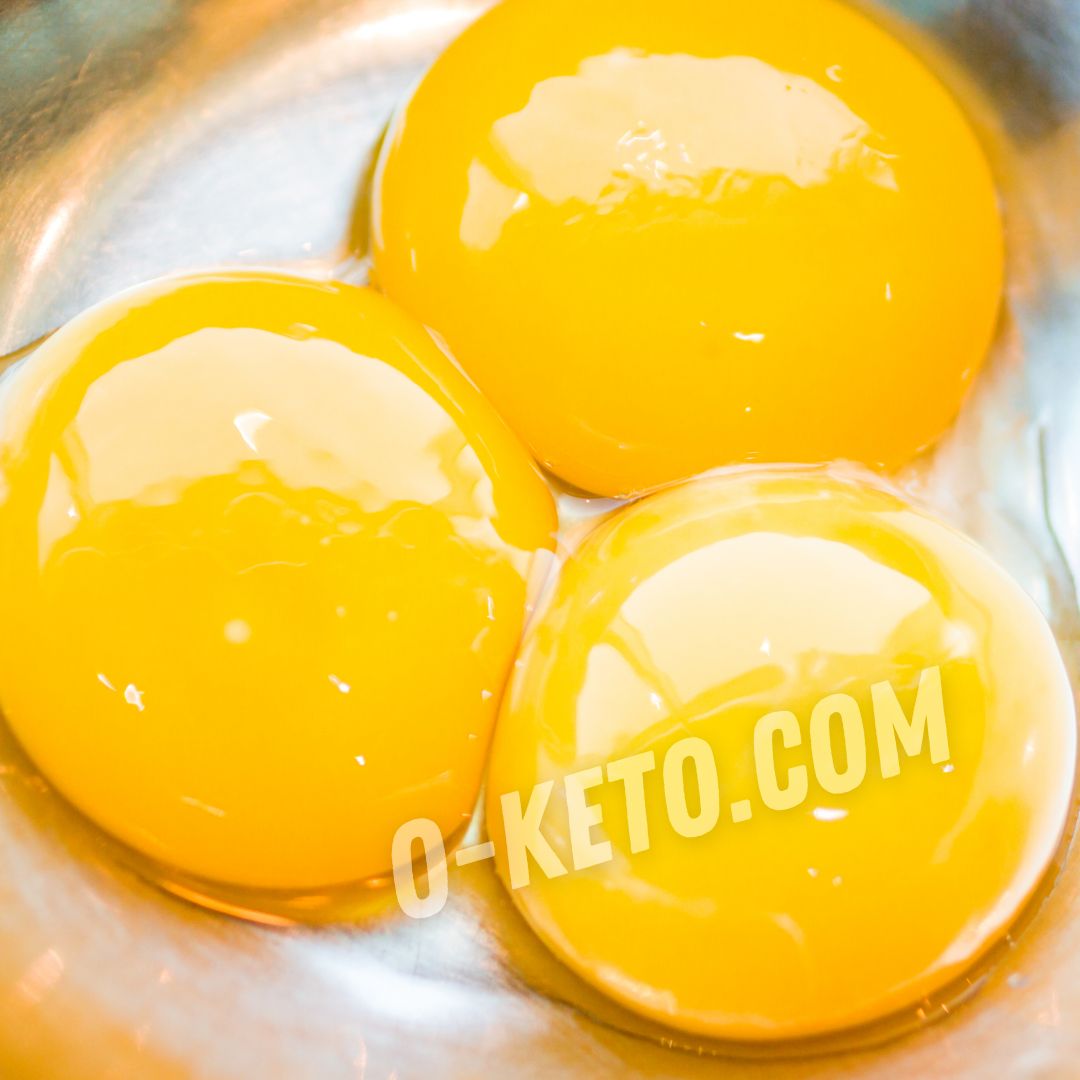

Egg yolk is the rich, dense part of a chicken egg that gives food creaminess, color, fat, and a deeper taste. In cooking it has several jobs at once: it binds sauces, softens baked goods, thickens custards, creates emulsions in mayonnaise, and rounds out savory dishes. Although the yolk is smaller than the white, it carries most of the egg fat along with fat-soluble vitamins, lecithin, choline, lutein, and zeaxanthin.
A yolk is rarely eaten as a large stand-alone food. More often it appears as one or two yolks inside eggs, omelets, sauces, minced meat, pate, sugar-free frozen desserts, or keto baking. For that reason it is useful to judge it not only by calories, but also by what it does in a recipe. An extra yolk can raise richness and fat content without adding many carbohydrates.
Nutritional value
One chicken yolk provides about 55 kcal, around 2.7 g of protein, and about 4.5 g of fat, including roughly 1.6 g of saturated fat. Carbohydrates are usually below 1 g per yolk, so it rarely creates a carbohydrate issue in a normal portion. Exact numbers vary with egg size: a small egg gives a smaller yolk, while a large egg gives more weight and more calories.
Egg yolk contains vitamins A, D, E, and K, plus B vitamins such as folate, biotin, and choline. It also provides phosphorus, iron, and zinc. Lecithin is one reason yolks make stable emulsions, so homemade mayonnaise, hollandaise, and some dressings keep their structure because of the yolk. Lutein and zeaxanthin contribute to the yellow color; the shade can range from pale yellow to deep orange depending mostly on the hen feed.
Is it suitable for keto?
For keto and LCHF, egg yolk is convenient: it adds very little carbohydrate, combines well with fats, and makes dishes more filling. At breakfast it pairs naturally with eggs, avocado, fish, cheese, butter, herbs, and low-starch vegetables. In sauces it gives thickness without flour or starch, which is especially useful in low-carbohydrate cooking.
Still, yolks should not be the only way to add fat. It is better to rotate them with fish, meat, organ meats, cheeses, olive oil, butter, and suitable portions of nuts. This keeps the menu more varied in taste and micronutrients, and prevents every dish from leaning too heavily on eggs.
How to use it
The simplest uses are boiled eggs, fried eggs, omelets, or sugar-free shakshuka. For a runny yolk, cook eggs soft-boiled or poached; for salads, hard-boil them and cool them quickly. Raw yolk in homemade sauces requires very fresh eggs and careful kitchen hygiene: wash the shell before cracking and do not store the finished sauce for long.
In hot sauces, yolk can curdle easily. To keep the texture smooth, first mix it with a little warm liquid, then return it to the pan and keep the heat low. In minced meat, yolk makes the mixture softer and helps it hold shape. In keto baking it adds color, tenderness, and a fuller taste, especially in recipes based on almond or coconut flour.
How to choose
Choose eggs with clean, intact shells, no cracks, and no off smell. Size matters in recipes: if a recipe expects large eggs, replacing them with small ones can change the moisture of dough or the thickness of custard. Yolk color by itself does not prove quality; a brighter shade often reflects feed rather than a special property of the product.
For dishes with little heat treatment, use the freshest eggs you can get from a reliable source. For sauces, mousses, and creams, pasteurized yolks are a useful option when available. Their taste may be slightly milder, but they are easier to handle in recipes that are not cooked thoroughly.
Limitations
The main limitation is egg allergy. A reaction can involve the white, the yolk, or both, so people with a confirmed egg intolerance should not experiment with separate egg parts without professional guidance. Yolks are also calorie-dense for their small volume: when added to sauces, casseroles, and drinks, they can raise total calories quickly.
With individual limits on saturated fat, gallbladder issues, or poor tolerance of rich foods, it is better to adjust the portion carefully. In practice, this does not mean avoiding yolks automatically; it means looking at the whole diet and at personal response.
How to store it
Keep whole eggs in the main refrigerator compartment rather than on a warm door shelf. A separated yolk dries and darkens quickly, so place it in a small covered container. To prevent the surface from drying, you can cover it with a little cold water and pour the water off before use. Use separated yolks within a day.
Cooked dishes containing yolk should be refrigerated and not left at room temperature for long. Homemade mayonnaise, creams, and yolk-based sauces are especially sensitive to freshness and clean utensils.
What can replace it?
The replacement depends on the yolk’s role. For color and taste in an omelet, use a whole egg or an egg mixed with cream. For emulsions in sauces, options include sugar-free mayonnaise, mustard, pasteurized yolk, or aquafaba if an egg-free version is needed. For softness in keto baking, cream cheese, sour cream, butter, or an extra whole egg can help, but the final texture will be different.