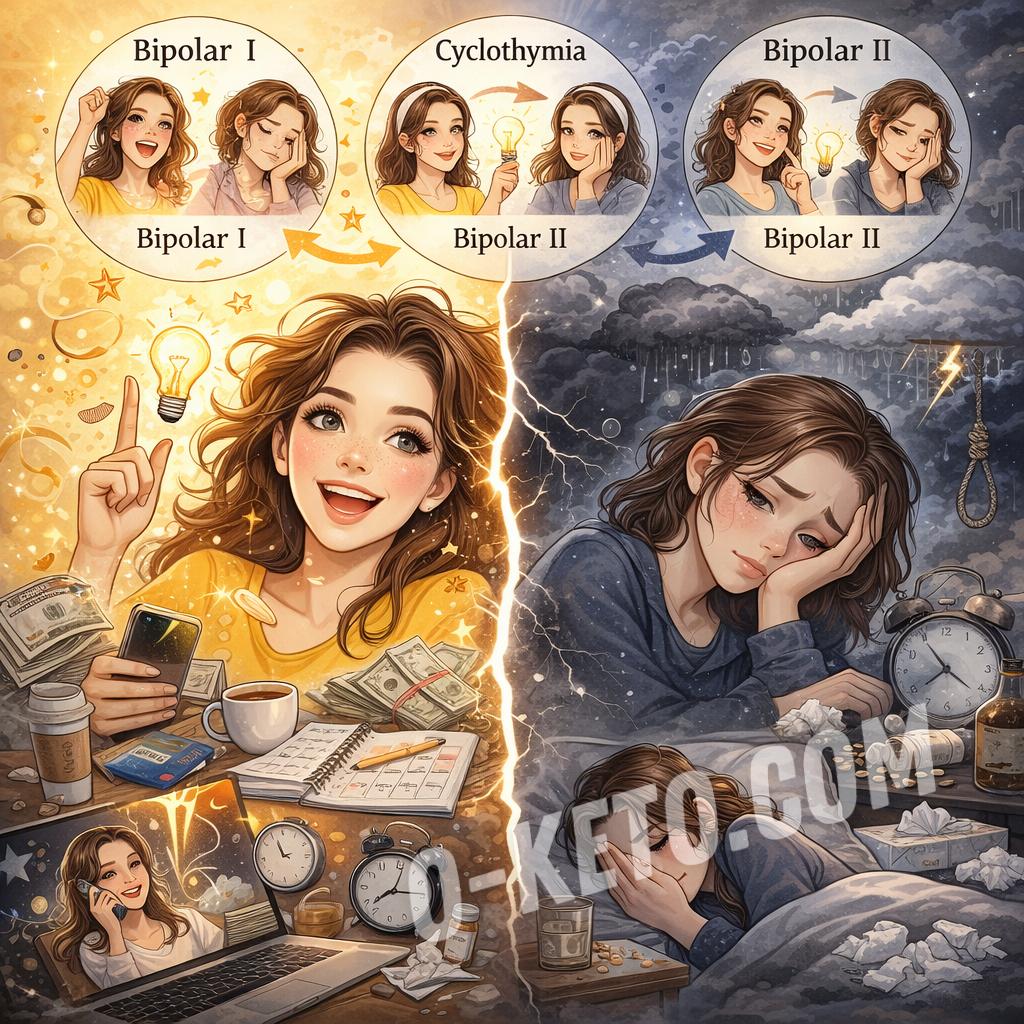
Bipolar affective disorder (BAD) is a chronic mental disorder associated with the disruption of mood, energy, and activity regulation.
It is characterized by alternating periods of elevated and lowered psycho-emotional states that go beyond normal mood fluctuations. These phases can significantly disrupt social adaptation, professional activities, and quality of life, especially in the absence of timely diagnosis and support.
Types of bipolar disorder
Modern psychiatry identifies several forms of BAD, differing in the severity and duration of episodes:
bipolar disorder type I is characterized by the presence of at least one manic episode, which may be accompanied by depressive phases;
bipolar disorder type II manifests as alternating depressive episodes and hypomania without the development of full-blown mania;
cyclothymia is a chronic condition with years of mood fluctuations, where symptoms do not meet the diagnostic criteria for mania or severe depression.
Phases and features of the course
BAD occurs in a wave-like manner. Between episodes, there may be periods of relative stability that can last for months or years. In some individuals, the disorder has a seasonal pattern, often with exacerbations in autumn and spring. Without treatment, episodes typically become more frequent and severe.
Symptoms
The clinical picture depends on the prevailing phase and individual characteristics of the nervous system.
Manic and hypomanic episodes
elevated or unstable mood, sometimes with pronounced irritability;
sensation of excess energy and accelerated thought processes;
decreased need for sleep without feelings of fatigue;
rapid speech and increased sociability;
tendency to impulsive decisions, financial risks, and overestimation of one’s abilities.
Depressive episodes
persistent low mood and feeling of inner emptiness;
loss of interest in activities that were previously enjoyable;
appetite and weight disturbances;
slowed thinking, difficulties with concentration;
pessimistic thoughts, including ideas of worthlessness and death.
Causes and risk factors
BAD is considered a multifactorial disorder. Its development involves both innate and acquired mechanisms:
hereditary predisposition and characteristics of neurotransmitter systems;
chronic stress, traumatic events, and sleep disturbances;
organic brain damage and neuroinfections.
Diagnosis
The diagnosis is made based on clinical interviews, analysis of medical history, and observation of symptom dynamics. Differential diagnosis with recurrent depression, anxiety, and personality disorders plays an important role. Sometimes prolonged observation is required, as the first manifestations may appear as isolated depressive episodes.
Treatment approaches
Treatment of BAD aims to stabilize mood and prevent relapses:
use of mood stabilizers to control phases;
use of antidepressants strictly in combination with other medications;
psychotherapy to develop self-regulation skills and recognize early symptoms;
correction of sleep patterns, stress levels, and lifestyle.
Living with bipolar disorder
With proper treatment and regular monitoring, many people with BAD lead active and fulfilling lives.
Patient awareness, support from loved ones, and adherence to specialist recommendations play a crucial role.
Self-discontinuation of medications or ignoring symptoms often leads to exacerbations and worsening of the disease course.
Conclusion
Bipolar affective disorder is a complex but manageable condition. Early detection, a systematic approach to treatment, and attention to psycho-emotional state can significantly reduce symptom severity and improve long-term prognosis.
Any remaining questions? Ask chatGPT.:
If you have any questions о термине "Bipolar affective disorder", you can ask them to our bot.
Only verified information backed by research, physiology, and biochemistry about your health.
Why diseases occur, how to heal with proper nutrition, vitamins, and minerals, what therapeutic doses to take, and which diet is optimal for your health. What tests to take and how to interpret the results.
In the settings, you can also enable knowledge based on GNM and homeopathy.
We use cookies to ensure the best presentation of our website. If you continue to use the site, we will assume that you are satisfied with it.