


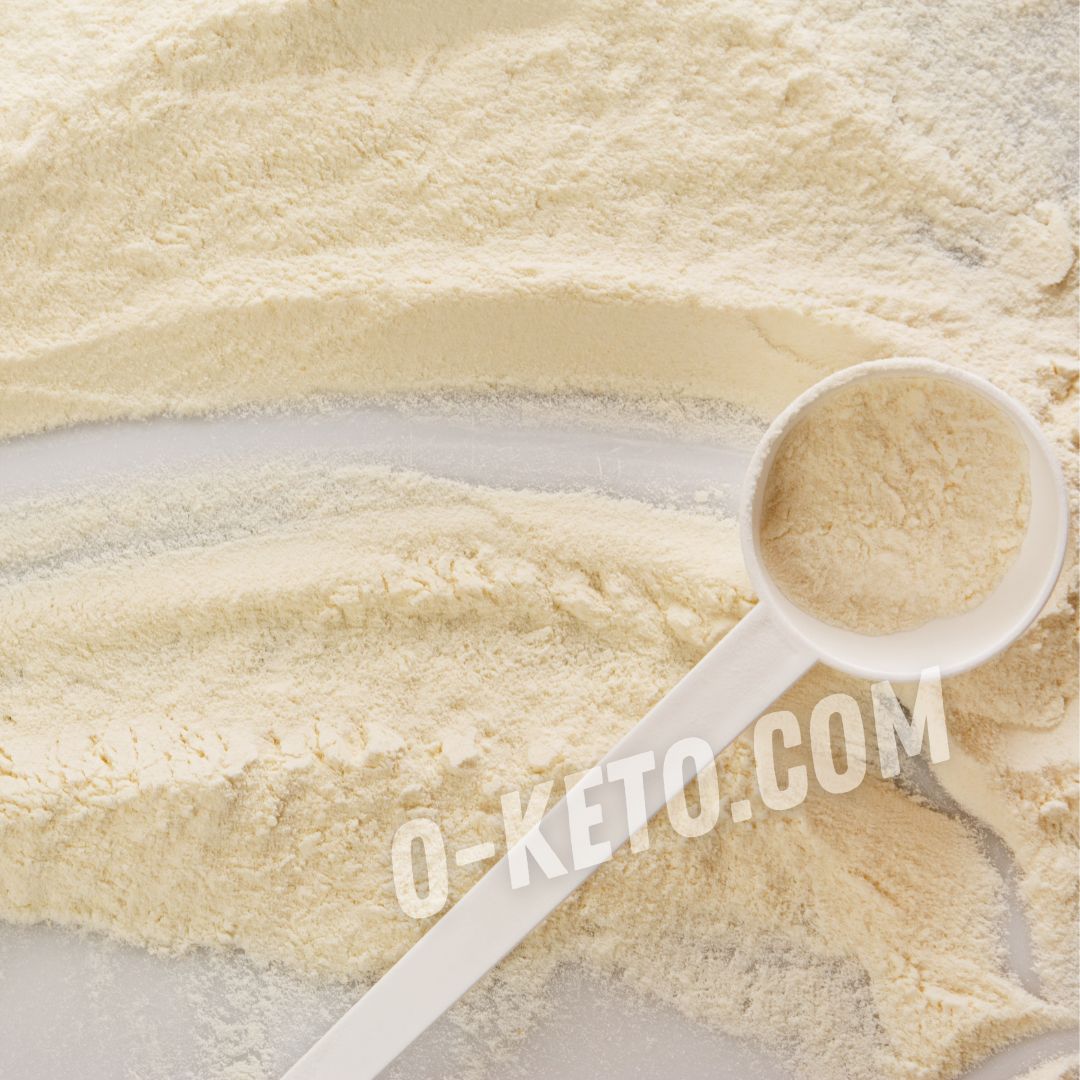

Rice protein isolate is a powdered plant protein made from white or brown rice. During processing, most of the starch is removed and the concentrated protein fraction remains. The finished product usually contains 80-90% protein, little fat, and much fewer carbohydrates than rice flour or rice itself.
This protein is chosen by people who do not tolerate milk proteins, soy, eggs, or pea protein. It has a neutral, slightly grain-like taste and a sandier texture than whey or casein. For that reason, rice isolate is often mixed with cocoa, coffee, cinnamon, vanilla, small portions of berries, coconut milk, or other ingredients that round out the taste.
Nutrition
In 100 g of rice protein isolate there are usually about 350-400 kcal, 80-90 g of protein, 1-3 g of fat, and roughly 3-10 g of carbohydrates. The range depends on purification level, raw material, flavorings, and sweeteners. A normal serving is 25-35 g of powder and provides about 20-27 g of protein.
The protein profile of rice differs from dairy protein: it usually contains less lysine, while still providing leucine, valine, isoleucine, and other protein components. In a vegan diet, rice isolate is often combined with pea or another plant protein to make the profile more even. In a mixed diet, this is easier to cover with ordinary food.
Place in keto and LCHF
Rice protein isolate can fit keto and LCHF if the product is low in carbohydrates and contains no sugar, maltodextrin, rice syrup, or starchy fillers. Unlike rice, it is not a grain side dish but a purified protein product. Still, the word “rice” is a reason to check the label: powders differ greatly.
On keto, count not only carbohydrates but also total protein for the day. If the menu already includes meat, fish, eggs, cheese, and cottage cheese, an extra shake may be unnecessary. If protein is low or dairy proteins do not suit you, rice isolate can be a convenient backup option.
How to use
The simplest method is to mix the powder with water, unsweetened almond milk, coconut drink, or coffee. For a smoother texture, blend the drink and let it stand for 2-3 minutes. Add it to hot liquid carefully: first stir it into a small amount of cold water, then add it to the warm base.
In cooking, rice isolate is used in protein shakes, sugar-free bars, keto pancakes, creams, seed porridges, and doughs based on almond or coconut flour. It can dry out baked goods, so it is often combined with eggs, cream cheese, plain yogurt, butter, psyllium, or zucchini puree in savory recipes.
How to choose
A good ingredient list starts with rice protein or rice protein isolate. Flavored versions need especially careful reading: they may contain sugar, maltodextrin, starch, plant creamers, flavorings, and sweeteners that do not suit everyone. For strict counting, a neutral unflavored powder is easier.
Check protein per serving, carbohydrates per 100 g, rice source, sweeteners, and heavy metal testing if the producer publishes it. For rice products, this is an important raw-material quality issue. The smell should be neutral and grain-like, without dampness, mold, or rancid notes.
With rice isolate, it is especially important to distinguish a protein powder from rice flour: the word “rice” does not guarantee low carbohydrates. Check the protein, carbohydrates, and additives on the actual package; a pea-and-rice combination can sometimes provide a more balanced amino-acid profile.
Limits
Rice isolate usually contains no lactose or milk protein, but individual tolerance still differs. In some people, plant proteins cause bloating, dry mouth, heaviness, or a sandy feeling in the drink. It is better to start with half a serving and observe the response.
People with protein restrictions, kidney conditions, or a special diet should discuss protein supplement amounts with a clinician. It is also not a good idea to replace the whole protein part of the menu with powder: ordinary foods provide not only protein, but also fats, minerals, flavor, texture, and satiety.
Storage and substitutes
Store the powder in a tightly closed tub or bag, in a dry cool place, away from steam. The scoop should be dry. If the powder forms dense clumps, smells damp, or tastes bitter, it is better not to use it. Keep a prepared drink in the refrigerator and drink it the same day.
Rice isolate can be replaced with pea protein, a rice-pea protein blend, whey isolate, casein, egg white powder, or ordinary food: meat, fish, eggs, cottage cheese, tofu. The substitute depends on the reason for choosing it: vegan diet, lactose avoidance, taste, texture, or tolerance.


