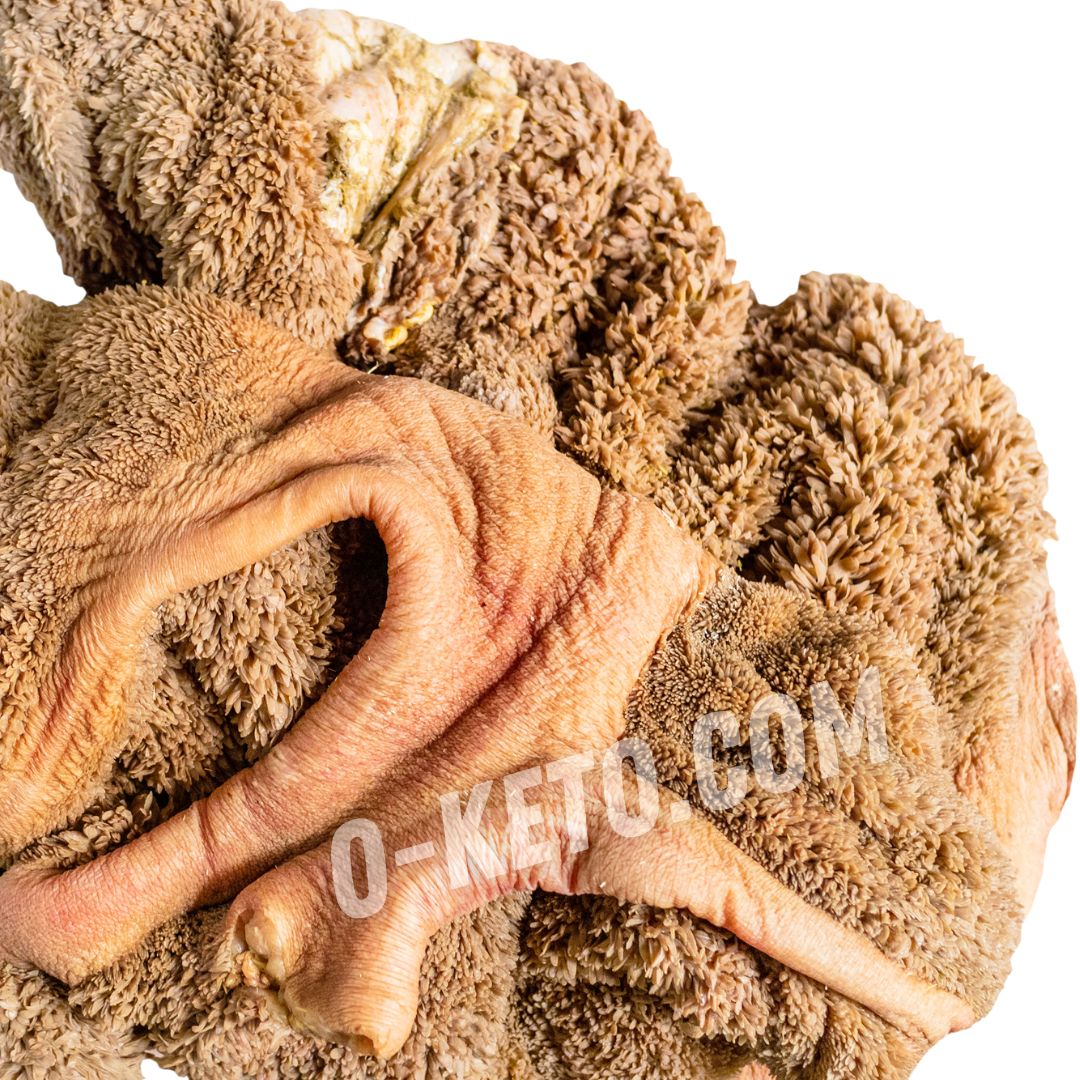

Tripe is part of the stomach of ruminant animals, most often beef tripe. In cooking, the word usually means cleaned stomach with a firm, elastic structure and a characteristic taste. It is used in soups, stews, fried dishes, fillings, spicy sauces and traditional recipes in many cuisines.
Nutritionally, tripe fits low-carb eating well: per 100 g, common values are about 90 kcal, 15 g of protein, 3 g of fat and 0 g of carbohydrates. The glycemic index and glycemic load are 0. B vitamins, iron, zinc and selenium may also be present. Still, processing quality and cooking method matter most.
Nutrition
Tripe is a protein-rich organ meat with minimal carbohydrates and moderate fat. It is not as fatty as brisket or bacon, so on keto it is often cooked with butter, lard, cream sauce or rich broth. Boiled tripe can be quite light and may need a richer accompaniment.
The protein is firm, and the connective tissue needs time. It is hard to cook quickly: if undercooked, tripe remains tough and rubbery. With long gentle cooking, it becomes more tender and absorbs sauce flavor well.
Is It Keto-Friendly?
Tripe fits keto when prepared without flour, potatoes, sweet sauces or breading. The product itself has almost no carbohydrates, but traditional recipes may include beans, grains, bread, potatoes or flour thickening. Those additions change the dish profile.
A good keto version is tripe in broth, sugar-free tomato sauce, cream sauce, with mushrooms, cabbage, herbs, garlic, pepper and spices. If a ready semi-prepared product is used, the marinade and sauce ingredient list should be checked.
How to Use It
Tripe is usually rinsed carefully, then boiled or stewed for a long time. Once soft, it can be quickly fried, added to soup, combined with sauce or baked. The smell becomes milder if it is cooked with bay leaf, pepper and onion for aroma, then the first water is discarded.
Practical options include:
- stewing in broth with garlic and pepper;
- tripe with mushrooms and cream sauce;
- spicy soup without potatoes or grains;
- frying cooked tripe in butter with herbs;
- stew with cabbage, sugar-free tomato and spices.
How to Choose and Store
Fresh tripe should be clean, without a strong rotten smell, and have a firm structure. A very strong chemical smell may come from aggressive processing. Completely uncleaned tripe requires experience, so cleaned and pre-prepared tripe is usually more convenient for home cooking.
Tripe must be kept strictly refrigerated and cooked quickly. For longer storage, freeze it in portions. After boiling, it can be kept in broth so it does not dry out, but it should be used within the next few days.
Limits and Substitutes
Not everyone likes tripe because of its smell and texture. It requires long cooking and careful cleaning, otherwise the dish tastes heavy. If organ meats are unfamiliar or poorly tolerated, start with a small portion.
For a similar food role, tripe can be replaced with other organ meats: heart, tongue, poultry gizzards, tail or cheeks, but the texture will differ. If simple low-carb protein is needed, beef, turkey, chicken or fish work. If a firm gelatin-rich texture is needed, beef cheeks, tail or well-cooked gizzards are closer.
Portion and Common Mistakes
A usual serving of cooked tripe is about 150-200 g, but the dish should be judged together with the sauce. If the sauce contains flour or potatoes, the low-carb profile is lost. The main mistake is rushing: tripe needs time, and short boiling almost always leaves it tough. Another mistake is trying to remove its character completely. It is better softened with broth, spices, garlic and fat while keeping the product recognizable.
Preparation and Serving
If tripe is not bought fully ready, it is convenient to cook it in two stages. A short first boil followed by draining removes the strongest smell, then the product is cooked until tender in fresh water or broth. Salt is better added closer to the end because a long salty boil can make the texture drier.
In the finished dish, tripe almost always needs contrast: acidity from tomato or lemon, fat from cream or butter, heat from pepper and freshness from herbs. Cutting matters too. Thin strips absorb sauce faster and feel less heavy, while larger pieces suit stews where the chewy texture is part of the dish.