


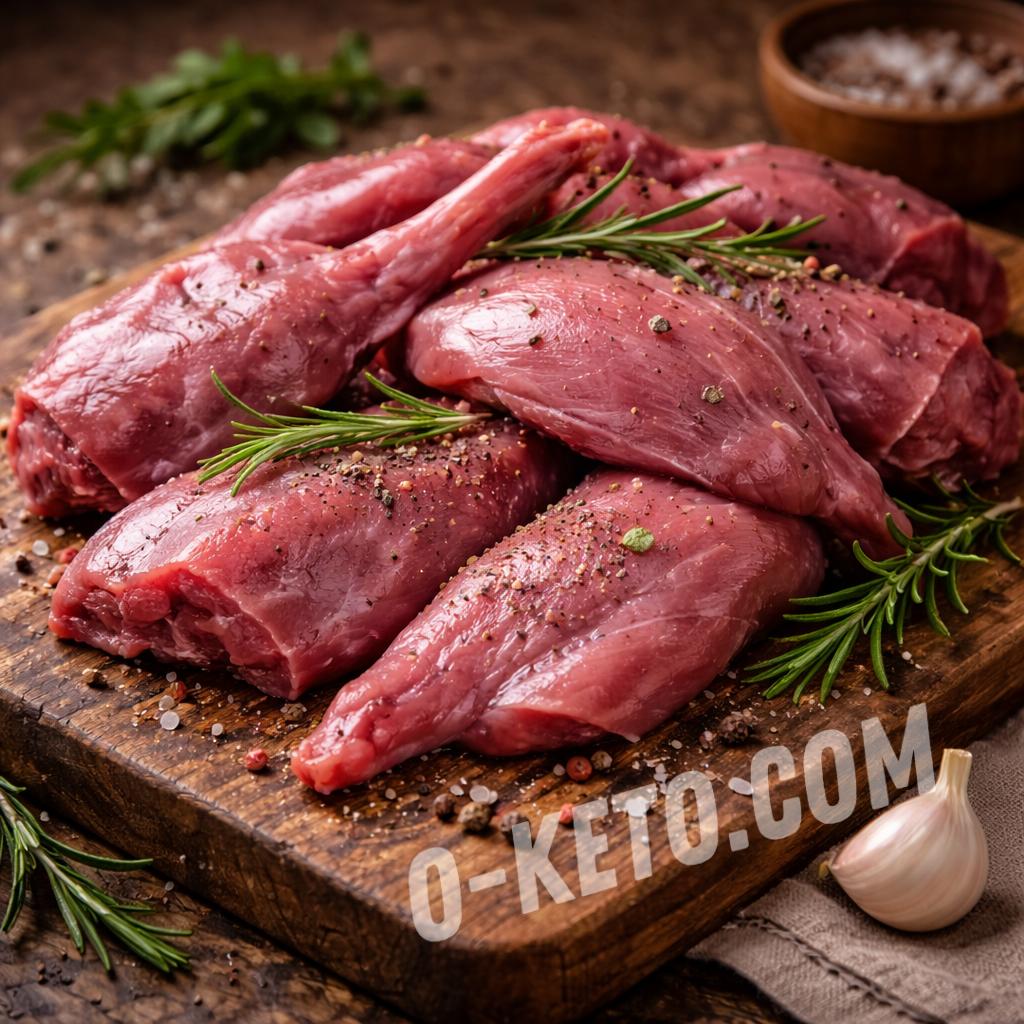

Rabbit meat — is the meat of a wild hare, which has long been valued for its rich flavor, high nutritional value, and dietary properties. Unlike domestic animal meat, rabbit meat has a denser structure and a pronounced aroma typical of game.
Rabbit meat contains many vitamins and minerals necessary for the normal functioning of the body. It is easily digestible and can serve as a good alternative to fattier types of meat. Rabbit meat is widely used in traditional European cuisines, where it is stewed, baked, or cooked slowly with vegetables and spices.
Nutritional Value of Rabbit Meat
Rabbit meat is characterized by its high protein content and relatively low fat content. This makes it a popular product among supporters of healthy eating and dietary diets.
| calories | 170–180 kcal |
| proteins | 20–25 g |
| fats | 3–6 g |
| carbohydrates | 0 g |
Rabbit meat contains important trace elements and vitamins:
- B vitamins (B6 and B12);
- iron;
- phosphorus;
- zinc;
- selenium.
The glycemic index of the meat is zero, as it contains no carbohydrates.
Cooking Rabbit Meat
Before cooking, rabbit meat is usually marinated to make it more tender and flavorful. Wine, vinegar, herbs, and spices are often used for the marinade.
Main cooking methods:
- stewing with vegetables and spices;
- baking in the oven;
- grilling;
- slow cooking in thick sauces.
With prolonged slow cooking, the meat becomes tender and juicy, and its flavor is revealed most fully.
Consumption Features
Rabbit meat pairs well with vegetables, mushrooms, and aromatic herbs. Due to its low fat content, it is often served with sauces or stewed vegetables, which make the dish more juicy.
This type of meat can be an excellent option for diversifying the diet, especially for those who prefer natural products and game.


